Follow Us on Google
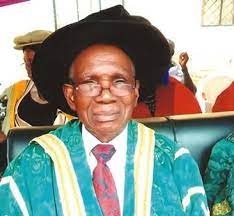
Nigeria has lost foremost dermatologist, prolific writer and cultural enthusiast in the death of Prof. Anezionwu Nwankwo Okoro. Popularly known as Anezi Okoro, the deceased, who died at 94, was West Africa’s first dermatologist. He also distinguished himself in the world of letters by churning out creative works which entered the reading lists of many schools and wormed themselves into the hearts of readers.
Announcing his death, his first son, Chukwuma Aneziokoro, said his father died peacefully in his sleep on January 20, 2024. According to him, “He had been sick for some time. But he died peacefully around 4 a.m. He was a great man, caring father and husband. I will sorely miss him.” To him, he was “an institution, human conglomerate, an academic and intellectual giant who was undoubtedly a miracle of ingenuity.”
Okoro was one of the oldest living African writers. The late writer and dermatologist was one of the most prolific writers of his generation with over a dozen books, creating stories that have inspired many, especially Nigerian youths, many of whom read his books in their formative years. For Anezi Okoro, writing for young people “is a cultural battle, a war which makes Nigerian children see indigenous cultures as inferior to western ones,” as he once said. He will be remembered in the literary world for his efforts in improving the knowledge of today’s generation and those to come. He also created stories that inspired many writers and readers across Africa.
He had mentored and supported creative writers in Enugu and offered useful advice to enhance their craft. Besides, he contributed immensely to the improvement of the lives of persons living with albinism. He was a selfless man who contributed immensely to the development of the nation. Aside from being a creative writer, he was the author of books on medicine/health, environmental sciences and ecology. He became a Professor of Medicine at the University of Nigeria, Nsukka in 1975. He also wrote not less than 200 poems. He recently translated 10 Lamb’s tales of Shakespeare to Igbo language entitled Akuko Ufodu Shakespeare Koro, in collaboration with Nwobiara Chukwura, in a move to promote indigenous language.
Best known for his 1972 classic, One Week One Trouble, the book is woven around a secondary school boy named Wilson Tagbo, whose flaws in secondary school outweigh his virtues by getting into trouble almost every week, from riding the school’s bull and interrupting a sports event to tampering with laughing gas at the Chemistry laboratory.
His first book, The Village School, written in 1966, set in an African village community with a primary school, is a spellbinding story where most people are part-hero and part-villain; and where, at a period of transition, life swirls around the village school. In most of his writings, he laboured to juxtapose the good and the bad as a way of effecting social change.
Okoro was born in Arondizuogu, Imo State, Nigeria on May 17, 1929. He had his secondary school education at Methodist College, Uzuakoli, Abia State, Nigeria. From 1957 to 1959, he worked as a house surgeon, University College Hospital, Ibadan. He began his career as an academic in 1975 as a Professor of medicine, University of Nigeria, Nsukka.
He was the President of the African Association for Dermatology from 1986 to 1991, Director of Dermatology, NNPC in Lagos from 1977 to 1981, a visiting professor, Medical College of Georgia, Augusta in 1987, and University of Minnesota, Minneapolis, 1988, King Faisal University I, Damman, Saudi Arabia as Professor of Dermatology from 1989 to 1995.
He contributed to the choosing of Abuja as the new federal capital. Considering his immense contributions to medicine, the arts and culture, we urge the Federal Government to name a national monument in his honour. Similarly, his home state, Imo, and Enugu, where he spent many years, should immortalise him.
His classic, One Week One Trouble, ranks alongside juvenile classics, like Achebe’s Chike and the River, Onuora Nzekwu’s Eze Goes to School, and Cyprian Ekwensi’s The Passport of Mallam Ilia. We sympathise with his family, professional colleagues, members of the literary community and the people of Imo State. He was a national icon, whose enterprising spirit, love for education and care-giving should be emulated. May his soul rest in peace.