Follow Us on Google
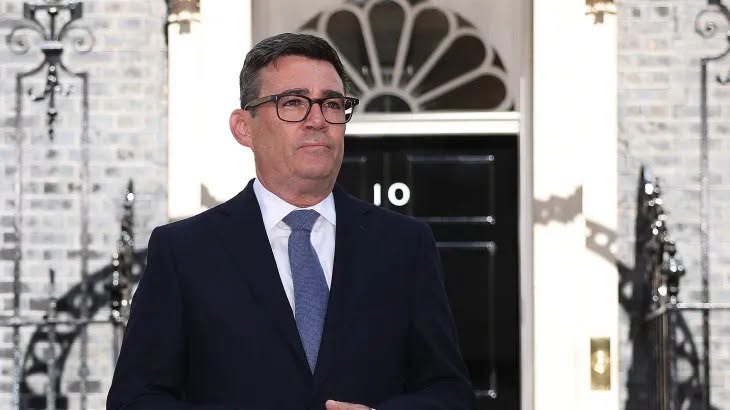
Andy Burnham has officially become the new Prime Minister of the United Kingdom after being invited by King Charles III to form a government, succeeding Keir Starmer, following his resignation as leader of the governing Labour Party.
Burnham, the former Mayor of Greater Manchester, takes office as Britain’s seventh prime minister in the past decade, inheriting a nation grappling with economic pressures, political divisions and mounting demands for reforms.
Speaking outside 10 Downing Street shortly after his appointment, the 56-year-old pledged to usher in a new era of stability, promising to rebuild public confidence in government and improve living standards across the country.
“My government will focus on restoring hope, rebuilding trust and ensuring that every part of Britain shares in our nation’s prosperity,” Burnham said in his inaugural address.
He outlined plans to tackle the rising cost of living, reduce homelessness, strengthen public services and launch a long-term economic strategy aimed at revitalising Britain’s economy. He also promised to devolve more powers to regional authorities, drawing on his experience as mayor.
Other News
His emergence follows weeks of political uncertainty within the Labour Party after Keir Starmer stepped down amid internal pressure despite leading the party to a landslide general election victory just two years ago.
As one of his first official acts, Burnham unveiled a reshuffled Cabinet, appointing John Healey as Chancellor and Ed Miliband as Foreign Secretary, while retaining Shabana Mahmood as Home Secretary.
The new prime minister also reaffirmed Britain’s commitment to its international allies, including continued support for Ukraine, while stressing that domestic economic recovery would remain the central priority of his administration.
Political analysts say Burnham faces the daunting task of reuniting the Labour Party, restoring voter confidence and countering the growing popularity of opposition parties ahead of the next general election.
His appointment marks another significant chapter in Britain’s recent political history, as the country seeks greater stability after years of frequent leadership changes and persistent economic challenges.