Follow Us on Google

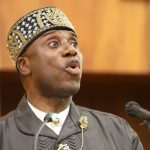
Did you view the video? It was shot by Channels TV and it is just about 1 minute, 43 seconds, in length. It is going viral in social media groups. If you haven’t, please, look for it. But before you do, here is a synopsis. The video showed the Emir of Kano, Alhaji Muhammadu Sanusi II, also known as Sanusi Lamido Sanusi, weeping. An aide had to hand him a white handkerchief to wipe his tears. Yes, the emir wept and in public too!
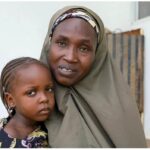
Why did he weep? He narrated a story that forced tears from his eyes. Well, listen to what irked the emir. He said: “I was sitting receiving these reports and there were all these women who were waiting; and I heard a very loud scream. So, I sent someone to check and the person who had checked came back with tears in his eyes. And what had happened? A woman who had just walked across from a children hospital, about 200 metres from the palace, just across, and her child was sick and she had come to ask for money to go and buy the drugs. And while she was waiting for her turn to ask for support, the baby died in her arms. And how much was this? It was less than $5 (Five dollars). This is what happens in this country every day. Every day! Children die because their parents cannot afford $5. A mother will watch her child die because she does not have $5”. At this point, the emir held back his words, broke down and wept.
I do not know his audience. But whoever he was addressing must be worth his time. The emir that Nigerians have come to know is not one to address an audience of charlatans. He talks to serious-minded people. Whoever was in the emir’s audience must know how much $5 is worth. For the average Nigerian, that is just about N1,800 (One thousand, eight hundred naira only). In the emir’s words, the amount the poor mother wanted was “less than $5.” It means the woman could not afford an amount less than N1,800 to buy drugs for her sick baby. That, according to the emir, is the reality of existence in today’s Nigeria.
As I watched that video on Twitter, I scanned further to read a tweet about another woman, a mother, who could no longer afford to feed her kids. She was filmed by a Nigerian who pledged to help raise N12,000 to enable her start a business. The woman was shown asking whoever that wants to come adopt her kids as she could no longer feed them. She did not even talk of clothing or housing comfort for her kids. Just feeding! Already, they are all out of school. In her helplessness, she begs members of the public to adopt her kids. One can only imagine what may happen if no one adopts the kids.
These became public knowledge because they were reported. There are a million others not reported. According to the Multidimensional Poverty Index (MPI), jointly published by the United Nations Development Programme (UNDP) and the Oxford Poverty and Human Development Initiative (OPHI) at the University of Oxford, last July, “the population of Nigerians in multidimensional poverty increased from 86 million in 2007 to 98 million (or 51.4% of the population) in 2017.”
According to Oxford Poverty and Multidimensional Index (OPMI), “multidimensional poverty encompasses the various deprivations experienced by poor people in their daily lives – such as poor health, lack of education, inadequate living standards, disempowerment, poor quality of work, the threat of violence, and living in areas that are environmentally hazardous.”
A mother who would watch her baby die because of lack of an amount less than N1,800, or one that can no longer afford to feed her kids, suffers multidimensional poverty. Those two look like exceptions because they were reported. But, fact is, Nigerians are poorer than they were 10 years ago. Nigerians are more frustrated than they were 10 years ago. The hopelessness they face has led to increase in suicide rates. A 2016 index of World Health Organization (WHO) ranks Nigeria at number 15 on its suicide index. World Population Review puts the number of suicides in Nigeria at 18,608 per annum. Scary? This is Nigeria!
Well, that’s a narrative on our country. As the emir weeps, you probably would have received some telephone calls, or short messages, from people who know you, asking for support, of all sorts, but mostly monetary. As it is, many are still struggling to pay school fees for their kids and buy the necessary textbooks. There are a horde of others struggling to see themselves through huge medical bills, while many have long resorted to alternative medicine and prayer houses for solutions that the right medication could cure. And like Emir Sanusi said, “this is what happens in this country every day.”
Sadly, this is happening in a country that introduced social safety nets that pays N5,000 monthly to poor people, though wife of the President, Aisha, is on record to have said no one from her home state of Adamawa has benefitted from the scheme. I do not know if anyone in Imo State is on the list of beneficiaries.
While poverty ravages Nigerians, their leaders alienate themselves from their pain with the comfort of officialdom, also tightening the noose around the poor with higher taxes and policies. As it is, the middle class is wiped out. The available classes now are the rich, the poor and the extremely poor. The extremely poor look up to the poor for support; and the poor look up to the rich for same. Prof. Chukwuma Soludo summarised the situation in his October 1, 2019, presentation at The Platform, when he said: “Abuja has sought to keep everybody in check, but has succeeded in holding everybody down.”
Nigeria is, sadly, down.
In reality, the situation will only get worse. But that’s ok! We were told early in the life of the APC regime, in 2015, that it must get bad, and sometimes very bad, before it gets better. I just hope we are the ‘very bad’ point.