Follow Us on Google
By Chidiebere Onyemaizu
There is an old Nigerian proverb that says the loudest voice in a crowded market is not always the wisest. As the 2027 general election draws steadily closer and Nigeria’s political marketplace grows noisier by the day—filled with the sounds of party implosions, courtroom dramas, factional warfare, and endless accusations—one party- the Social Democratic Party, SDP- has chosen, rather conspicuously, to say everything by saying almost nothing disruptive at all. The party has remained unfazed in the political turbulence. Its silence is deafening and calmness it enjoys exhilarating .
Politics, especially as played in Nigeria, is often measured by spectacle. The more dramatic the headlines, the more attention a party receives. Yet history has shown that political stability, internal discipline and institutional order are often far more consequential than daily media excitement. In that respect, the SDP is attempting something unusual: it is trying to make organisation itself its campaign message.
Take stock of where everyone else, political parties inclusive- stand and it becomes obvious that the SDP is an oasis of tranquility.
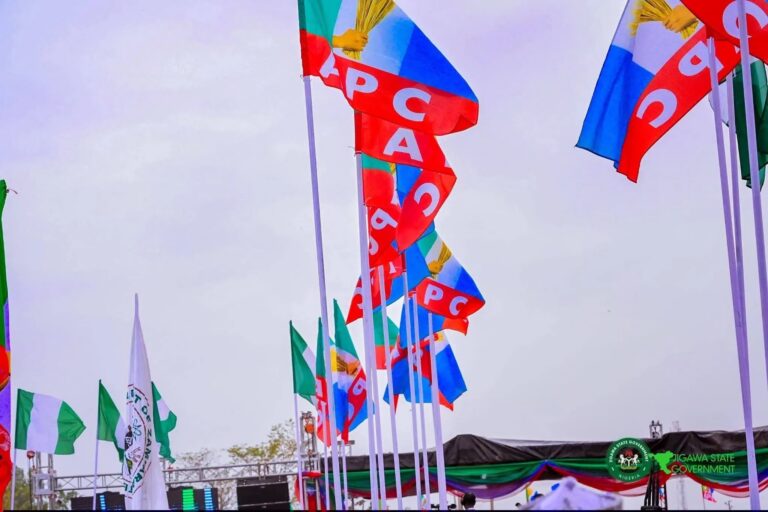
Daily Sun recalls that the APC’s primaries were riddled with violence, killings, vote-buying and money-sharing taken to ridiculous levels—including a senator in Borno State allegedly distributing N135 million to party executives, and a House of Representatives member sharing N26 million among APC executives in another state. Politics analysts opine that the development is an unsettling commentary on Nigeria’s political environment. For example, instead of showcasing democratic competition, the exercises exposed the enormous influence of money in internal party politics and reinforced public cynicism about the country’s electoral culture.
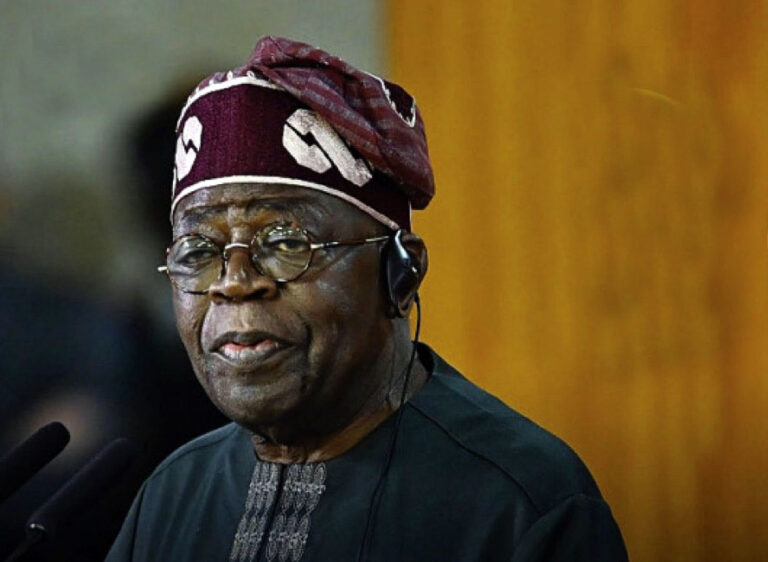
Ironically, the ruling party has handed its opponents a treasure trove of scandals with which to prosecute an electoral campaign. However, those opponents appear too consumed by their own internal battles to seize the opportunity.
The ADC, once the most-watched opposition platform after key figures adopted it as a coalition vehicle against President Tinubu, now faces factional disputes, a disputed presidential primary, Peter Obi’s dramatic exit, and deep questions about whether its biggest challenge is no longer visibility but credibility. Its fate, in fact, hangs in the courts, waiting for judicial pronouncements to determine whether it has a legitimate leadership at all.
The PDP, meanwhile, produced not one but two presidential candidates—the Tanimu Turaki-backed Goodluck Jonathan and the Wike-sponsored Sandy Onor—a spectacle that confirms what many long suspected: the PDP is not one party heading into 2027, but two competing power blocs wearing one badge. A party that once prided itself on being Nigeria’s largest political machine now finds itself fighting for coherence before it can even begin fighting for votes.
The NDC, for its part, has seen its crisis deepen between the party’s founder, Seriake Dickson, and sections of the Obidient Movement, with Dickson publicly criticising the group—a quarrel so public and so bitter that it required a face-to-face meeting recently to stop the bleeding. Even beyond immediate reconciliation, the NDC must still resolve outstanding appeals, manage aggrieved aspirants, and strengthen internal cohesion before candidate lists are finally settled.
Against this backdrop of organised chaos, observers agree that ahead the 2027 elections, the SDP has done something almost radical in Nigerian politics: It conducted a clean, uncontested, consensus-driven presidential primary in Bauchi, with delegates from all 36 states and the FCT unanimously affirming Prince Adewole Adebayo as its flagbearer, in full compliance with the Electoral Act and INEC guidelines. No faction. No court case. No parallel convention. No aggrieved aspirant storming out of a hotel ballroom to announce a rival executive. Just order.
That alone may not sound revolutionary, but in the context of Nigerian politics, where internal party disputes routinely end in prolonged litigation and electoral uncertainty, such organisational discipline deserves attention.
Other News
Political pundits are however of of the view that orderly conduct alone does not win elections in Nigeria, and the SDP eggheads agree. They insist that what makes the party’s positioning genuinely interesting—and what the political class would do well not to dismiss—is that its presidential candidate comes carrying something more durable than a coalition of grievances. According to them, he comes carrying an ideology. Essentially Adewole Adebayo has been unambiguous about his political philosophy: “Nigeria is not a private company. Nigeria belongs to Nigerians.” He has consistently argued that the country’s resources must benefit the people rather than a privileged few, and that government should be anchored on social welfare, justice, accountability, productivity and national development. These are however, not entirely new words in Nigerian political lexicon. Politicians have spoken similar language before. The SDP says what distinguishes its message is its insistence that these objectives should not depend on the goodwill of a leader but on strict obedience to the Constitution. It cites that as its boldest proposition. According to party chieftains, Nigerians should to think less about personalities and more about institutions. This aligns with Adebayo’s political thoughts: He has repeatedly warned that Nigeria is drifting dangerously towards what he describes as “one-man rule,” arguing that democracy can only survive when political parties, institutions and citizens are allowed to function freely. He has pointed out that even members of the ruling APC have increasingly become victims of internal suppression. “A president who governs through constitutional restraint rather than personal discretion would represent not merely a change of administration but a profound change in political culture”, Adebayo stressed.
The party emphasizes that its policy proposals reflect that philosophy, more so as its presidential candidate has promised a nationwide jobs and public works programme capable of stimulating employment while rebuilding infrastructure.
He has also pledged free quality education for every Nigerian child and a healthcare system robust enough that the country’s highest public officials would no longer need to seek routine medical treatment abroad. According to the SDP, these are presented not as acts of generosity but as constitutional responsibilities that every government owes its citizens.
Whether Nigerians believe those promises is another question entirely. But unlike campaigns built primarily on personalities, ethnic arithmetic or elite alliances, it does appear that the SDP is attempting to build its appeal around governance itself.
Naturally, the party remains the underdog. It lacks the financial machinery of the APC, the historic nationwide brand of the PDP, and the emotional mobilisation that continues to energise much of the Obidient Movement. Electoral success in Nigeria, political analysts argue, often depends not only on ideas but on organisational reach, funding and coalition-building.
Moreover, a fragmented opposition landscape could once again split the anti-APC vote and hand President Tinubu a second term by default, irrespective of the internal discipline of any individual opposition party. That remains the SDP’s greatest structural challenge—not necessarily the strength of the ruling party, but the inability of the opposition to present a united electoral alternative.
But SDP partisans say something quietly persuasive about a party that has chosen, in the middle of a political season defined by confusion and conflict, to model the very qualities it claims it would bring into government: discipline, constitutionalism, predictability and calm.
Its National Chairman,Professor Sadiq Umar Abubakar Gombe has put it plainly: “We want to assure Nigerians that the SDP will provide the needed alternative platform for the rescue mission of this country.”
Whether Nigerians choose to board that platform is another matter entirely.
But as every other major political party limps toward 2027 trailing the debris of its own internal crises, the SDP appears to be walking into the contest quietly, steadily and without apology, carrying, according to its leadership, its most potent campaign symbol—not a coalition agreement, not a political godfather, not an endless courtroom injunction—but the Nigerian Constitution itself.
In a political season dominated by noise, observers note that, that may prove to be the loudest statement of all.