Follow Us on Google

By John Ogunsemore
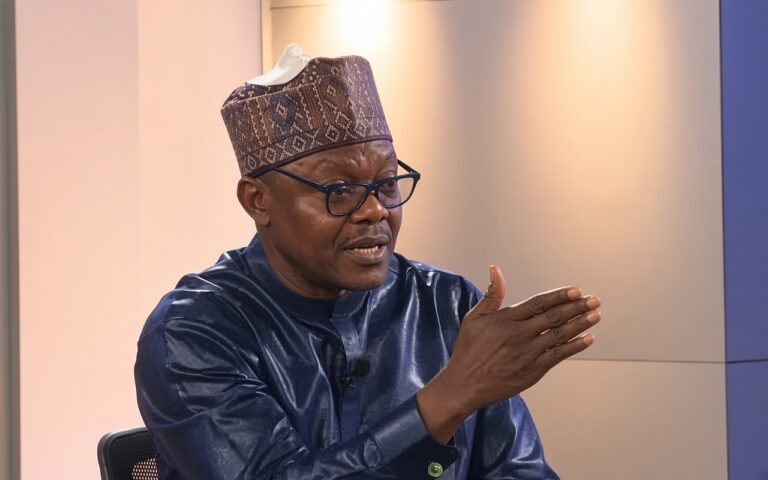
Former Deputy Governor of Central Bank of Nigeria (CBN), Dr. Kingsley Moghalu said the timing of ambassadorial appointments by the Bola Tinubu administration does not portray serious or responsible governance.
Moghalu, a former senior United Nations official, said this in a Facebook post on Monday.
He was reacting to a report by a national daily indicating many of the ambassador-designates faced the prospect of being rejected by host countries due to time constraints on their tenure.
In December 2025, the Senate confirmed 67 ambassadorial nominees forwarded by President Tinubu.
The report quoted senior presidency and foreign service officials as disclosing that the Ministry of Foreign Affairs was grappling with the challenge of securing agrément, the formal consent of receiving states, for the ambassador-designates.
The officials said several countries were insisting that ambassadors have a minimum tenured period of a year or two tied to the life of the sending country’s administration.
Moghalu said, “If true (and such concern would be logical based on standard diplomatic practice), this should not be a surprise.
“To be announcing ambassadorial appointments nearly a year to the end of an elected government’s tenure, when the practice is that receiving countries must issue a formal ‘agrement’, a formal decision by the receiving country to accept credentials from the individual named as Ambassador – a process that takes several weeks to months at the earliest- does not indicate serious and responsible governance.
Other News
“Even if not publicly stated, receiving countries will whisper their unease through various channels.”
Moghalu said for Nigeria to be in such a situation is bad for the image of the nation “once regarded as a medium power in world politics and the undisputed numero uno in Africa”.
Moghalu queried the rationale behind recalling the ambassadors appointed by the Buhari administration without timely replacements.
He said, “Our political leaders, most of them not famous for deep thinking or particularly knowledgeable about governance and diplomatic practices, and existing as we do in our own parallel universe in Nigeria in which we assume the rest of the world functions the way we do, or don’t , are not sensitive enough to these kinds of things.
“The result is that our country loses out both on substance (e.g. the diplomatic lacuna in strategic capitals like Washington DC which contributed without question to the US military intervention against terrorists in Nigeria), and then brand-wise.
“If the Nigerian leader did not consider the appointment of Ambassadors in a timely manner important, as obviously was the case, then he should have allowed those appointed by his predecessor to remain at post for his first term of office.
“By recalling the ambassadors in 2023, Tinubu left a dangerous lacuna that no leader conversant in statecraft should expose his or her country to. We have all now seen that there are limits to the prioritization of political buccaneering over hands-on governance and statecraft.
“The question is: have we learnt any lessons? Although the ambassadorial list has some decent people, the calibre and quality of several ambassadorial nominees range from the pedestrian to the ridiculous. This politicization of governance, in which political considerations are the overriding motive behind most decisions by a government, has led to the death of merit in the governance of Nigeria. We all are the losers.”