Follow Us on Google
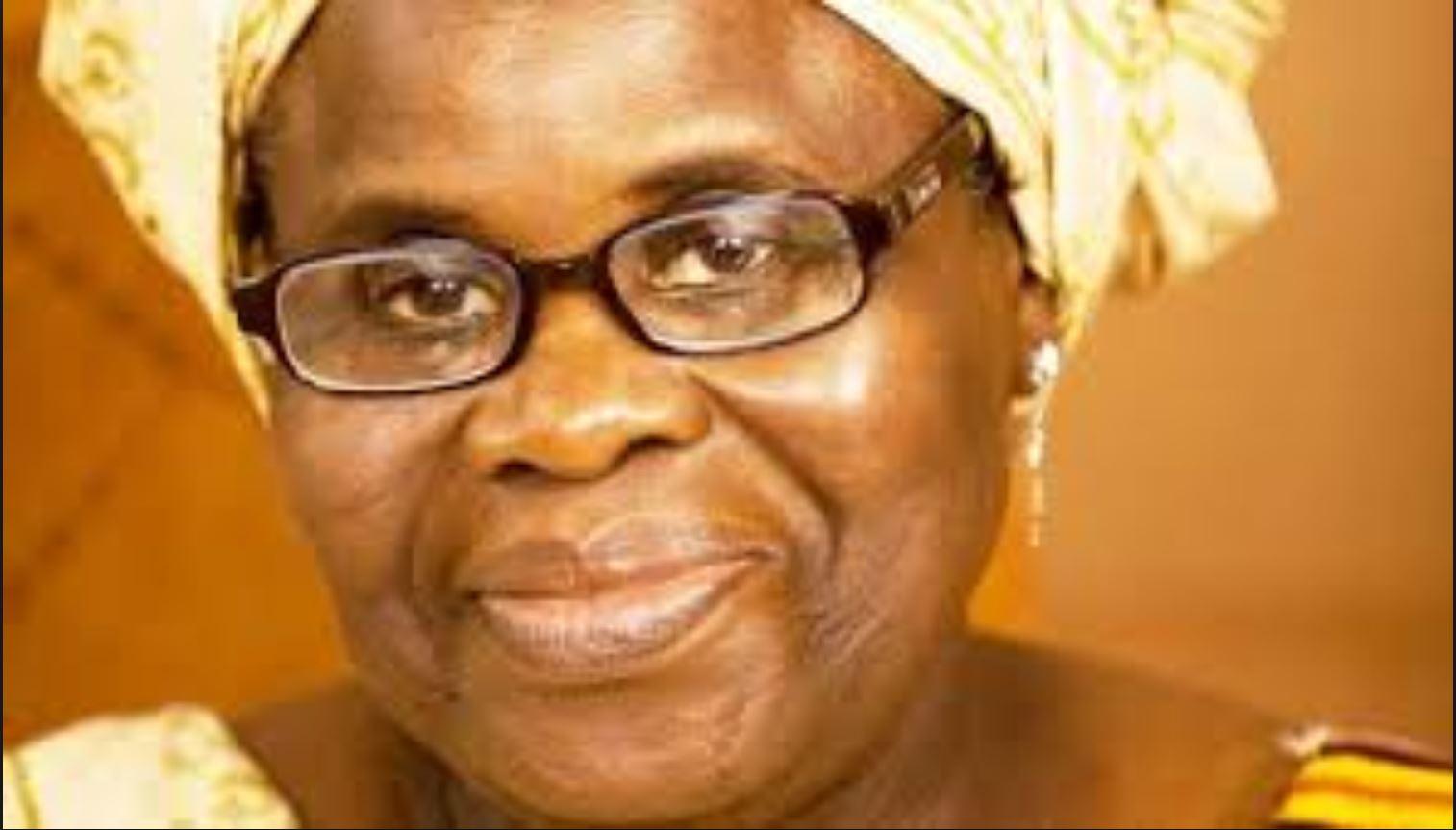
Relevant stakeholders have been called upon to make meaningful efforts in conferring enduring fame upon Africa’s literary giants and other trailblazers.
This call was made by Ghana’s former Minister of Information and founder of the African University College of Communications, Kojo Yankah, during the last edition of the Toyin Falola Interview Series specially held in celebration of Africa’s first female published dramatist, Ama Ata Aidoo who passed on in May this year.
While eulogizing the late dramatist and eminent writer, Yankah noted that “We lose a sense of who our writers are not too long after they are dead. We at the African University College of Communications decided on the 75th anniversary birthday of Ama Ata Aidoo to establish a centre of creative writing and named it after her. We did this in 2017; it has been one of the most impactful centres at the university. Since its establishment, over 4000 students have participated in the activities of the Ama Ata Aidoo centre. The director of the centre has produced four anthologies.
“I met her on many occasions. It is important that we keep the memories of our writers. We need to find centres or establish many where students can go and study about them. We are working on the Pan-African heritage world museum in Ghana where we will have a literary section.”
Aidoo was born on March 23, 1942, in Abeadzi Kyiakor, near Saltpond, in the Central Region of Ghana. Aidoo was raised in a Fante royal household, the daughter of Nana Yaw Fama, chief of Abeadzi Kyiakor, and Maame Abasema. Her grandfather was murdered by neocolonialists, which brought her father’s attention to the importance of educating the children and families of the village on the history and events of the era. This led him to open up the first school in their village and influenced Aidoo to attend Wesley Girls’ High School, where she first decided she wanted to be a writer.
Philanthropy professional, Dr. Akwasi Aidoo, particularly referenced Ata Aidoo’s insistence on closing the political and socioeconomic divides which have long characterized Ghana’s realities. “I first met her in 1966 when I was in secondary school preparing for my GCE O’ Level, and her book, The Dilemma of a Ghost, had just come out. Many of us who were studying literature at that time in secondary school literally memorised the book. I met her at Lagon. She had just completed her first degree by the way. I told her that the book she had just published was so meaningful, speaking to the imperative of cross-cultural bridging and bonding. She told me that she was glad I read the book. She said what we needed to do in Ghana was to close the political divides, come together, understand each other across ethnic groups,” he recalled.
Egyptian author, Ashraf Aboul-Yazid did a detailed comparative analysis of the huge literary contributions of Aidoo. According to him, ““The relationship between the East and West, and the conflict between Eastern values and Western values, have been, and will remain, a subject of questioning, research, and a theme that stories, plays, novels, and travel literature deal with. Perhaps I could start with the year 1938, that is 85 years ago, when Egyptian writer Tawfiq al-Hakim published his play ‘A Sparrow from the East’. He embodied part of his autobiography, in addition to his expected handling of the clash between East and West in more than one aspect.
“For Tawfiq al-Hakim, the West was France or Paris in particular, which is self-evident, because the relationship with the other begins with the former coloniser. We see the same theme after three decades in the novel by Sudanese writer Tayeb Sali’s Season of Migration which was published in Hewar magazine in 1966, before being published as an individual book in Beirut, in the same year, but Tayeb Saleh chooses another coloniser: Britain.
“While the mentioned above authors were all men, who travelled to the West, and narrated their experiences, we have a different situation that is the west is coming to the east; the north is living in south in Ama Ata Aidoo’s play, The Dilemma of a Ghost published in 1965, which is considered one of Ghana’s first and most influential postcolonial literary works that followed Ghana’s independence from the British colonisation in 1957. The play came out to light in a critical period in which the postcolonial Ghanaian identity was being formed on all levels: psychological, social, political, etc. Some critics consider that its exceptional importance in the history of Ghana in particular and Africa at large. Though Ghana, as a historical fact, was not the first African nation to get its independence, both Egypt of Tawfiq al-Hakim and Sudan of Tayeb Salih preceded it in 1956, its liberation from the British imperialism was a landmark in the history of the whole continent.
“As such, the emergence of the new nation-state of Ghana was at the centre of attention of all those concerned with the historical conflict between colonialism and anti-colonialism, the West and the East, and tradition and modernity. In other words, Ghana has become a major field of postcolonial studies.
“I see Ghanaian writer Ama Ata Aidoo an outspoken woman who resists and subverts traditional literary boundaries. Aidoo’s long, varied and prolific literary career publishing poems, plays, short stories, essays and novels—garnered much attention from critics and after teaching fir several years at various institutions in Africa and the USA, earned the respect and recognition of the African American writer, Alice Walker.
“Aidoo advances the complex lives of women who act in contradictory ways haunted by African traditions, but caught up in the disintegration of postcolonial Africa. She is just one of the many female voices that urgently needed to be heard after being silenced for so long. Aidoo’s recurring themes are, ‘marriage, motherhood, emotional and economic dependence, women’s education, their political and economic marginalisation, and resistance to oppression’. With an unconscious Western feminist agenda always in mind, Aidoo insists that she did not learn her notions of feminism outside of Africa, and that her vocal women simply come from her Akan-Aidoo side.”
Others such as Dr. Ogaga Ifowodo, Bisi Adjapon, Professor Abena Busia, Professor Mofola Ajayi, among others celebrated the late writer. Oswald Okaitei, a multi-award-winning Ghanaian poet, spoken word artiste, playwright, storyteller and creative artpreneur, gave a rousing poetic performance in honor of Aidoo.
Audience was made up of participants from Ghana, Egypt, Tunisia, Morocco, Kenya, South Africa, Uganda, England, Nigeria, among many other countries. The interaction was streamed across all social media platforms, television and radio stations in many parts of the world.