Follow Us on Google
Every nation is a reflection of how it treats its children
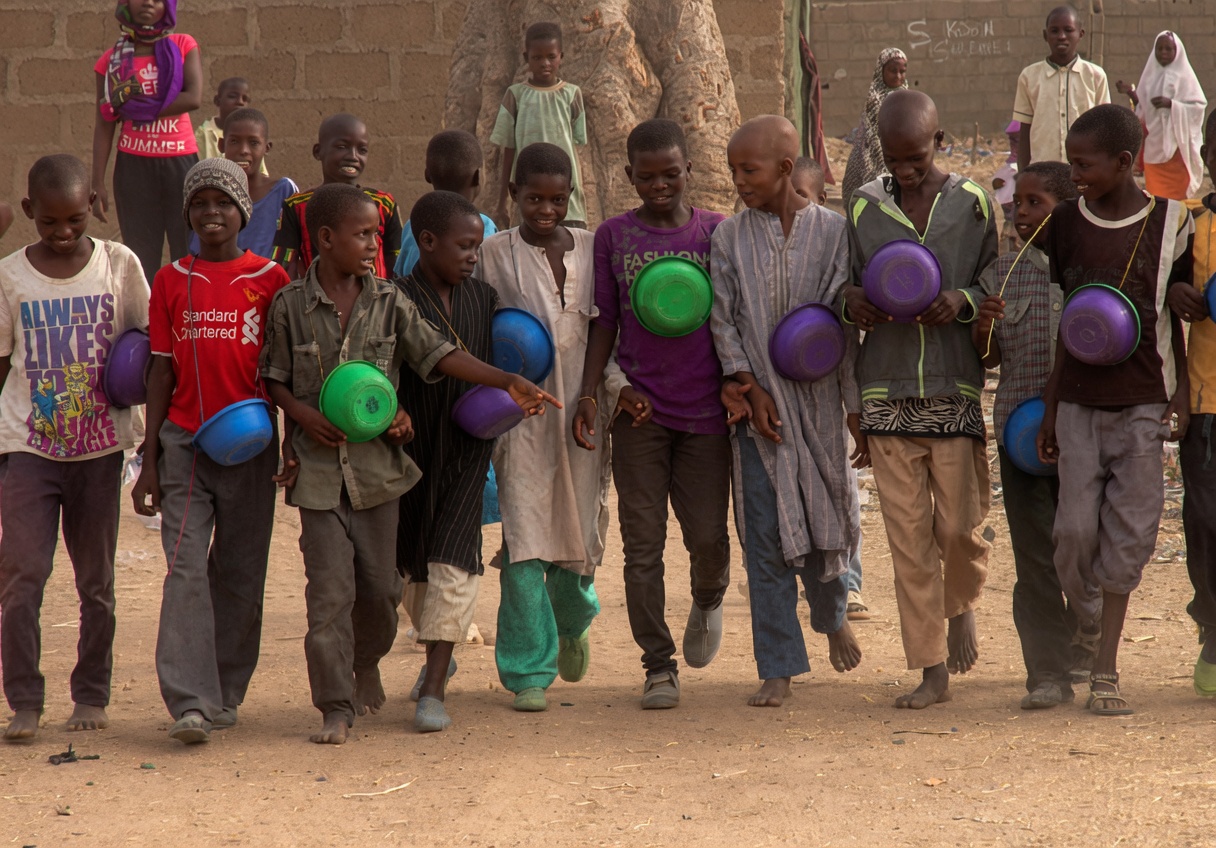
When children are found in classrooms, a nation is preparing for tomorrow. When they are found in laboratories, workshops and vocational centres, a nation is investing in prosperity. But when thousands of children roam the streets from dawn till dusk, sleeping under bridges, scavenging for leftovers at restaurants, motor parks and drinking joints, begging for survival, and growing up without education, parental care or hope, the future itself is under threat.
Northern Nigeria is today confronted by one of its greatest self-inflicted crises: the almajiri system.
For decades, the system was regarded as a cultural and religious method of Qur’anic education. In its original form, it produced respected Islamic scholars under the direct care and supervision of teachers and communities. But over the years, that noble tradition has been eroded by poverty, population growth, weak governance and parental neglect. What remains in many places is a humanitarian emergency.
Governor Abdullahi Sule of Nasarawa State deserves commendation for saying publicly what many leaders discuss only in private. Speaking at the Summit on Enhancing Human Capital Development in Northern Nigeria in Abuja, he described the Almajiri system as one of the major contributors to the alarming number of out-of-school children and a significant driver of insecurity in the region.
His words were not merely political. They reflected a painful reality that confronts every major city in Northern Nigeria.
Walk through the streets of Lafia, Kano, Kaduna, Sokoto, Maiduguri, Katsina or Gusau. The evidence is impossible to ignore. Young boys wander through markets, motor parks, hotels and food stalls searching for scraps to eat. Some sleep in abandoned buildings. Others spend their nights in open spaces, exposed to hunger, exploitation, disease and criminal influence. Most of these children did not choose this life.
They are products of circumstances created by adults: parents overwhelmed by poverty, communities struggling with unemployment, and governments that have failed to build an educational system capable of protecting every child.
Children who are denied education, family care and opportunity become easy targets for exploitation. Criminal gangs, violent extremists and other unscrupulous individuals often prey on vulnerable youths who have little protection or hope. This is why the Almajiri crisis should not be viewed simply as an educational challenge; it is also a security, economic and humanitarian emergency.
Nigeria has witnessed the consequences of ignoring millions of vulnerable young people. Across parts of the North, insecurity continues to undermine farming, business, education and investment. While insecurity has many causes, including poverty, unemployment, weak institutions and organised crime, the continued existence of millions of out-of-school children increases the pool of vulnerable youths who may be recruited or exploited by criminal networks.
Former President Goodluck Jonathan recognised the urgency of this challenge. His administration established Almajiri Model Schools across Nigeria to integrate Qur’anic learning with formal education. The vision was simple but ambitious: preserve Islamic education while ensuring that children also acquire literacy, numeracy, vocational skills and the knowledge required to compete in a modern economy.
Unfortunately, many of those schools failed to achieve their intended impact because of changes in government, inadequate funding and inconsistent implementation. Rather than becoming centres of educational transformation, many were abandoned, underutilised or left without sustained support.
Nigeria cannot afford another cycle of good intentions followed by neglect.
Other News
The Constitution already recognises education as a national objective, yet millions of children remain outside the classroom. It is time for stronger legal guarantees that make every child’s access to basic education enforceable in practice. Every level of government should be held accountable for ensuring that no child is left on the streets without education or access to skills training.
This is why Governor Sule’s proposal deserves serious national attention. Beyond ending the present form of the Almajiri system, the National Assembly should work with Northern governors, traditional institutions, religious leaders and civil society to strengthen laws and policies that guarantee compulsory education while respecting religious instruction.
Such reforms must not criminalise poverty or punish vulnerable families. Instead, they should provide practical support through quality schools, trained teachers, school feeding programmes, healthcare, vocational training and social protection for struggling households.
The North has always produced great scholars, administrators, entrepreneurs and professionals. There is no reason why millions of its children should remain trapped in cycles of begging and exclusion.
This is no longer a Northern problem alone. Children who grow up without education or opportunity are part of Nigeria’s future, wherever they eventually live. If they are neglected today, the social and economic costs will be borne by the entire federation tomorrow. History will judge today’s leaders not by the speeches they deliver but by the children they rescue.
The debate must now move beyond sympathy. It must become action.
Northern governors, the National Assembly, traditional rulers, Islamic scholars, parents and communities must forge a historic consensus that every child deserves both sound religious instruction and quality modern education.
The streets should never become classrooms. Motor parks should never become playgrounds. Begging should never become a child’s occupation.
Every child deserves a teacher instead of hunger, a classroom instead of the streets, a skill instead of despair, and hope instead of abandonment.
If Northern Nigeria can reclaim its children today, it will also reclaim its future. If it fails, the consequences will extend far beyond one region. They will shape the destiny of the entire nation.
The time for debate is ending. The time for rescue should begin.