Follow Us on Google
By Chinenye Anuforo
[email protected]
Nigeria’s recent joint security operation with the United States is being read in technology and infrastructure investment circles as more than a counter-terrorism measure.
For investors whose capital underwrites telecom networks, data centres, payment rails and logistics platforms, the action signaled a strengthening of the operating environment that digital businesses depend on.
The Christmas Day operation in Sokoto was intelligence-led and tightly targeted, carried out by Nigerian forces with U.S. support. The government and other stakeholders were quick to stress that it did not mark an escalation into conflict, but rather a reinforcement of stability. That distinction matters to technology investors, who tend to price risk around predictability, uptime and asset protection rather than military optics.
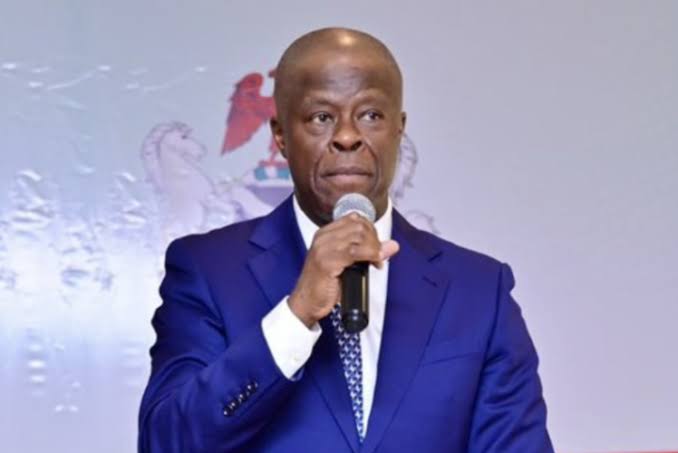
“Nigeria is not at war with itself, nor with any nation,” Finance Minister and Coordinating Minister of the Economy Wale Edun said in a December 28 statement.
“What Nigeria is decisively confronting alongside trusted international partners is terrorism”, he explained.
For technology and infrastructure investors, the message was calibrated: security actions that protect productive regions and critical networks are pro-growth, not destabilising.
In a digital economy, security extends far beyond borders and battlefields. Telecom towers, fibre-optic routes, data centres, payment networks and last-mile logistics all rely on physical safety and institutional stability. Disruptions linked to insecurity translate directly into network downtime, higher operating costs and delayed expansion.
By framing the operation as part of a broader reform agenda under President Bola Ahmed Tinubu, the government positioned security as inseparable from economic and digital stability. Edun highlighted this link, noting that safeguarding Nigerians also safeguards investment.
For telecom operators rolling out broadband, fintech companies expanding agent networks, and cloud or colocation providers assessing regional sites, improved security conditions lower long-term risk and strengthen the case for sustained capital deployment.
Nigeria’s improving macroeconomic indicators add context to why security developments are resonating with technology investors. Gross domestic product grew 4.23 per cent in the second quarter of 2025 and 3.98 per cent in the third, with authorities projecting a stronger fourth quarter. Inflation has slowed for seven consecutive periods and is now below 15 per cent, easing pressure on businesses and consumers alike.
International rating agencies have taken note. Moody’s, Fitch and S&P Global Ratings all upgraded Nigeria in 2025, citing improved policy credibility and fiscal discipline.
For tech investors assessing currency exposure, regulatory risk and long-term returns, such upgrades serve as independent validation of reform traction.
Nigeria’s capital markets, increasingly reliant on digital trading systems and data transparency, have reflected the shift in sentiment. The Nigerian Exchange Group emerged in 2025 as one of Africa’s strongest performers, despite global uncertainty.
By December 24, the NGX All-Share Index had gained nearly 49.2 per cent for the year. Equity turnover more than doubled year-on-year, according to the Exchange’s year-end review, highlighting growing engagement with Nigeria’s market infrastructure.
Domestic investors accounted for roughly 79–80 per cent of transaction value, while foreign participation, at about 20–21 per cent, showed a modest but meaningful recovery. Telecommunications, alongside banking, consumer goods and industrials, led market gains, an indication that investors see resilience in sectors tied to digital connectivity and services.
Foreign portfolio flows are returning cautiously, constrained by familiar concerns around exchange-rate dynamics, tax clarity and policy consistency. Yet for technology and infrastructure investors with longer time horizons, the alignment of security cooperation, macroeconomic reform and market performance points to a more coherent risk narrative.
For policymakers, the challenge is sustaining that alignment. For investors, the takeaway is clearer: security in Nigeria is increasingly being treated as economic infrastructure, essential to protecting data, networks and capital.
“Nigeria remains open for business, anchored in peace, and firmly focused on the future,” Edun said.
As markets look toward 2026, Nigeria is asking technology and infrastructure investors to read its security actions not as warning signals, but as reassurance evidence of a state willing to confront risk directly, work with global partners, and create the stability on which digital growth depends.