Follow Us on Google
By Lawrence Agbo
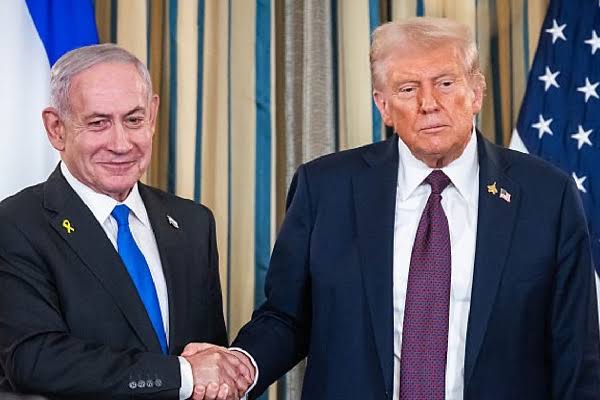
In an official congressional report delivered to President Donald Trump, US Congressman Riley M. Moore called for comprehensive action to combat violence against Christian communities in Nigeria, including the repeal of blasphemy and sharia laws in some regions.
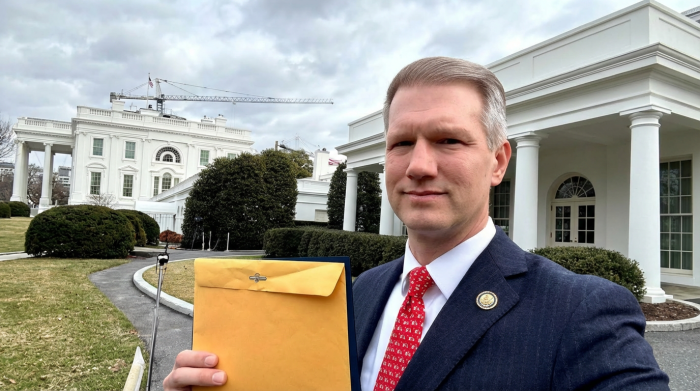
According to a press release issued in Washington, Moore joined members of the House Committees on Foreign Affairs and Appropriations at the White House to present what he called a “comprehensive report outlining concrete actions to end the persecution of Christians in Nigeria and counter growing extremist violence in the region”.
The proposal comes after Nigeria was redesignated by President Trump on October 31, 2025, as a Country of Particular Concern (CPC) under the US International Religious Freedom Act.
Moore said that the president assigned him and Tom Cole, the chairman of the House Appropriations Committee, to head a congressional inquiry into “the security challenges plaguing Nigeria and the persecution against Christian communities.”
He noted that the report was the outcome of “months of investigation, including a bipartisan congressional fact-finding trip to Nigeria, hearings with expert witnesses, consultations with religious leaders, meetings with Internally Displaced Persons, and engagement with senior Nigerian government officials”.
“I travelled on a bipartisan delegation to Nigeria and saw with my own eyes the horrific atrocities Christians face, and the instability the Nigerian government must combat,” Moore said in the statement.
To safeguard vulnerable Christian communities and dismantle jihadist networks, the report makes several proposals, one of which is the creation of a bilateral security pact between the United States and Nigeria.
Additionally, it suggests that certain US monies be withheld “pending demonstrable action by the Nigerian government to stop violence against Christians” and that people and organisations found to be involved in religious persecution be subject to penalties and visa restrictions.
One of the demands it makes is “the repeal of Sharia and blasphemy laws.” In twelve states in northern Nigeria, sharia courts coexist with secular courts, mostly for Muslim citizens’ civil and private cases.
Human rights organisations previously expressed disapproval of several provisions of blasphemy laws and expressed worries about due process in specific situations.
Other News
In addition, the paper recommends coordinating with foreign partners such as France, Hungary, and the United Kingdom. It begs for “technical support to the Nigerian government to eliminate violence from armed Fulani militias.”
According to Moore, the document “outlines concrete steps to impose accountability measures, counter radical Islamic terrorism, and lays out a plan to work in coordination and cooperation with the Nigerian government to bring security to all the people of Nigeria”.
“Our brothers and sisters in Christ have suffered in silence for too long. The world is now watching,” he added, urging Nigerian authorities to take the opportunity to strengthen bilateral relations with Washington.
For nearly ten years, Nigeria has been dealing with overlapping security problems. Parts of the northeast have been devastated by the Islamist insurgency, which is commanded by Boko Haram and its affiliate, Islamic State West Africa Province.
Armed bandits and criminal groups have conducted village raids and kidnappings in the north-west and north-central regions.
Although observers point to land conflicts, climate stresses, and inadequate local government as major contributing reasons, long-standing tensions between herders and farmers in the Middle Belt have also resulted in violent fights, frequently framed along religious lines.
Nigeria’s successive governments have denied allegations of state-sponsored persecution, arguing that insecurity impacts people of all ethnicities and religions.
Abuja has repeatedly declared that it is still dedicated to upholding religious freedom and pursuing offenders regardless of their religious affiliation.
After the report was presented, the White House has not yet announced any concrete policy initiatives.
Analysts warn that any action to impose sanctions or restrict US assistance could affect diplomatic relations between the two nations, which collaborate on commerce, regional security, and counterterrorism.