Follow Us on Google
By Bianca Iboma-Emefo
A group, Owerri Indigenous People, has petitioned President Muhammadu Buhari, the National Assembly, the United Nations, African Union, the International Criminal Court (ICC), Pope Francis and the president of the Catholic Bishops Conference, among others, over what it described as “ethnic cleansing” of the good people of Owerri, Imo State.
The group alleged that all “holy sites” that mark the customary identity of the indigenous people of Owerri were destroyed, requesting that the petition should be treated with the urgency it deserved. It presented evidence to back it’s claims.
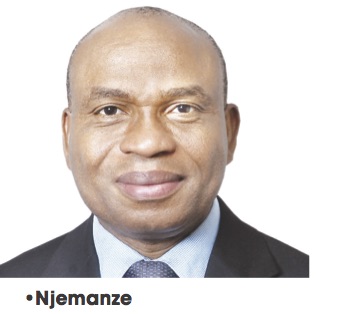
A petition signed by the leader of the group, Dr. Phillip Njemanze, said: “We, the indigenous people of Owerri, have made essential contributions to the diversity and richness of human civilization and culture, which constitute the common heritage of mankind. We, the Amawom Welfare Association, are the custodians of the ruling house of Owerri Ancient Kingdom. We are writing to draw the attention of all UN member states to the continuing violations of the rights of Indigenous People of Owerri, Imo State, Nigeria, in contravention of the United Nations Declaration on the Rights of Indigenous Peoples (61/295), 2007.
“The Owerri indigenous people have suffered from historic injustices, including colonization and dispossession of our lands, territories, and resources, which have prevented us from exercising our right to development in accordance with our own needs and interests.
“We have formed a community of people’s movement to achieve political, economic, social, and cultural progress and eliminate all types of discrimination and oppression in Nigeria. We firmly believe that giving our people the power to control the developments that affect their lands, territories, and resources will help us preserve and strengthen our institutions, cultures, and traditions.
“Moreover, it will enable us to promote our development in alignment with our aspirations and requirements. We appreciate that the UN General Assembly has urged member states to comply with and effectively implement all their obligations regarding indigenous peoples under international instruments, especially those related to human rights. The UN also encourages member states to engage in consultation and cooperation with the concerned indigenous peoples in fulfilling these obligations.
“Owerri is an urban area in Nigeria, and according to the Nigeria Land Use Act of 1978, Section 2(1)(a) and (b), land are either under the control and management of the Governor of the State with a ‘Land Use and Allocation committee’ as an advisory body, or under the control and management of the local government in which the land is located with ‘the Land Allocation
Advisory Committee’. Owerri is one of the four Municipal Local Government
Areas in Nigeria, along with Calabar, Kano, and Abuja. Under the 1999 Constitution, the municipal government is headed by the Minister of the Federal Capital Territory (FCT) in the case of the newly created Abuja Municipal Local Government Area, in all other cases, by the traditional paramount ruler of the Municipal Local Government Area.
“Therefore, the land in Owerri Municipal Area Council are under the control of the Owerri Municipal Government headed by His Royal Majesty, the Eze of Owerri. Unfortunately, the provisions of this Act have been misapplied, leading to the dispossession of the indigenous people of Owerri of their lands without regard for their aspirations and needs. The successive Federal and Imo State governments of Nigeria have misapplied these provisions to the extent that they have completely dispossessed the indigenous people of Owerri of all their ancestral lands, which were then reallocated to government officials, cronies, and land speculators, neglecting the needs of the Indigenous people of Owerri.
“These actions of the Nigerian government contravene several sections of the United Nations Declaration on the Rights of Indigenous Peoples.
“The forceful acquisition of Owerri community land has caused Owerri
Indigenous People to be subjected to forced assimilation and destruction of our culture, in breach of Article 8 (1) • Owerri Indigenous People have been deprived of our integrity as a distinct people, with their own cultural values, language and ethnic identities, in breach of Article 8 (2a);
• Owerri Indigenous People have been dispossessed of their lands, territories and resources, in breach of Article 8 (2b);
• Owerri Indigenous People have been forced to leave their home lands and transfer to other places and towns because of a lack of property in their home place, in breach of Article 8 (2c);
• Owerri Indigenous People have been forcefully integrated with other alien communities by virtue of the appropriation of their home land to other people, in breach of Article 8 (2d);
• Owerri Indigenous People have been demonized as ‘backward, informed, and unprogressive’ by government propaganda for claiming the right to their land, in breach of Article 8 (2e).
“As a leading member of the United Nations, Nigeria is bound to uphold the provisions of the United Nations Declaration on the Rights of Indigenous Peoples (61/295), 2007. This declaration represents a set of agreed-upon principles by the contracting states, and is generally considered to be autonomous from the domestic laws of individual countries with regard to its application and interpretation. It is important to note that international agreements embodied in conventions or treaties are considered autonomous, as the high contracting parties have agreed to be bound by their provisions, which are therefore superior to domestic legislation. Thus, any domestic legislation in conflict with the convention is deemed void.
“The United Nations Declaration on the Rights of Indigenous Peoples (61/295), 2007, under Article 41, requires that ‘organs and specialized agencies of the United Nations system and other intergovernmental organizations shall contribute to the full realization of the provisions of this Declaration through the mobilization, inter alia, of financial cooperation and technical assistance. ways and means of ensuring participation of indigenous peoples on issues affecting them shall be established’.
“We hereby request a Plan of Action, which should include the following: 1. The Office of the UN High Commissioner for Human Rights (OHCHR) should lead a UN investigative panel to examine the violations of human rights against the Owerri Indigenous People.
“The OHCHR, in collaboration with the Federal and Imo State Governments of Nigeria, should act expeditiously to protect the rights of the Owerri Indigenous People over their ancestral lands. This can be done by immediately putting an end to the Imo State Government’s dispossession of the Owerri Indigenous People’s lands. The Indigenous People of Owerri have Indigenous People of Owerri have been displaced from their ancestral lands, resulting in the destruction of their great cultural heritage. The Owerri Indigenous People should be given back their lands with the right of occupancy. The holy lands of particular interest are designated by Imo State Government as: (A) The Market Place called Eke Ukwu/Ekenwa; (B) Nkworiutara (Restoration); (C) Okpukpeikpe (Area K); (D) Mbari; (E) gb z ukwu Njemanze (3R Residential Layout); (F) Oke ha (Restoration); (G) Azu-Elu (Ekwema Residential Layout).
“The OHCHR should urge the Federal Government of Nigeria to comply with the provisions of the 1999 Constitution. The indigenous people of the ancient kingdoms in Nigeria have been subjected to breaches of their rights by the Federal Government of Nigeria. The 1999 Constitution of the Federal Republic of Nigeria establishes Owerri-Municipal, Calabar-Municipal, and Kano Municipal Local Governments as “municipal/autonomous” areas of self governance for the indigenous peoples of the pre-colonial ancient kingdoms. These kingdoms were not conquered by the British Empire during the colonial era and were granted “municipality status” in perpetuity for self-governance under an armistice agreement. The 1999 Constitution of the Federal Republic of Nigeria enshrined the concept of “municipality” after the country gained independence. The purpose was to protect the lands and cultural heritage of the indigenous people of ancient kingdoms, including Owerri municipal. “However, the Federal Government has ignored this constitutional provision and allowed the Imo State Government to unlawfully take over the rights of self-governance over the lands of the indigenous people of Owerri Municipal. According to the 1999 Constitution of the Federal Republic of Nigeria, the King of Owerri from the Njemanze Royal Dynasty is the head of Government of Owerri Municipal. The king governs alongside elected councilors of the Owerri Municipal Local Government Area (LGA). The OHCHR should act quickly to protect the human rights of the indigenous people of Owerri, their ancestral lands, and world cultural heritage sites such as Eke ukwu Owerri, Mbar, gb z Ukwu, NkwOri tara, Okpukpeikpe, and other lands affected by the current confrontation.
“The UN High Commissioner for Human Rights (OHCHR) should urge strict compliance with Article 4, which would grant the Owerri Indigenous People the right to self-determination, including the right to autonomy and self-governance in matters relating to the disposition of lands in designated special areas within the Owerri Municipal Local Government Area.
“The UN High Commissioner for Human Rights (OHCHR) should urge strict compliance with Article 19, which would require the Imo State Government to consult and cooperate in good faith with the Owerri Indigenous People through their own representative institutions in order to obtain their free, prior, and informed consent before adopting and implementing legislative or administrative measures that may affect them.
“The UN High Commissioner for Human Rights (OHCHR) should urge strict compliance with Article 26(1), which would grant the Owerri Indigenous People the right to their lands, territories, and resources, which they have traditionally owned, occupied, or otherwise used or acquired. The UN High Commissioner for Human Rights (OHCHR) should urge strict compliance with Article 26(2) to enable the Indigenous People of Owerri to exercise their right to own, use, develop, and control the lands, territories, and resources they possess by virtue of traditional ownership, occupation, or use, as well as those acquired through other means.
“The UN High Commissioner for Human Rights (OHCHR) should urge strict compliance with Article 26(3), which requires the Imo State Government to legally recognize and protect the lands, territories, and resources of the Owerri
Indigenous People. This recognition should be conducted with due respect for their customs, traditions, and land tenure systems. In Owerri/Igbo tradition these lands are referred to as ALA OBI which is not sellable or transferable, and dates back to the Biblical traditions of the Jews (see 1 Kings 21:3.But Naboth said to Ahab, ‘The LORD forbid that I should give you my ancestral inheritance.
“The UN High Commissioner for Human Rights (OHCHR) should urge strict compliance with Article 27, which requires the Imo State Government to establish and implement a fair, independent, impartial, open, and transparent process in conjunction with the Owerri Indigenous People. This process should give due recognition to the Owerri Indigenous Peoples’ laws, traditions, customs, and land tenure systems to recognize and adjudicate the rights of the people pertaining to their lands, territories, and resources, including those traditionally owned or occupied. The Owerri Indigenous People have the right to participate in this process. “The UN High Commissioner for Human Rights (OHCHR) should urge strict compliance with Article 28(1) to ensure that the Indigenous People of
Owerri are granted the right to seek redress, which may include restitution or, if that is not possible, just, fair, and equitable compensation for the lands, territories, and resources they have traditionally owned, occupied, or used, and owned or occupied. The Owerri Indigenous People have the right to participate in this process. “The UN High Commissioner for Human Rights (OHCHR) should urge strict compliance with Article 28(1) to ensure that the Indigenous People of
Owerri are granted the right to seek redress, which may include restitution or, if that is not possible, just, fair, and equitable compensation for the lands, territories, and resources they have traditionally owned, occupied, or used, and which have been confiscated, taken, occupied, used, or damaged without their free, prior, and informed consent.
“The UN High Commissioner for Human Rights (OHCHR) should also urge strict compliance with Article 28(2), which stipulates that, unless otherwise freely agreed upon by the individuals concerned, compensation should be provided in the form of lands, territories, and resources that are equal in quality, size, and legal status, or in monetary compensation or other appropriate redress.
“The World Heritage Foundation should work with other UN bodies with expertise on archeological exploration with ground penetrating radar to study the areas I have outlined as Holy Sites in Owerri cited in references [Njemanze 2021, 2022].
“We respectfully request immediate action on our petition.”