Follow Us on Google


• Say communities must shape development priorities from conception to implementation
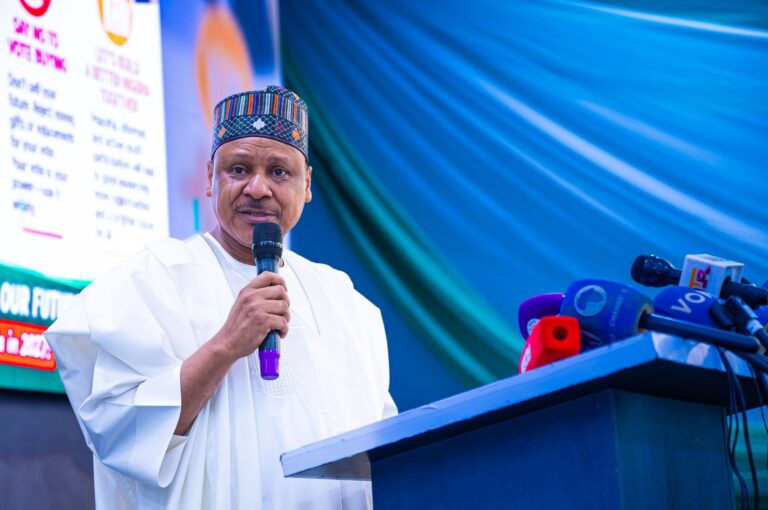
Governments must stop imposing development projects on communities and instead involve citizens in identifying their needs, setting priorities and determining how projects are implemented, Imo State Governor, Hope Uzodimma, and his Nasarawa State counterpart, Abdullahi Sule, have said.
The governors said public trust could only be sustained when citizens were actively involved in governance and could see their contributions reflected in policies, projects and service delivery.
They spoke during a panel session on “Responsible Governance and Communication: Building Trust through Community Engagement, Stakeholder Relations and Inclusive Impact” at the 2026 World Public Relations Forum in Abuja.
Uzodimma said his administration’s approach to governance was anchored on engaging stakeholders from the beginning of the decision-making process rather than presenting them with decisions already taken.
He explained that citizens and relevant groups were involved in planning, designing frameworks, developing ideas and implementing projects to ensure that government interventions reflected the actual needs of the people.
According to him, inclusive governance requires bringing different segments of society, including women, young people, persons with disabilities, students, traditional rulers, security agencies and political stakeholders,into the process.
He said his administration established an agency for persons with disabilities to ensure that their concerns were recognised and that they were not excluded from government programmes and decision-making.
Uzodimma stressed that participation must go beyond consultation, adding that citizens should be able to identify how their suggestions translate into concrete projects.
He said such an approach creates a sense of ownership among the people and strengthens confidence in government.
The governor also drew attention to the challenge posed by misinformation in the social media era, noting that information, whether true or false, could circulate rapidly and shape public perception.
He emphasised the need for strategic and transparent communication to ensure that citizens receive accurate information about government policies and activities.
On his part, Sule said development planning in Nasarawa State was based on identifying gaps and priorities with the involvement of the people, particularly in areas such as infrastructure, education and youth development.
He said citizens were not merely recipients of government projects but participants in the planning and design processes.
“They are part of the planning. They are part of the design,” Sule said, explaining that involving the people helped ensure that projects addressed their needs.
The governor said transparency and honesty were essential to building public confidence, adding that citizens should be able to assess government performance by comparing their circumstances and the level of development over time.
He noted that government policies and decisions must be guided by the law and informed by the realities and expectations of the people.
Sule said governments must work with citizens rather than assume that officials alone knew what communities needed.
In her remarks, the moderator, Ms Shreya Krishnan, Managing Director of AnitaB.org India and Chair of the Policy Advocacy Committee of UNESCO’s Women for Ethical AI in South Asia, said public trust was shaped not merely by government messaging but by citizens’ actual experiences.
She said people judged government by whether they were heard, whether decisions were explained, whether public services improved and whether authorities reached communities that needed attention.
“Public trust is shaped by more than what governments say. It is built by what citizens experience,” Krishnan said.
She challenged the governors to explain how they ensured that communication was backed by responsible decisions and tangible delivery, so that public confidence was earned through action rather than words.
In her concluding remarks, Krishnan said public trust could not be built through a single announcement or campaign, stressing that responsible communication must be reflected in how governments listen, make decisions, engage stakeholders and deliver outcomes citizens could see and experience.
She said effective public communication could not be separated from the quality of governance, adding that governments must demonstrate through their actions that citizens’ voices mattered.