Follow Us on Google
By Fred Itua and Fred Ezeh, Abuja
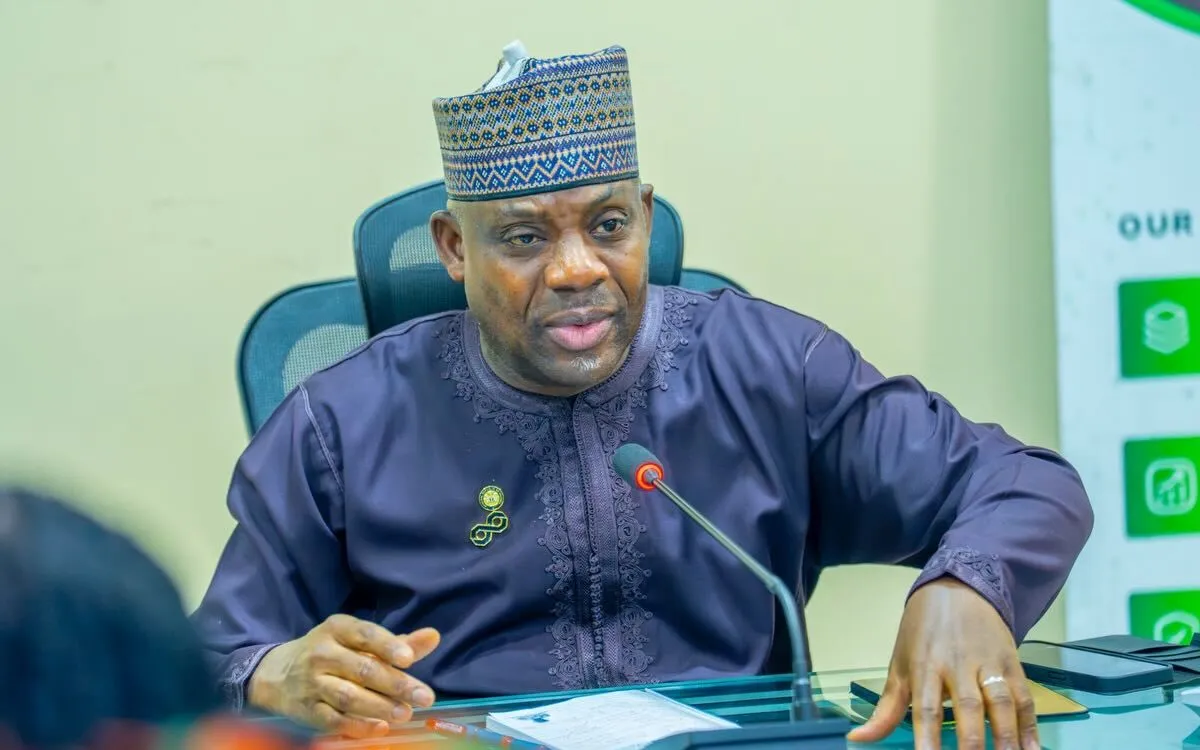
In an exclusive interview with Daily Sun, the Minister for Education, Dr Tunji Alausa, speaks on a wide range of critical issues shaping the nation’s learning landscape. Speaking on key points for emphasis, the Minister detailed the six priority areas of the Nigeria Education Sector Renewal Initiative, listed concrete achievements in technical training, medical and nursing enrolment, out-of-school children interventions, girl-child education, and national data systems, gave a forceful defence of the proposed management arrangement for King’s College, Lagos, and spoke on the state of Unity Schools in Nigeria, among other pressing matters.
You speak of education as the bedrock of society. What is the foundation of the work you are doing under President Bola Ahmed Tinubu?
Education is the bedrock of any society, and we have a president today, President Bola Ahmed Tinubu, who has produced so much in education, fervently and benevolently. You must understand one fundamental thing: if you are to give anybody a chance in life, you must educate that person. If you are to stop poverty and break the cycle of poverty, you must educate that child. And if you are to do anything where you can measure and monitor outcomes, it is about education, and it is about data.
That is why President Bola Tinubu rolled out the Agenda for Education, which is powered by the Nigerian Education Sector Renewal Initiative, anchored on six priority areas. First is expanding our agenda on TVET, which is technical and vocational education and training. Second is expanding our STEM agenda, science, technology, engineering, and mathematics. Third is our agenda to reduce the unenviable position that we are in today as the country with the highest number of out-of-school children. Fourth is our emphasis on educating the girl child as a high priority area. The fifth high priority area is data and digitalisation. And the last priority area we are focusing on is data and quality assurance. We need to quality-assure the kind of education we give our children, the quality of education these children are receiving, the teachers who teach them, and the ultimate outcomes of those teachings. I can tell you today that we have moved in a concurrent way that will surpass the target of every single part of our six high-priority areas.
Can you take us through the specific results you have achieved so far across these six priority areas?
We have moved well over one million out-of-school children back into the classroom. We have completely changed the narrative about technical and vocational education. Before we came in as a government, TVET was considered privatised and neglected, leaving youths with no skills for the present or the future. Now, the country is embracing TVET. We have a lot of young Nigerians coming in to get skilled jobs today.
When we started the TVET initiative to train Nigerians, we set up robust systems. I can report to you today that we have trained or are currently training over 250,000 young graduates across the entire country in over 1,200 skill training centres nationwide. We have also adopted totally free education across all our federal technical colleges, as well as selected state technical colleges. The only thing parents need to do is send their children to school with their pyjamas.
I can also share what we have accomplished regarding STEM expansion.
We have doubled the number of students being admitted to study medicine, pharmacy, dentistry, and nursing. When President Bola Tinubu came in, we were enrolling only 28,000 nurses in nursing schools across the country. I am happy to tell you today that although we gave ourselves a target to increase enrolment to 115,000 within two years, we exceeded that target. We are currently enrolling about 130,000 students into nursing schools across the country. Just within three short years, the shortage of nurses in the country is disappearing. You can ask anyone looking for nurses now. Our task now is to ensure we train even more. Some may travel abroad, which is fine, but we will maintain enough healthcare personnel for our own nation.
With our agenda for other medical specialties, we moved medical school intake from 5,000 to 12,000 students within three years. Our target over the next few years is to enrol 20,000, ensuring we eliminate the shortage of doctors. We are doing similar work in engineering.
Regarding out-of-school children, beyond moving one million back to school, we are embarking on an expansive, accurate data count. We have engaged the National Bureau of Statistics to conduct a general household survey on the grid, which is closest to a census in terms of specificity, sensitivity, and accuracy. I do not believe claims that we have 15 to 17 million out-of-school children. By the time we complete this counting, we estimate the figure will be around 7 to 8 million. However, even one child out of school is one too many, so we are doing everything to push forward.
On girl-child education, through one of our largest World Bank credit facilities, the Adolescent Girls Initiative for Learning and Empowerment (AGILE), we have brought over 6 million girls into school, equipping them with both formal education and digital skills.
On data and digitalisation, we have embarked on the most extensive digitalisation of an educational system in sub-Saharan Africa. Nigeria used to have the reputation of having no reliable educational data. In two years, we have built the largest education database in Africa, the Nigeria Education Data Infrastructure Platform. Using unique learner identity management, we can now monitor every child across the entire education system from primary to junior secondary and senior secondary school. We track the number of children passing their WAEC exams, entering universities, and graduating. The next phase is matching those students to jobs and guiding them away from redundant courses.
Education has changed, and AI has altered the landscape. We have carried out a comprehensive curriculum review, making it outcome-based and competency-driven so that students receive the skills required for the present and the future. We launched the National Data Infrastructure, and we want editors and the press to use it to keep both the federal and state governments honest.
You keep returning to the issue of funding and responsibility between the tiers of government. Can you explain that dynamic again?
What I have observed in this country is that all problems and blames get attributed solely to the federal government. That is incorrect. The largest portion of resources today goes to the state and local governments.
I was fortunate to get a clearer breakdown of the revenue data. People often cite raw allocation figures claiming 52 per cent goes to the federal government, 26 per cent to state governments, and 20 per cent to local governments. But if you look deeper, those are just surface figures. Before that money is distributed, the 13 per cent derivation fund is deducted for oil-producing states. Then, out of the federal government’s share, 38 per cent goes into the Consolidated Revenue Fund, 1 per cent goes to the Ecology Fund, and another 1 per cent goes to the National Mineral Resources Fund.
By the time you pull all statutory allocations out, only about 38 per cent of net revenue remains with the federal government, while 62 per cent of the total revenue goes to state and local governments. Furthermore, out of the total Value Added Tax (VAT) collected in the country, only 10 per cent goes to the federal government, while 90 per cent goes to the states and local councils. The tiers of government closest to the citizens have more money to fund basic education.
Other News
You mentioned the public education data platform. What does it show, and what should journalists do with it?
We moved quickly to make public our education data through the Nigeria Education Data Infrastructure Platform. Today, anyone can log on and check the teacher-student ratio in any state, local government, or school. You can see the exact state of infrastructure: whether a school has usable classrooms, WASH facilities, computers, or clean water. It is all public, and we need journalists to carry out investigative work using these accurate numbers. Challenge those local government chairmen and state governors who do not build enough classrooms.
Using this data for evidence-based governance has exposed major systemic gaps. Today, we have between 22 million and 28 million children enrolled in Primary 1 to Primary 6. However, by the time they reach Junior Secondary School (JSS 1 to JSS 3), that figure drops to about 12 million. That represents an 18 million child drop-off. Previously, when annual school censuses were collected manually on paper for millions of children, it took two years to collate, resulting in outdated information. Now we receive real-time data.
Where do those 18 million children go?
That is the question. The data reveals the answer: it is primarily a lack of physical infrastructure and access. Nationwide, we have about 78,000 public primary schools compared to only 18,000 public junior secondary schools. That is a ratio of roughly five to one, whereas it should be one to one. There ought to be as many secondary schools as primary schools. State and local governments must build more schools. At the federal level, we intervene through Constituency Intervention Funds, giving states 50 per cent matching allocations to rebuild, but the states and local governments are simply not doing enough. We need journalists to echo this issue.
Regarding quality assurance, we have executed the most extensive teacher professional development, welfare, and recognition scheme in the history of this country. My assurance to Daily Sun and the nation is that the reward for good work is more work. Myself and the Minister of State for Education, Professor Suwaiba Ahmad, will continue to work tirelessly to surpass the mandate given to us by President Bola Ahmed Tinubu, which is ensuring every Nigerian gets quality education. The status quo is not the solution. If we keep doing the same thing, we will keep getting the same poor results. We are transforming the system, even though we are facing serious resistance.
You mentioned resistance, particularly around Unity Schools and King’s College. Please take us through that fully.
It concerns King’s College and our general network of Unity Schools. The original premise behind Unity Schools is obsolete. Decades ago, a parent living in Lagos could comfortably send a child to school in Sokoto or Ife without safety concerns. Today, parents worry about sending their children across states. The security context has changed, and we must face reality.
Furthermore, private education has expanded rapidly, taking in more students, while government investment in public school infrastructure has lagged for decades, leaving them dilapidated. When I visited King’s College about a year and eight months ago, I wept because of the total degeneration. I went to the hostels, and there was a foul stench from the bathrooms. The dormitories looked like dungeons, and the cafeteria felt like a place where slaves were fed. The school had been without electricity for nine months on the morning I visited.
Classrooms were like landfill pits, filled with heaps of uncleaned garbage across multiple rooms. I went to the science laboratory at 10:00 a.m., and it was completely dark. When I asked the teacher how students could learn in such conditions without light to see the board, he had no answer. It was a complete mess in an institution meant to train national leaders.
The King’s College Old Boys’ Association offered to step in and manage the school. They want to invest their own money to restore the college to its past glory, while guaranteeing that admissions remain open to pupils from every part of the country, with no fee increases. Yet, the Parent-Teacher Association (PTA) is fighting the government over this progressive plan.
You keep coming back to the PTA and the unions. What exactly is happening there?
In some of these unity schools in Lagos, you find individuals who have been employed as PTA teachers for 27 years, earning a paltry ₦60,000 a month. Meanwhile, elements within the PTA in these schools run lucrative schemes where they sell school admissions for up to ₦20 million. Some of the pupils are unsupervised, with some even involved in drug abuse, yet the unions fight to defend this compromised setup.
We have stated clearly that we are not selling government properties. The alumni want to invest non-profit capital, maintain free or low-cost tuition, raise teacher salaries, and restore high academic standards. We ought to have public schools capable of training a pipeline of leaders, similar to Eton College in England. We cannot continue with the present decay, yet I am being vilified for taking a stand. I will continue to resist these corrupt interests because the past generation provided us with decent public education, and we owe the same to today’s youth. When I attended medical school, we had 24-hour electricity, good memories, and a strong attachment to the country because of the quality education provided to us. We cannot say the same for children in public schools today.
The unions have become so corrupted that their true interests are unclear. We assured them that staff welfare will be protected. At King’s College, out of about 120 academic staff, 57 are federal civil servants and 63 are PTA-employed staff. We pledged to absorb and accommodate everyone according to their grade without transferring them out of state.
Despite these assurances, the PTA went as far as hiring a prominent senior advocate to take the federal government to court, agreeing to pay legal fees ranging from N100 million to N150 million. Where is a PTA getting N150 million for legal fees if not from running criminal enterprises across our schools? They are the ones renting protesters to block administrative initiatives.
We are not privatising King’s College, nor are we applying this management model to all other unity colleges. This is a unique intervention for an institution where the alumni offered a workable solution after 20 years of neglect.
The Ministry of Education lacks the capital to fix all unity schools immediately. If I had ₦1 trillion today, it still would not be enough to rehabilitate all unity schools nationwide. Even if I secure ₦20 billion or N24 billion from World Bank credits for school rehabilitation, that money must be shared across all 36 states and geopolitical zones. Renovating the unity schools in Lagos alone would cost nearly N24 billion, while the entire South-West would require almost ₦40 billion.
Partnering with alumni networks where feasible is the morally right and practical choice. I wanted to share my side of the story directly so the public understands the truth. I appreciate Daily Sun for its balanced and robust coverage, and I thank the management for this profound opportunity to outline our vision.