Follow Us on Google
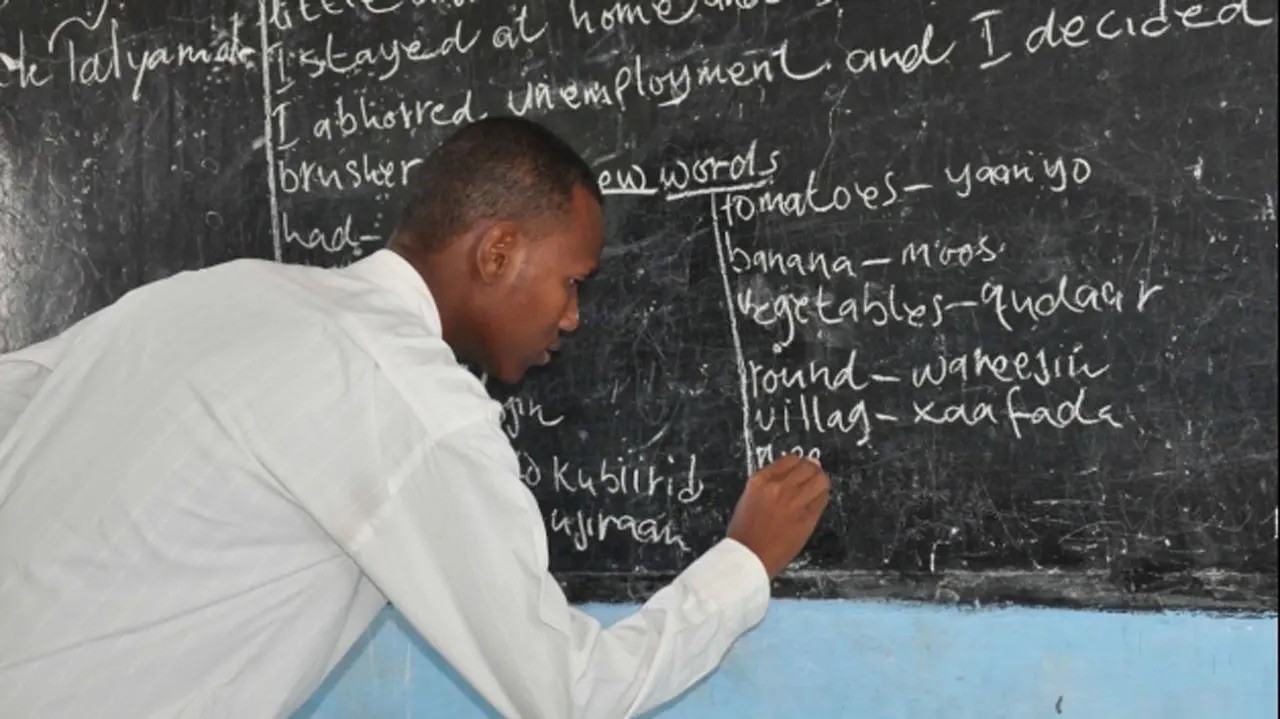
A new report has exposed a disturbing teacher shortage in the nation’s public primary schools. According to data from the Ministry of Education’s Digital Nigeria Education Management Information System, only 592,077 teachers serve 31,827,244 learners. This results in a national teacher-learner average of one teacher to 53.8 learners. In other words, this translates to one teacher serving almost 54 learners in Nigerian public primary schools.
The survey, which covered 108,016 public schools, with only 84,177 schools or 77.9 per cent that submitted their data, revealed physical infrastructure challenge in these schools. The survey also indicated that 592,077 teachers are responsible for learners using 394,836 classrooms. This reveals a national learner-classroom ratio of 60.1 to one.
The report came on the heels of the alarm raised by the Nigerian Union of Teachers (NUT) over shortage of qualified teachers in public schools. The President of NUT, Comrade Audu Amba, admitted that the situation was alarming, citing a Universal Basic Education Commission survey, which identified a shortage of 194,876 teachers in public primary schools across the country. The census also recorded a learner-to-school ratio of 296.2, indicating that the average public school caters for almost 300 learners.
The worrisome statistics clearly underscore the teacher shortage in Nigeria’s public schools. The teacher shortage varies from one state to another. For instance, in Kano and Katsina states, the teacher crisis is substantially higher. While the teacher/learner ratio is one to 88 in Kano, it is one to 87.4 in Katsina. Kano State had the highest number of learners in the data with 5,226,239, with learner/classroom ratio at 91.7 to one.
The learner/classroom ratio for Katsina State stood higher at 107 to one. Imo State recorded 1,243,543 learners, with a learner-teacher ratio of 82.2:1, and a learner-classroom ratio of 75.7:1. Other Nigerian states with ratios above 60 learners per teacher, according to the data, include Jigawa with 72.8:1; Kaduna, 72.7:1; Abia, 72:1; Bauchi, 69.7:1; Kebbi, 63.5:1; and Borno, 59.8:1. Jigawa has 1,567,300 learners, Kaduna 2,418,712, Abia 707,382, Bauchi 1,535,858, Kebbi 956,163, and Borno 954,160. Cross River has the lowest ratio in the supplied data at 13.6 learners per teacher. Enugu follows with a 17.1:1 ratio, with 364,227 learners, and Ekiti with 18.4:1, and 286,517 learners, and so on.
We deplore the rising teacher shortage in the nation’s public primary schools and urge the state governments to rise to the challenge and employ more teachers to fill the yawning gap. The funding of education at the basic level should be given the deserved attention. Without good foundation at the basic level, it will be daunting to get it right at the secondary and tertiary levels. The governors should intentionally fund education, beginning with the primary schools.
Other News
We decry the utter neglect of primary education across the country. No nation can fully develop with dilapidated infrastructure in its primary schools, as well as alarming teacher shortage. It will be difficult for the children in our poorly funded and ill-equipped primary schools to compete with the peers in other countries.
The National Policy on Education recommends a teacher-student ratio of 1:25 for pre-primary/kindergarten, 1:35 for primary school, and 1:40 for secondary school, but we observe these provisions in the breach. Regrettably, Nigeria is also behind the UNESCO benchmark of 1:30 teacher-student ratio for optimal learning. Reports suggest that Nigeria has approximately 592,077 to 915,593 primary school teachers serving tens of millions of pupils.
The shortage of manpower in the basic education sector is almost the same with the deficit in secondary school level, where Nigeria has an estimated 912,245 secondary education teachers, according to a recent World Bank development data.
The situation is most deplorable in some states of the federation, like Kano and Katsina, where the learner-teacher ratio has dropped to about 88 learners to one teacher and 87.4 learner/teacher ratio. The state governors should not jettison the funding of public schools in the country to alumni associations.
With more funds accruing to them from Abuja, the teacher shortage and infrastructure challenge facing our public primary and secondary schools should be a thing of the past. We urge the governors to rebuild and equip our public schools as well as ensure that they are adequately staffed. The teacher shortage in these schools and infrastructure challenge should be frontally addressed forthwith.