Follow Us on Google
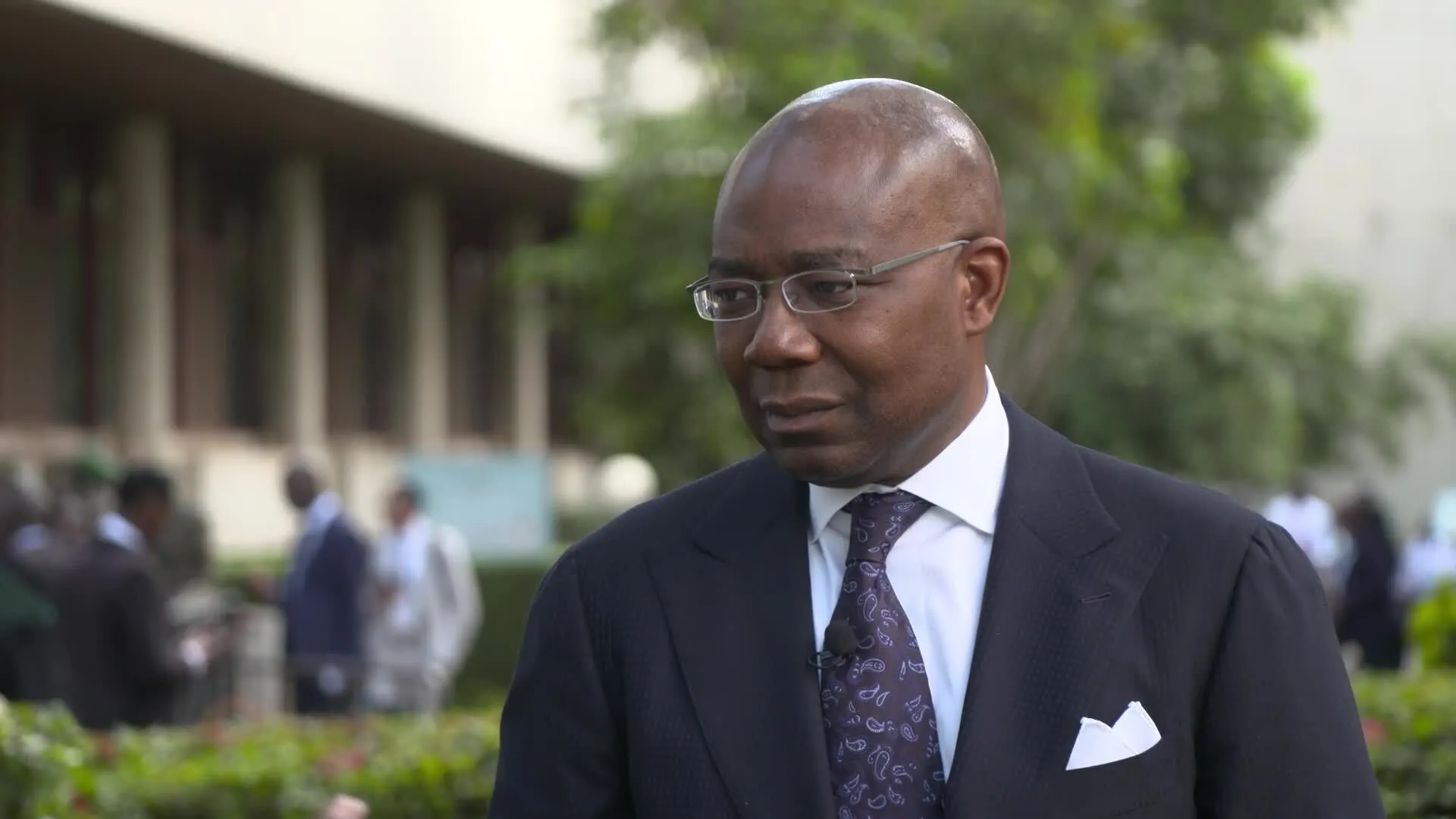
From Juliana Taiwo-Obalonye, Abuja
Delivering a paper titled “Public-Private Collaboration for Service Delivery and Innovation” at the International Civil Service Conference 2026, Aigboje Aig-Imoukhuede of the Aigboje Aig-Imoukhuede Foundation argued that the success of government must be measured by results citizens actually feel — not by policy pronouncements, meetings or long working hours.
“The true measure of government is not policy announcements, it is simply about whether citizens can actually feel the results of the work that government is doing in their life,” he told an audience of private sector and civil servants, both within and outside the country, gathered under the conference theme “Reforms, Resilience and Results.”
He listed everyday services as the yardstick: “Whether a passport is issued on time, whether the road is completed and on time, hopefully, whether the hospital functions, whether pensions are paid without distress… Whether a business can be registered without undue delay… Whether a farmer can move goods to market efficiently or has to watch the fruits of their labor literally evaporate in front of them.”
Pointing to rising public expectations driven by visible technological progress elsewhere, Aig-Imoukhuede said modern governance requires governments to “work differently”. He warned that fiscal pressures across Africa make intelligent collaboration with the private sector not optional but essential. “The question is no longer whether or not government should collaborate with the private sector. The real question is, how can government collaborate intelligently, transparently, and effectively while preserving public trust and public property,” he said.
Aig-Imoukhuede stressed the centrality of the civil service in converting political priorities into operational realities. “The civil service remains the engine room of the Nigerian state. Politicians may define priority, but the civil service converts the national ambition into an administrative reality,” he said, adding a blunt forecast: “If the civil service is effective, Nigeria moves and Africa move. If the civil service is slow, fragmented, and overwhelmed, Nigeria slows down, or in other words, Africa drops down.”
He highlighted the complementary strengths of each sector: “The private sector brings capabilities that government may struggle to build quickly on its own: capital, technology, execution speed, project management, innovation, customer experience design and performance measurement. Government brings legitimacy, scale, continuity and responsibility for the public interest.” He insisted successful countries are those where the sectors “understand their distinct roles, but come together in harmony and play like an orchestra for the benefit of their citizens.”
Other News
Broadening the common perception of public-private partnerships beyond big infrastructure projects, Aig-Imoukhuede said more important work lies in building systems that actually function: procurement reform, digital identity, payment platforms, health logistics, tax administration, citizen service portals and public-sector capacity. “Public-private collaboration is not only about roads and airports, it’s not only about infrastructure, it is much broader. Probably the more important part of it is about building systems that work,” he said.
He warned against confusing activity with reform: “The number of meetings held is not reformed. The number of committees established is not reformed. The number of memorandums signed is not reformed.” Instead, he urged government ownership of reform and measurable improvements in service delivery: “Success will only be what the people we serve say it is. So we must understand that, and the real question, therefore, is the service to that man or woman improve? Did the waiting time reduce? Did transparency improve? Did the leakages reduce? Did the citizens experience government differently? That is the true test of reform.”
Aig-Imoukhuede also emphasised capability transfer as a core objective of partnerships. “A good partnership takes place when that partner can literally see the other partner transforming as a result of that partnership. Knowledge systems and skills must transfer from the private sector into the public sector,” he said, citing examples of civil servants who initially struggled with technology but later were “coding and writing a system”. He added a reciprocal expectation for private firms: “Loyalty to nation, public interest, selflessness must transfer from the public sector to the private sector.”
Calling for a mindset shift within business, he argued private enterprises must view government not simply as a market or source of contracts but as “the custodian of public trust”. “The question from the private sector must not be how much can we expect from government. The real question for every company, every enterprise in Nigeria’s economy and in Africa’s economy must be how can we help solve public problems sustainably and at scale,” he said.
Concluding, Aig-Imoukhuede painted collaboration as mission-critical for national advancement: “If we do that, truly Africa and Nigeria can take its place, its pride of place as a flag bearer of progress and development in the community of nation.”
His session was moderated by Stephanie Busari of CNN.