Follow Us on Google

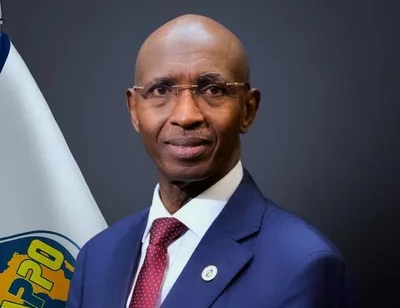
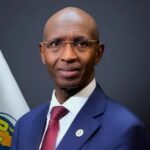
Regional Chairman for Africa of the World Energy Council, Dr Omar Farouk Ibrahim, has urged African leaders to take responsibility for the continent’s energy future by strengthening financing, developing indigenous technologies and investing in regional energy infrastructure.
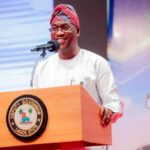
Ibrahim made the call at the 14th Anniversary Lecture of Realnews Magazine, held at the Radisson Blu Hotel, Ikeja, Lagos, on Thursday. The lecture was themed, “Geopolitical Turbulence and Energy Security: Forging Strategic Opportunities for Africa.”
He said Africa’s energy insecurity was not primarily caused by a lack of natural resources but by inadequate financial capacity, limited technological capabilities and weak market infrastructure.
According to him, the continent possesses substantial oil and gas reserves, enormous solar resources, hydropower potential, wind and geothermal energy resources, as well as critical minerals. Despite these endowments, Africa continues to account for the world’s largest energy-access deficit.
Citing the 2026 Tracking SDG 7 Report, based on 2024 data, Ibrahim said more than 560 million people in sub-Saharan Africa lacked access to electricity, while approximately 970 million had no access to clean cooking facilities.
He identified inadequate financing, limited technological capacity and underdeveloped market infrastructure as the three major obstacles preventing the continent from fully harnessing its energy potential.
The former Secretary-General of the African Petroleum Producers’ Organisation (APPO) said the organisation commissioned a study during his tenure to examine the future of the petroleum industry amid changing international financing policies, technological developments and market conditions.
He disclosed that APPO had also initiated efforts to establish an African energy bank to address funding challenges confronting the continent’s oil and gas industry.
Although the organisation was not made up of bankers, he said professionals had been engaged to drive the initiative, adding that an agreement had been signed towards establishing the institution.
Ibrahim said the proposed bank would improve African energy operators’ access to funding and reduce their dependence on external financial institutions.
He also challenged African universities to move beyond dependence on imported technologies and become centres of innovation capable of developing homegrown solutions to the continent’s energy challenges.
Recalling that he began his career as a teacher in 1981 before becoming a university lecturer, Ibrahim lamented what he described as Africa’s longstanding tendency to imitate technologies developed elsewhere.
Other News
He urged academic institutions to strengthen research, look inward and develop indigenous technologies that would support local production and industrial growth.
“Our energy transition must be a transition from energy poverty to energy prosperity, not from energy poverty to deeper deprivation,” he said.
He maintained that Africa’s energy security must be driven primarily by Africans, insisting that the continent’s challenges should be addressed through homegrown solutions and the effective utilisation of available resources.
Chairman of the occasion and Managing Director of NEDO Gas Development Company, Engr. Debo Fagbemi, commended Realnews Magazine for 14 years of professional journalism and its commitment to media excellence.
Fagbemi also paid tribute to the magazine’s publisher, Maureen Chigbo, for sustaining her professional responsibilities despite the painful loss of her sister, who was kidnapped and subsequently killed in Abuja.
He recalled his own experience of kidnapping in Port Harcourt in 2016, when he spent six days in captivity before securing his release. He said the experience had left a lasting impression on him, although he had never spoken publicly about it.
In her remarks, Chigbo thanked participants and acknowledged the challenges the organisation had faced, including the death of her sister and other losses.
She said the anniversary lecture was organised to deepen public understanding of developments in the oil and gas industry, particularly against the backdrop of rising energy prices.
Chigbo urged journalists to disseminate the knowledge shared by the experts and promote informed public discussions on Africa’s energy future.
Also speaking, a participant, Prof. Nkiriuka Ifekwenu of Bells University, described the lecture as a wake-up call for universities to contribute more actively to technological development.
She said she would return to her institution to explore ways of encouraging indigenous technology and local production rather than continuing to depend on foreign solutions.