Follow Us on Google

The Africa Centres for Disease Control and Prevention (Africa CDC) has lauded African airlines for playing a key role in the continent’s response to disease outbreaks.
It said the carriers have consistently served as important partners in disease surveillance and containment.
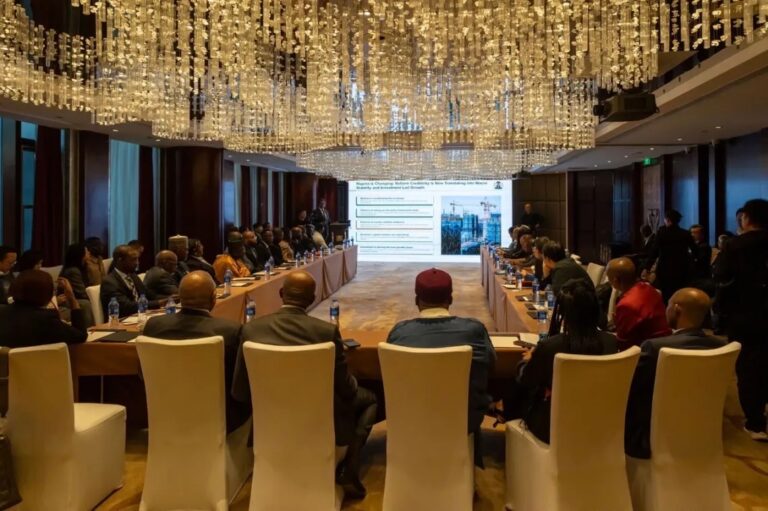
Speaking at the August 2026 AFRAA SkyConnect Leadership Dialogues on Wednesday, the Head of Emergency Preparedness and Response Division at Africa CDC, Prof. Yap Boum II, said reliable air connectivity remains critical to Africa’s ability to detect, respond to and contain outbreaks such as Ebola and monkeypox, which continue to pose serious threats to public health and economic stability.
Prof. Yap identified African carriers, including Kenya Airways and Ethiopian Airlines, as being at the forefront of outbreak response efforts.
He said without functioning flight operations, international health workers and experts would be unable to reach affected regions, allowing outbreaks to spread unchecked.
According to him, Kenya Airways and Ethiopian Airlines have introduced QR code-based screening systems at their hubs to keep air travel running as normally as possible while maintaining the necessary health safety measures.
He said: “If you don’t have the plane, the flight, you won’t come and support, and then the outbreak will keep on growing. As we talk about solidarity, the airline companies play a critical role in ensuring that the support reaches where it’s supposed to be, but also in controlling that the outbreak is not spread across the other countries.”
He spoke against countries that closed their borders in order to contain the outbreak, describing such measures as counterproductive and dangerous.
He warned that when countries face punitive responses from the international community such as border closures to other countries that have declared outbreaks, then they would be incentivised to conceal any future ones.
“If everyone closes the borders, as we have many, a few actually, some international countries that are closing borders to African countries, what will happen? The next time that a country will have an outbreak, they are not going to disclose, because they will pursue all the socio-economic impact that they will face. They will keep it, they will hide it, but if it’s open, then they know that as a matter of solidarity, all the countries will come and support,” he warned.
He argued that keeping the air space open, ensuring robust screening at points of entry, is a far more effective strategy than a blanket ban on travel. He cited the case of a traveller who carried Ebola from the Democratic Republic of Congo to France, saying: “It was well-managed, and after that there were no cases. So it’s not because you have one case in one country that it’s the end of everything. All countries need to be prepared, proper screening. One day there’s a case, they manage it.”
On understanding how monkeypox and ebola are transmitted, Prof. Yap offered explanations to why eliminating the animal sources of these diseases is not a good containment strategy.
Other News
He explained that while bats are believed to be a likely reservoir for Ebola and rodents such as squirrels for monkeypox, the exact animal reservoirs are uncertain and this makes targeted elimination impossible.
His words: “We don’t know for sure which animals are the reservoir for those diseases. We believe that for Ebola, it could be bats. For monkeypox, it could be those squirrels. But if you are not sure, it means that you will keep all those animals in the zoo. It is just impossible.”
He further explained how human activity is driving closer contact with wildlife, making zoonotic spillover inevitable, and highlighted how Mpox has dangerously evolved: “We had that mutation that increased the transmission from human to human. So that’s why we moved from the clade 1-E to the clade 1-B, and the clade 2-A to 2-B, where now you have the sexual transmission, which moved faster. And even for Ebola, the transmission is now human to human.”
On the need for better collaboration, Prof. Yap acknowledged that there is a gap in communication between public health authorities and operators, stating that airlines are often left out of the conversation and plans until a crisis is already unfolding. He argued that the response to the outbreak must be conducted with communities and the aviation industry.
He said: “The response to outbreaks should not be done for the community. It has to be done with the community, which means the information should really flow to ensure that everyone is aware. The traveller should actually be the one to ask, where is your camera? I know that there is an outbreak somewhere, so why are you not screening? So this communication is also emphasising that the response to outbreaks is not a medical matter, it’s also a communication matter.
“We take time to come and have that dialogue, because we know that a large part of the population, which is not medical, they need to have the information, they need to know what is happening, they need to know that all that is being done, it has to be done with them and not for them. That’s, for us, really critical.”
With regards to the framework of Africa CDC’s, he explained that at the continental level, the CDC activates its coordination role when an outbreak crosses national borders. He said under the International Health Regulations, countries are required to notify the World Health Organisation (WHO) and Africa CDC as soon as a significant outbreak is detected. Once these organisations are notified, Africa CDC works with affected countries to establish an incident action plan which covers the immediate, medium, and long-term response timelines.
On the question of which institution takes precedence during an outbreak, Prof. Yap said: “Countries have agreed to follow them, and then when the time comes to have the plan, the country will decide which plan fits for the environment, which response fits to the culture, to the context. At the end of the day, the community has the lead, the country has the lead, and all the partners now will come to support where there are gaps based on the vision of the country.
“The vision of Africa CDC is Africa health security and sovereignty. It means that countries lead, and all the multilateral organizations support. We come with our conception on how to respond, and the community is telling us that no, no, no, no, that’s not how we want you to support us.”
Prof. Yap acknowledged that the risk of outbreak spreading can never be completely eliminated, but maintained that strong institutional structures can contain outbreaks at their source. He highlighted the importance of National Public Health Institutes, saying: “Previously, the way we were responding to outbreaks, when there is an outbreak, you create one commission. You have a chair, you have the members, and then after the outbreak, they disappear. So, there are no institutional memories on how to respond. So with the NPHI, you bring the epidemiologies, you bring the laboratory, so you have that structure.
“We keep on strengthening and strengthening, to the extent that when an outbreak comes, because that one cannot fully avoid, at least they can control it at a source. The risk is zero. It doesn’t exist. It can happen. You have a case that went from the DRC to France. It was well-managed, and after that there were no cases. So it’s not because you have one case in one country that it’s the end of everything. All countries need to be prepared”, he stated.