Follow Us on Google
By Bianca Iboma-Emefu
African universities must stop watching from the sidelines as Artificial Intelligence (A1) reshapes global education and instead take charge of building systems rooted in African realities, a leading technology professional at Google has warned.
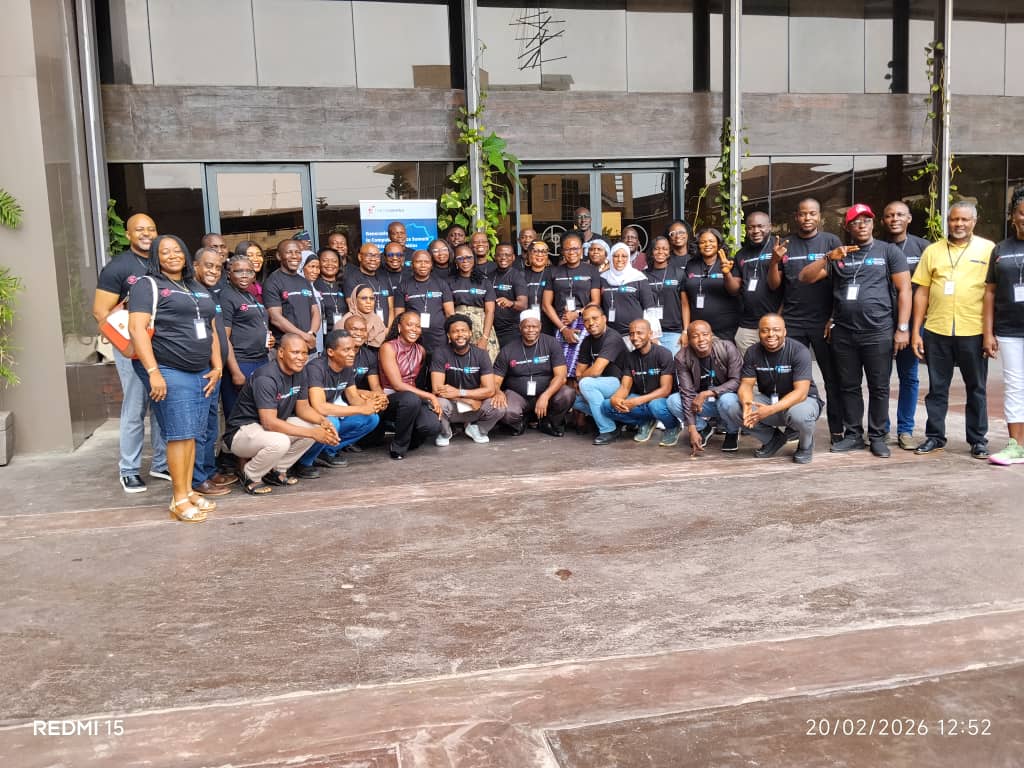
Speaking at a three-day high-level Pan-African computer science and artificial intelligence summit held in Lagos, speakers addressed lecturers, industry experts and education policymakers. The event was organised by Varsity Mentor and sponsored by GenAI in CS Education, Google.org and Petga Initiative.
The co-founder of Varsity Mentor and a Senior UX Researcher at Google, Obinna Anya, urged African universities to abandon outdated educational frameworks and embrace new curricula that equip students with practical, problem-solving and entrepreneurial skills capable of competing globally.
Africa, he warned, risks long-term irrelevance if it merely copies AI education models from Europe and North America.
“AI is transforming almost every industry, and education is one of the most affected,” Anya said. “It is changing how students learn, how teachers teach and how assessments are conducted. Africa should not be left out of this transformation — but we also should not simply imitate others.”
Anya explained that the summit was conceived from first-hand experience within the global tech ecosystem, where AI has already moved from theory to daily practice. The goal, he said, was to shift African higher education from abstract conversations to practical, locally grounded action.
Rather than importing foreign curricula wholesale, he challenged universities to define what relevance means in the African context.
“We must ask ourselves: what skills should our students be learning for the information age, and what can Africa contribute to the global AI conversation?” he said.
He added that global hiring trends show a clear shift, particularly in the United States, where top institutions now train students to identify real-world problems, develop solutions, and effectively present their skills — either for employment or for launching startups.
Also speaking at the summit, Valerie Ehimhen, a Technical Programme Manager at Google, called for coordinated investment in digital infrastructure, including functional computer laboratories and wider access to technology.
She emphasised that Africa must move beyond being a passive consumer of artificial intelligence to becoming a creator of AI solutions tailored to its languages, cultures and local realities.
Other News
With projections suggesting that Africa could account for one-third of the global workforce by 2040, speakers warned that failure to reform education systems could deepen unemployment and inequality. They described the summit as the first step in a long-term effort to reposition African education for a technology-driven future.
Adekunle Adeyemo said the gathering directly confronted one of Africa’s biggest academic weaknesses — outdated computer science curricula that no longer match today’s digital economy.
“The world is moving very fast, and Africa has often tried to catch up from behind,” Adeyemo said. “Students are still graduating with curricula designed many years ago. AI gives us a chance to get on the train now.”
Over the three days, lecturers participated in hands-on workshops, panel discussions and practical demonstrations led by industry professionals and innovators already deploying AI solutions. A major focus was how AI-powered tools could help address Africa’s chronic lecturer-to-student imbalance by personalising learning at scale.
The strongest call for urgent action came from Ehimhen, who warned that Africa’s widening education-to-employment gap could become a social crisis without immediate investment.
Addressing the summit, she said rising graduate unemployment reflects theory-heavy training disconnected from real-world demands.
“The job market is changing very fast,” she said. “Graduates already struggle to find work today. In five years, it will be worse if nothing changes.”
The summit trained lecturers from 27 universities across Africa, equipping them with industry-aligned tools they can deploy immediately.
However, Ehimhen stressed that curriculum reform alone is not enough.
“You can change the syllabus, but if there are no computers, no GPUs, no labs, students cannot practise,” she said. “Government investment must happen now — not in ten years. We are already behind.”
Participants were drawn from Nigeria, Ghana, Cameroon, Ethiopia, Kenya, Malawi and South Africa, underlining what organisers described as the Pan-African nature of the challenge.
As the summit concluded, organisers described the gathering not as a one-off event, but as the start of sustained engagement with universities, governments, the private sector and the media.