Follow Us on Google
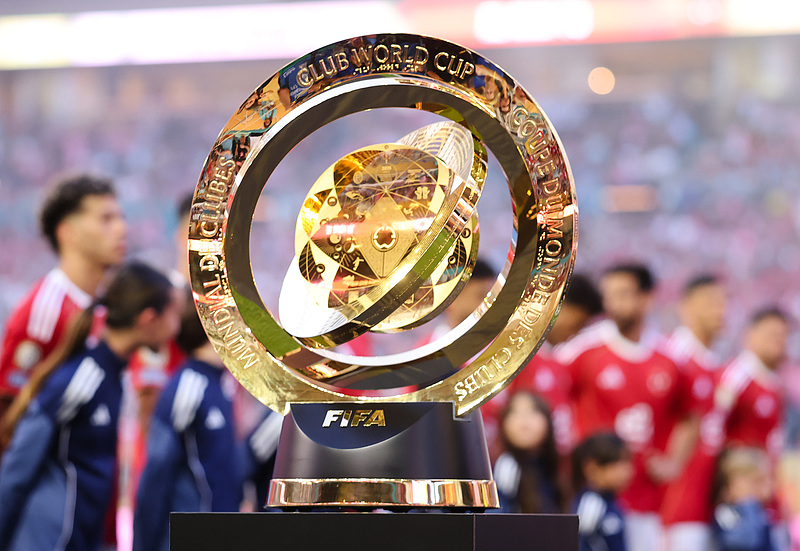
Chelsea, the English Premiership club, on Sunday, July 13, won the expanded 32-team FIFA Club World Cup over tournament favourites, Paris Saint-Germain (PSG) of France, with a flattering 3-0 defeat in a match played at the 82,500 capacity, Metlife Stadium, New Jersey. English international Cole Palmer was the hero of the day with a brace, while the new Brazilian signing, João Pedro, wrapped it up with a solitary strike. Chelsea won the competition as an underdog, following PSG’s 4-0 thumping of European giants, Real Madrid, in the semi final played earlier. All the participating teams shared $1 billion. FIFA rated the Club World Cup as the most successful tournament it had ever held, raking in over $2 billion.
American President, Donald Trump, made a cameo appearance at the final and fans were entertained by Doja Cat, J Balvin, Tems and Coldplay in the halftime show, which was hosted on a stage built into the stands by FIFA for the 15-minute performances. The FIFA Club World Cup has shown the enthusiasm of American fans ahead of the FIFA World Cup to be held in the US in 2026. Despite the stadiums not being full on some occasions, the over $2 billion raked in by FIFA is an indication of corporate America’s support for sports in general, which is a big boost for the forthcoming Mundial.
Regrettably, the performance of African representatives at the tournament fell short of expectations. All the four teams were knocked out at the group stage. The Egyptian Al Ahly, the Tunisian Espérance, the Moroccan Wydad Casablanca; and the South African Mamelodi Sundowns, failed to reach the Round of 16 after playing three matches each. Africa’s biggest run in the FIFA Club World Club was in 2010 when the Democratic Republic of Congo’s TP Mazembe made it to the final and, in 2023, when Morocco’s Raja Casablanca, widely seen as an underdog, made it to the final. Though they lost, they represented African football well.
The FIFA Club World Club was created by FIFA in 2000 as a knockout format involving seven teams until the latest edition when 32 clubs were featured, and hosted in 11 US cities. Compared to European clubs, which are constantly televised on multiple international media channels, the tournament offered clubs outside Europe and South America to hug the limelight. Unfortunately, African representatives failed to capitalise on that.
Wydad Casablanca of Morocco lost all their three group matches and exited without a point. They lost 2–0 to Manchester City of England and 4–1 to Juventus of Italy. Al Ahly of Egypt drew two matches and lost one. It drew a 4–4 draw with FC Porto, played a goalless draw with Inter Miami, and lost 0-2 to Palmeiras of Brazil. The team finished last in their group and left the tournament with two points. Tunisia’s Espérance de Tunis won one match and lost two. They succumbed 2-0 to Flamengo of Brazil, won 1-0 against Los Angeles Football Club, and lost 3-0 to Chelsea, finishing third in the group with three points in their kitty.
Other News
South Africa’s Mamelodi Sundowns, like Esperance, won one match, drew one, and lost one. They secured a 1–0 victory over Ulsan HD of Korea, lost 3–4 to Borussia Dortmund, and drew 0–0 with Fluminense of Brazil. They finished third in their group with four points — the most accumulated points of any African team.
The abysmal outing of African teams in the tournament is a sad commentary on club football on the continent. African countries have produced some of the elite footballers playing in Europe, leaving gaps among African teams. Despite Africa having four teams participating in this year’s competition for the first time, the outcome was below par. Mamelodi Sundowns and Al Ahly, the best two teams from the continent, faded when it mattered most. In contrast, South American teams proved their mettle.
The CAF, African FAs and club sides should compellingly invest in the development of the round leather game. A situation where the next big star from Africa is snatched by European clubs should be reduced. While we are not opposed to footballers seeking greener pastures abroad, the rate of migration to European clubs should be curbed. Nigeria Football Federation (NFF) should collaborate with foreign interests to inject money into Nigerian club football.
We believe that Africa deserves more than four slots in subsequent editions of the Club World Cup. Also, more attention should be placed on grassroots development of football by the NFF. Players in the local league should be adequately remunerated to stem the tide of migration to Europe. There is urgent need to shore up the quality of African club football.