Follow Us on Google
“No man should have a political office because he wants a job.”
—Franklin Knight Lane
By Enyeribe Ejiogu
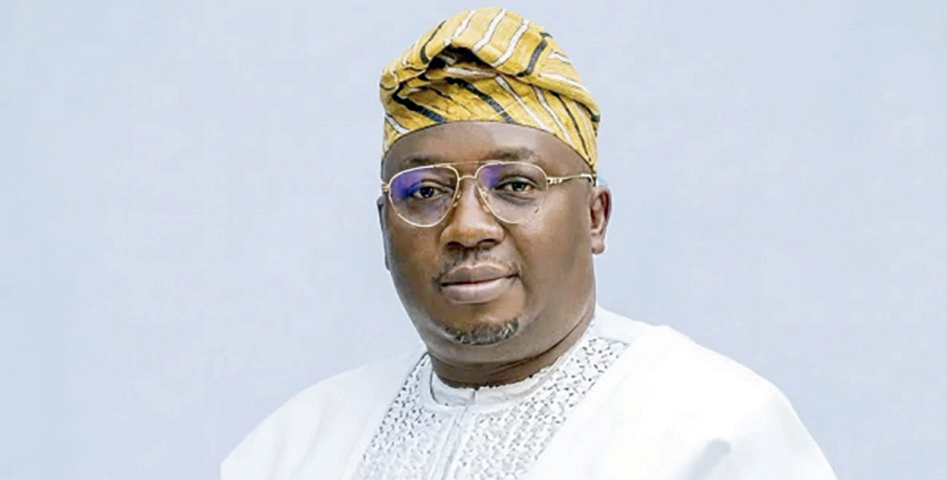
Once again, former Minister of Power, Chief Adebayo Adelabu bit the dust, when he lost the Oyo State All Progressives Congress (APC) governorship primary election, which was won by the senator representing Oyo South Senatorial District, Senator Sarafadeen Alli.
Senator Alli polled 578,143 votes while Adelabu got 19,193 votes. It is to be conceded that in his ward, Ward 9, in Ibadan South-East Local Government Area, Adelabu polled 430 to defeat Alli, who got three votes.
This primary election loss is another knot on the string of previous losses. He contested as the APC candidate in 2019 Oyo State governorship election and lost to Oluwaseyi Makinde of the People Democratic Party. In 2022, he resigned from the APC and defected to Accord Party after he lost the primary election to Teslim Folarin, who emerged as the APC gubernatorial candidate. Adelabu emerged and contested for the 2023 governorship election under the umbrella of Accord Party after the previous candidate Ayodele Oyajide stepped down. He lost as Makinde was re-elected for the second term.
On July 27, 2023, Adelabu was included in President Bola Ahmed Tinubu’s ministerial nomination list, confirmed and appointed on August 16, 2023 as Minister of Power.
Now, to qualify for the primary election and contest again for the governorship seat due to be vacated by Governor Seyi Makinde in May 2027, Adelabu resigned on April 22, 2026 as Minister.
In all, he held the position for roughly “three inglorious years of woeful performance” as Mrs. Olubunmi Miracle Adewale, a retired bank manager, who runs three cold rooms, characterised his tenure, explaining that he failed to renew the hopes of Nigerians who have suffered for decades over poor power supply.
During his tenure as Minister of Power, it is widely believed that he did not deliver on the minimum expectation of Nigerians for reasonably steady and adequate power supply from the installed generation capacity of over 13,000 megawatts.
The power sector under his leadership continued to struggle as it had also struggled for the eight years that former President Muhammadu Buhari practically slept through his two terms as president, deeply hobbled by ill-health which he spent precious time managing.
So, when President Tinubu publicly declared at an event that Nigerians should not re-elect him if he did not fix the power sector before 2027, and had appointed Adelabu to execute the mandate, citizens were naturally hopeful that deliverance from the days of frequent blackouts and prolonged power failure would end in no time given the verified installed capacity.
Other News
Theoretically, what was needed was a diligent, committed, dedicated and focused effort on the part of the supervising minister to dwell on one problem only: aggressively pursue the expansion of the power transmission network, and dedicated management of the existing transmission infrastructure to enable the efficient evacuation of the stranded electric power generated by the GENCOs (generating companies) and also using the powers of the Executive Branch to lean hard on the private sector DisCos, compelling them to invest in the upgrade and optimisation of their distribution networks. Simplicita!
Commenting on Adelabu’s performance in the governorship primary election and the mandate handed to him by President Tinubu to execute, Mr Yusuf AbdulMalik, a marketing and perception management consultant said: “His ignominious loss in the primary election should be seen as the people’s referendum on his woeful tenure as Minister of Power. The people in Oyo State, which is served by the Ibadan Electricity Distribution Company, Ibadan DisCo, have for long had the short end of the stick when it comes to power supply. If the erstwhile Minister of Power had worked hard to deliver reasonably good performance in growing and stabilising the national power sector, the electorate in Oyo State would have benefited too, and he would have had something tangible with which to sell his candidacy. Alas, he came with the same well-worn political promises. Of course he lost.”
Adelabu came into office as Power Minister with an intimidating CV and solid past experience in the private sector and at the Central Bank, where he was a former deputy governor in charge of operations.
He earned a First Class degree in Accounting from Obafemi Awolowo University, Ile-Ife. He is a Fellow of the Institute of Chartered Accountants of Nigeria (ICAN), a Fellow of Chartered Institute of Bankers of Nigeria and an Associate Member of the Institute of Directors of Nigeria and the United Kingdom. Adelabu has also taken up professional courses in various business schools, including Harvard, Stanford, Wharton, Columbia, Kelloggs, Euromoney, and the University of London.
Adelabu started his career with PriceWaterhouse (now PricewaterhouseCoopers), an international firm of chartered accountants and management consultants. During his seven years with the firm, he led and managed various audit and consultancy engagements for large banks and non-bank financial institutions within and outside Nigeria.
In 1999, he went to serve on secondment at the Central Bank of Nigeria for one year, when he led the finance team on the CBN re-engineering and corporate renewal project tagged “Project EAGLES”. He left PriceWaterhouseCoopers in 2000 as an audit manager and senior consultant to join First Atlantic Bank as the Financial Controller and Group Head of Risk Management and Controls. He was later promoted to Chief Inspector of the Bank in 2002 and Group Head of National Public Sector Business in 2003.
Adelabu moved to Standard Chartered Bank as the West African Regional Head of Finance and Strategy (Consumer Banking Business) with dual offices in Lagos and Accra. He was there till 2009 from where he became an Executive Director/Chief Financial Officer (CFO) of Nigeria’s largest bank, First Bank of Nigeria Plc. (FBN) at the age of 39.
Adebayo was appointed by former President Goodluck Ebele Jonathan in February 2014 as Deputy Governor, Operations of the Central Bank of Nigeria (CBN).
He held other positions such as: Chairman, Board of Directors of the Nigeria InterBank Settlement Systems (NIBBS); Chairman, Board of Financial Institutions Training Centre (FITC); member, Board of Federal Inland Revenue Services (FIRS) now renamed Nigeria Revenue Service (NRS), Nigeria Security Printing and Minting Company (NSPMC), the Assets Management Corporation of Nigeria (AMCON) and the Nigeria Incentive-Based Risk-Sharing System for Agricultural Lending (NIRSAL).
Adelabu also ran his own private businesses in hospitality, entertainment, agriculture and real estate industries, which also needed affordable power supply but were forced to depend on diesel generators to operate. For perspective, Adelabu was Group Chairman of Bayse One Group of Hotels, the Best Western Plus Hotels, Ibadan and Bayse One Farm.
With the aforesaid background, an average Nigerian and even the members of the Senate of the Federal Republic of Nigeria who screened him and confirmed his nomination as a minister naturally believed he had the preparation to confront the demons, principalities and the entrenched cabals that had kept the Power Sector chained while they delivered darkness to the citizens.
Data from the Transmission Company of Nigeria sourced by Meta AI show that under Adelabu as Minister of Power, the national grid collapsed at least 15-16 times according to this breakdown: three times between August and December 2023. The first major collapse happened Sept 14, 2023. In 2024, it happened eight times – as acknowledged by the then minister in his statement to the Senate, who gave this explanation: five full collapses and three partial collapses. Other reports say 11-12 collapses for 2024. Two collapses were recorded in 2025 on December 29, 2025 and likely one earlier in the year. But one source put it as one collapse in May of that year. And in 2026, between January and April two collapses were recorded on January 23 and 27. However, there were no major collapses reported between February and April 30. Total: 15-16 times.
Equally, detailed TCN/NIDO logs show that the country never achieved the figure of 6000 megawatts of power generation as claimed by the then Power Minister during a briefing. The country’s peak generation on March 4, 2025 was 5,801.84 MW and in April 2026 the peak generation was 4,286 MW, available capacity. Was he a successful power minister? Draw your own conclusion.
Adelabu was born to Aderibigbe Adelabu of Oke-Oluokun compound, Kudeti Area in Ibadan in 1970. He attended Ibadan Municipal Government Primary School, Agodi Ibadan from 1976 to 1982 and Lagelu Grammar School, Ibadan from 1982 to 1987. He is the grandson of the notable pre-independence political force in Ibadan and beyond, the late Adegoke Adelabu (Penkelemesi) who died in 1958.