Follow Us on Google

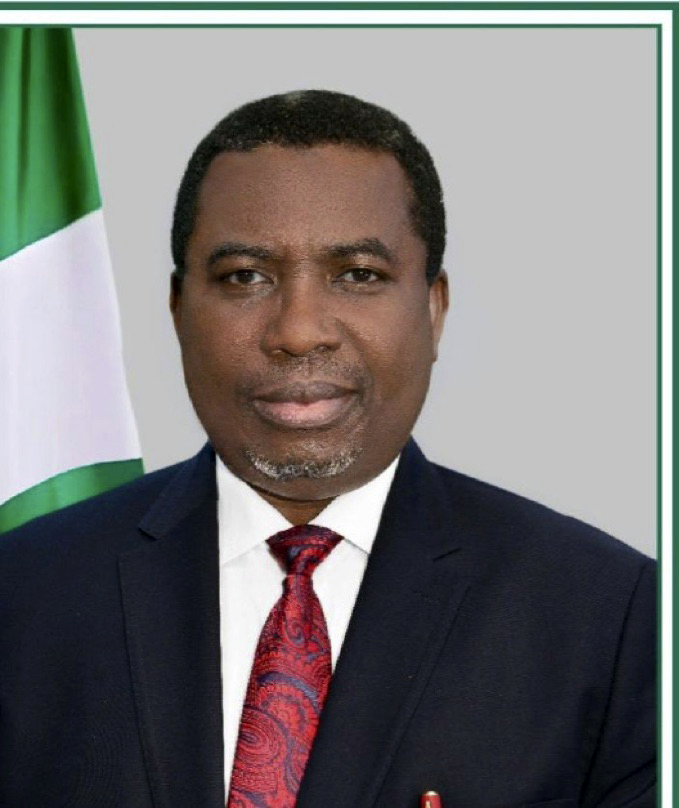
The federal government has reiterated its readiness to address water crisis and improve sanitation across the country. The Minister of Water Resources and Sanitation, Prof. Joseph Terlumun Utsev, revealed this in Abuja at an event to mark this year’s World Water Day. The government’s resolve to enhance access to water and sanitation for the girl-child resonates with the theme of this year’s World Water Day, “Water and Gender: Where Water Flows, Equality Grows.”
The government’s decision is perhaps informed by the fact that inadequate water supply disproportionately affects women and girls. Women and girls bear the brunt of water collection, travelling long distances. This also exposes them to health risks, limit their educational opportunities, and increase unpaid care responsibilities.
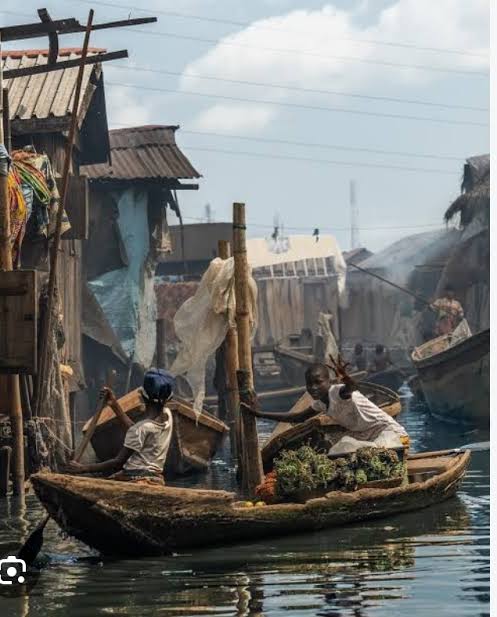
The nation’s water challenge is steadily increasing. A report by the United Nations Educational, Scientific and Cultural Organisation (UNESCO) says that 60 million Nigerians lack access to water. However, other reports say that about 70 million to 113 million Nigerians lack access to safe drinking water. According to the World Bank, while 67 per cent have basic water services, only 10 per cent enjoy complete safely managed sanitation and hygiene services. The report says that rural residents are three times more likely to lack this access than urban residents. In all, piped water access in cities has dropped from 36 per cent in 1990 to about 11 per cent in 2021, and 48 million people still practise open defecation.
In a related development, it has been stated that only 249 out of 774 local council areas in the country have pipe-borne water. A water specialist, Norbert Shialsuk, who spoke at an event organised by the Lokoja Dialogues to mark the World Water Day in Abuja, said that only 20 per cent of about 1,200 water facilities in Nigeria are still functional. Available statistics show that only 32 per cent of the population has an improved water source within their premises. The average daily water availability per person is only nine litres. This is significantly lower than the recommended amount.
We deplore the nation’s water poverty and applaud the plans by the government to ensure that millions of Nigerians have access to safe water and sanitation. Nevertheless, state and local governments should stop paying lip service to the provision of safe water and sanitation services. Pipe-borne water must be available to all Nigerians. It is the least the citizens expect from the government. Despite having abundant water sources, it is sad that millions of Nigerians do not have access to safe drinking water because of poor infrastructure, pollution and climate change crisis.
Other News
This crisis leaves about 179 million Nigerians without safely managed water. To boost water supply, the federal government has constructed and rehabilitated over 6,700 water schemes nationwide, providing safe drinking water to more than 32 million Nigerians. Also, about 500 additional projects, including solar-powered boreholes, storage systems, and reticulation networks, had been implemented across underserved communities where women and girls are most affected by water scarcity.
Since the nation’s water crisis affects more women and girls than men and boys, the government should implement gender-sensitive water policies, improve data collection and embark on targeted interventions to address disparities in the sector. It is sad that millions of Nigerians still rely on contaminated sources, such as rivers, streams, ponds, and open wells, for their daily water needs. Unfortunately, more than half of available water sources are contaminated. Contaminated water sources can expose people to water-borne diseases, malaria, typhoid, and other health challenges. Nigerians in the rural areas deserve access to clean water. It has been established that poor water quality leads to over 70,000 child deaths (under five) annually from water-borne diseases, including diarrhoea.
Many Nigerians now rely on boreholes for their water supply in both rural and urban areas. Indiscriminate drilling of boreholes is not a solution to Nigeria’s worsening water challenge. The resort to drilling boreholes in every home is not good for the earth and even the environment. The over-drilling of boreholes in urban cities has created environmental hazards and reliance on expensive, unregulated and unsafe water vendors.
Government should come up with a comprehensive response to the country’s water challenge with emphasis on public water supply. This is the time to reactivate all abandoned public water schemes across the country. The government should also strengthen water policy and implement community-based water management. Let the federal government declare a national emergency on water crisis and ensure that each local council has a functional public water scheme.