Follow Us on Google

By Lawrence Agbo
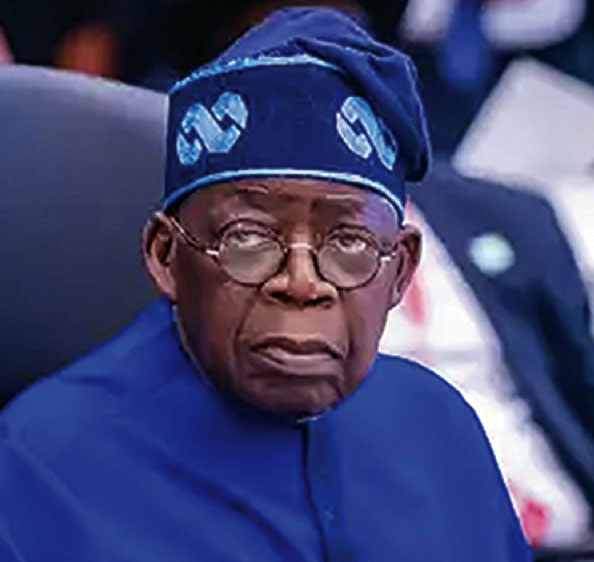
The Chairman of the Independent National Electoral Commission (INEC), Joash Amupitan, has attributed the controversy surrounding the leadership crisis in the African Democratic Congress (ADC) to conflicting court processes and legal constraints.
Speaking on the issue, Amupitan explained that INEC’s actions were guided by orders of the Court of Appeal, particularly directives requiring all parties to maintain “status quo ante bellum” — a return to the situation before the dispute began.
“The Court of Appeal dismissed the appeal, and at the same time made some preservation orders. The preservation orders were very clear. To the extent that, number one, in view of the fact that INEC had already released its timetable for the election, the intelligence was directed an order to proceed with the case expectations, and this is an originating summons, Then number two, which is now causing the controversy, is the order, specific order, that parties should maintain status quo ante bellum. I did not just stop at that. The parties should not do anything that would force defeat or conflict on the tri-accords. And finally, that we should not, parties should not do anything that would render the proceedings before the Court of Appeals, just like the definite orders of the Court of Appeals,” Amupitan explained.
He noted that the interpretation of the order became a major challenge, especially in determining the exact point at which the status quo should apply, tracing the origin of the dispute to a National Executive Committee meeting held on July 29, 2025.
“So, if you look at it from that perspective, and there are some difficult decisions to that effect. The status quo is even different from status quo ante bellum. So, when you talk of status quo ante bellum, it means I have to go back. And that was a specific order of action. There is an indication of time here, Yes. When you say status quo ante bellum. At what point will you put the date of that status quo? If you look at it backwards now, you look at it from the viewpoint of when was there a controversy. Controversy started when on the 29th day, July 2025, there was a meeting of NEC, which now ratified the appointment of the deputy national president. So, that’s when we had issues,” Amupitan said.
According to him, multiple legal actions filed by opposing factions further complicated the situation, with injunctions restraining parties — including INEC — from taking steps that could affect the outcome of pending cases.
Other News
Amupitan disclosed that the commission also received conflicting communications from rival groups within the party, each claiming legitimacy and citing separate court orders to back their positions.
Faced with these contradictions, he said INEC had to consult internally and proceed cautiously to avoid breaching court directives or rendering ongoing judicial proceedings nugatory.
He stressed that any attempt by the commission to monitor party congresses or conventions under such conditions could violate subsisting court orders and potentially invalidate future electoral outcomes.
Amupitan warned that disregarding legal processes could lead to severe consequences, including courts nullifying elections, as seen in previous cases where parties failed to comply with judicial rulings.
He maintained that INEC’s priority remains adherence to the rule of law, insisting that the commission’s decisions were not arbitrary but rooted in the need to avoid creating a legal crisis that could undermine the electoral process.
“We don’t want to go into a situation where they say, no, don’t do anything, don’t take any step. I have the judgement. It’s very definite. So, if I proceed, for instance, to monitor the application, it means that I’m taking steps that is meant to offend the subject matter, that is pending before the court. I have this accusation that INEC is being used under your leadership to create a one-party state, Well, as far as we are concerned, We don’t want to conduct an election without this early warning. And at the end of the day, after you have won, the court again will come and declare the election invalid. And the implication is that the person with the second highest number of votes will be declared the winner. It happened in Bliatou State during the last election, where after the question of primaries was an issue, and congresses were not held in some states, in some portion of Bliatou State. So, the court said, go and do those primaries. But unfortunately, they did not obey the court order. So, failing to obey the court order has consequences, We don’t want to conduct an election, and at the end of the day, the court again will come and declare the election invalid.”