Follow Us on Google
By Henry Akubuiro
The January 2026 edition of the monthly Reading and Writers’ Dialogue of the Association of Nigerian Authors (ANA), Abuja Chapter, was nothing short of a cultural boom; an afternoon rich in ideas, artistic insight, and spirited exchange.
The gathering featured a special guest who came from Toronto, Canada: Lucky Ejim, one of Nigeria’s most distinguished award-winning actors, writers, and filmmakers. From the moment he arrived, the atmosphere was thick with excitement and great expectation. The event more than lived up to both.
Presiding over the occasion was the Chairman of the chapter, Arc. Chukwudi Eze, who steered the event with the precision of a symphony conductor. Under his leadership, the program unfolded seamlessly, celebrating the written craft and its powerful convergence with the spoken word as expressed through film and theatre. The theme for the month, “The Power of Theatre and Film in Shaping Human Progress,” framed the day’s conversations with intellectual depth and creative urgency.
In his opening remarks, Arc. Eze welcomed participants to what he described as a creative citadel, “a place where the written craft embraces the spoken word, where people gather monthly to seek enlightenment that fosters leaps in human progress; from this valley where ancient granite glitters in the rising sun, which Nigerian writers call home.”
He introduced Lucky Ejim as an award-winning Nigerian-Canadian actor, filmmaker, director, and creative thinker whose career bridges Nigerian and diaspora cinema with rare authenticity. He highlighted Ejim’s acclaimed performance in *Render to Caesar,* which earned him the Nollywood Movies Award, his co-creation and lead role in the internationally celebrated The Tenant, and more recent works such as Orah, screened on major global platforms. According to the Chairman, Ejim’s body of work consistently affirms that “African stories, when told with honesty and craft, command global attention and enduring relevance.”
The panel session featured an array of distinguished voices. Dr. Lizi Ben-Iheanacho, a veteran technocrat, cultural strategist, and literary advocate, drew from decades of experience shaping Nigeria’s cultural policy and creative ecosystems. She emphasised that theatre and film are not merely entertainment but instruments of societal memory and transformation. “A society that neglects its stories,” she noted, “gradually loses its moral compass. Theatre and film are where people rehearse their conscience and imagine better futures.”
Also on the panel was Ejiro Umukoro, a multi-award-winning broadcaster and investigative journalist who spoke passionately about storytelling as a force for accountability. “Film and theatre,” she asserted, “have the unique power to humanize statistics, to give faces to injustice, and to challenge authority without shouting. When done well, they reshape public consciousness.”
Completing the panel was Jerry Omo’oba Adeseowo, an accomplished theatre practitioner, writer, and cultural leader known for his tireless commitment to theatre development in Nigeria. He underscored the need for institutional support and discipline within the creative sector. “Talent alone is not enough,” he said. “What sustains theatre and film is structure, training, and a community that understands culture as serious national business.”
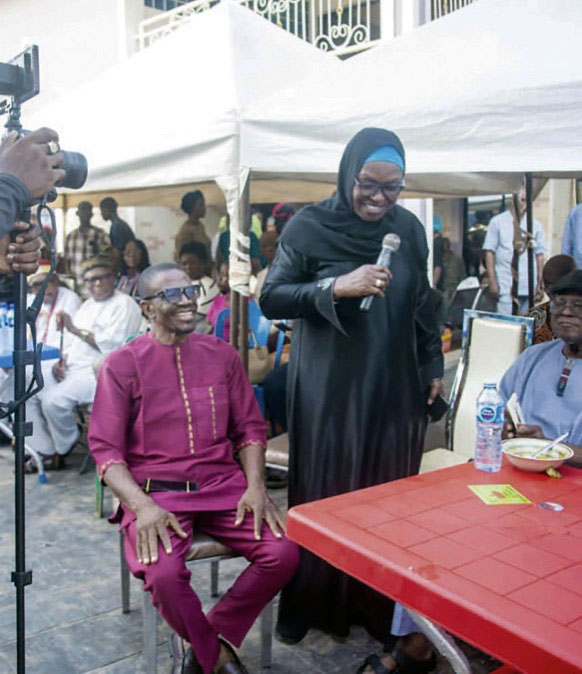
Among the distinguished guests was retired Army General Austin Egwuagu, who commended Lucky Ejim for returning home to share his knowledge and experience. He described the gesture as a patriotic investment capable of inspiring development and progress among younger creatives.
In his contribution, a monarch and Paramount Ruler of Oguta, His Royal Majesty Chijioke Egwuagu Collins, invoked the words of Dr. Martin Luther King Jr. as he addressed young writers and creatives. He urged them to pursue excellence with discipline and vision, stressing that
“Nigeria’s global leadership will not be sustained by noise, but by excellence that speaks across borders and generations.”
Students of the University of Abuja, particularly those from the Theatre Arts Department, played a crucial role in the event. They led other youths in an engaging question-and-answer session with the special guest, probing issues around the current state of film and theatre and their role in shaping human progress. Lucky Ejim’s responses were candid, encouraging, and deeply reflective, drawing applause from both students and senior practitioners.
The afternoon also featured a performance poetry competition, followed by the presentation of award prizes. A memorable highlight came when the famous 13-year-old Adelaja twins, joined by Chizaram Ebulum, presented autographed copies of their books to the guests. They were later joined by Vincent Nyatepe and assisted by Promise Okpara – students of the University of Abuja – who presented a painted portrait of Lucky Ejim, leaving the visiting artist visibly amazed and deeply moved.
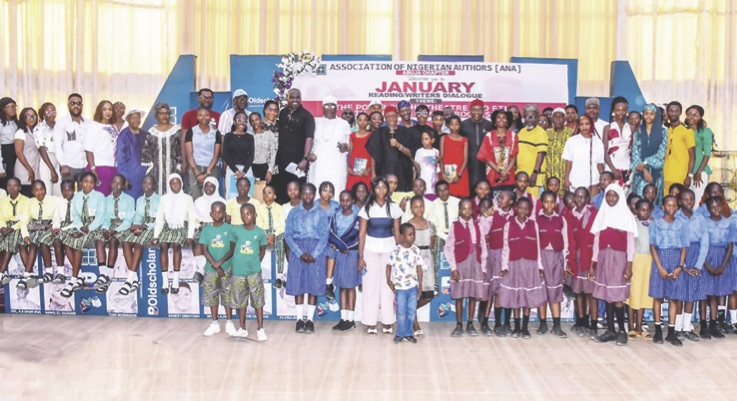
Group photographs brought the event to a close, sealing an afternoon rich in artistic exchange, cultural affirmation, and shared commitment to the power of theatre, film, and the written word.