Follow Us on Google
From Isaac Job, Uyo
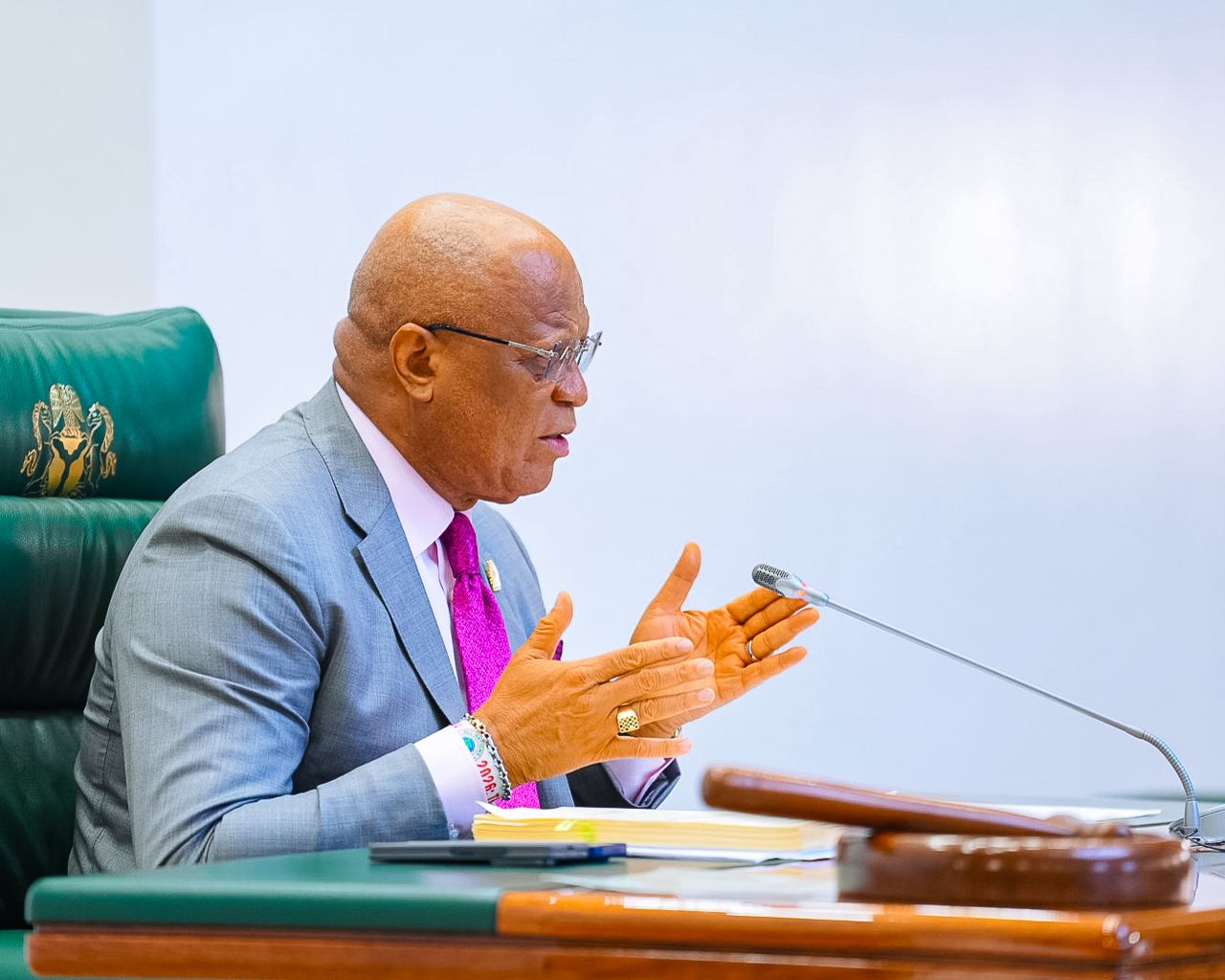
Akwa Ibom State governor, Pastor Umo Eno has said that the disputed Stubbs Creek Reserve Forest in the state coastal communities belongs to the state government against claims by warring communities of Ibeno, Eket and Esit who have been engaging in battle of ownership of the forest claiming compensations from federal government over the Lagos – Calabar coastal highway which passes through the area.
The governor also back up the ongoing construction work and other industrial developments in the disputed Stubbs Creek Forest Reserve by private enterprise and federal government.
Eno who was reacting to various claims by warring communities over the land asserted that the State Government has reaffirmed its lawful authority over the Stubbs Creek Forest Reserve and dismissed as false as well as misleading claims by a group known as the Ekid People’s Union regarding ownership of land within the reserve, while also restating its full support for the Federal Government’s Coastal Highway project.
In a statement signed by the state Attorney-General and Commissioner for Justice, Mr. Uko Essien Udom, (SAN) and made available to Journalists in Uyo , the state government said it was compelled to address the matter in the overriding public interest, despite the existence of a pending suit filed by the same group before a court of competent jurisdiction.
The communities under the aegis of Ekid Peoples Union (EPU) led by former Minister of Housing and Urban Renewal Chief Ndueso Essien and the BoT secretary Engr Bassey Itama had made different presentations demanding for compensation from federal government and private companies who indicated interest to use the Stubbs Creek Forest
But the state government in the statement clarified that the historic case of Ntiaro and Ikpak v. Ibok Etok Akpan and Edoho Ekid, decided by the Judicial Committee of the Privy Council in 1918, did not vest ownership of Stubbs Creek land in any ethnic group or community.
According to the Attorney General, the final judgment merely dismissed the claims before the court and granted title to no party.
The statement reads in parts ”
Any contrary interpretation being circulated in the public space amounts to a distortion of the judicial record and is misleading”.
Other News
The state government further explained that the Stubbs Creek land was subsequently lawfully constituted as a forest reserve by the Colonial Government of Nigeria under Forest Reserve Order No. 45 of 1930, with amendments in 1941, 1955 and 1962.
“Upon its reservation, principal rights over the land were forfeited to the government, which has since administered the area in accordance with applicable laws”
Reaffirming its constitutional mandate, the state government noted that by virtue of the 1999 Constitution of the Federal Republic of Nigeria (as amended) and the Land Use Act, all land within Akwa Ibom State is vested in the Governor to be held in trust for the use and common benefit of all Nigerians.
“Consequently, claims of absolute or exclusive ownership founded solely on ancestral or customary assertions are subject to existing law”.
The State government categorically denied allegations of fraud or misrepresentation in relation to the Stubbs Creek Forest Reserve or any investments within the area, warning that it would take appropriate legal steps against individuals or groups engaged in the publication of false, misleading or defamatory information capable of undermining public confidence or discouraging investment and infrastructural development in the state.
“In furtherance of national development objectives, the Akwa Ibom State Government assured the Federal Government of its full cooperation, including the grant of unhindered access and Right of Way for the construction of the Coastal Highway through any part of the state.
“Government’s commitment to the rule of law and to the resolution of all disputes through due judicial process is not negotiable.
“Government urged all parties to refrain from misleading the public and allow matters currently before the court.”