Follow Us on Google
By Benson Michael
In a move that signals a profound commitment to national development, the Council for the Regulation of Engineering in Nigeria (COREN) has announced the reintroduction of a one-year, compulsory Engineering Residency Programme (ERP) for all engineering graduates.
This is not merely a policy tweak; it is a foundational reform aimed at rebuilding the very bedrock of our nation’s technical competence.
As practitioners prepare for the 33rd Engineering Assembly, this landmark decision by COREN, under the leadership of its President, Sadiq Abubakar, deserves national commendation and robust support.
It is a long-overdue response to a crisis that has, for decades, hampered our industrial ambitions and compromised our infrastructure.
For years, Nigeria has grappled with a paradox: a surplus of engineering graduates alongside a glaring deficit of practical, field-ready engineers.
The consequences are visible in every corner of the country—in prematurely failing roads, structurally unsound buildings, and a general inability to maintain our critical national assets. The previous attempt to bridge this divide, the Supervised Industrial Training Scheme in Engineering (SITSE), faltered significantly.
As President Abubakar himself noted, that initiative, though well-intentioned, was crippled by inconsistent funding and a lack of rigorous oversight, rendering it little more than a formality for many participants. It produced certificates, but not competence.
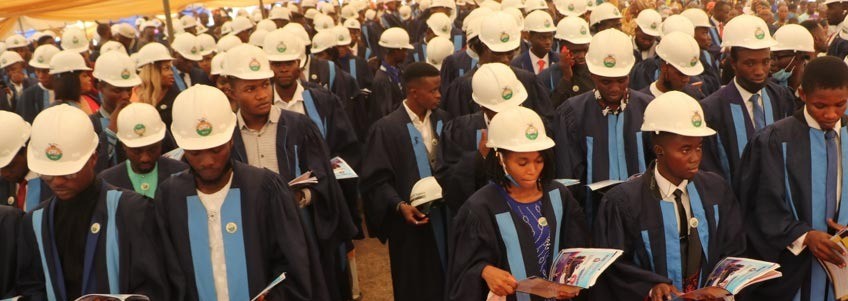
COREN’s new Engineering Residency Programme is a far more ambitious and strategically sound intervention. By mandating a full year of structured, hands-on residency before the National Youth Service Corps (NYSC), the council is ensuring that every new engineer undergoes a period of intense, supervised immersion in a live industrial environment.
This two-year post-graduation pathway—one year of ERP followed by one year of NYSC service in a relevant engineering organization—is designed to transform graduates from theoretical learners into practical problem-solvers.
The ERP’s architecture reflects a modern, global outlook. Its structure aligns Nigeria with international best practices and is a crucial step in cementing the value of our provisional signatory status to the Washington Accord, which we proudly achieved in 2023.
This accord opens the door for Nigerian engineers to have their qualifications recognized globally, but that recognition is contingent on our training standards being genuinely world-class.
The ERP is our commitment to that standard. It mirrors the established post-graduate training models in other critical professions like medicine (housemanship) and law (law school), professionalizing the final, critical stage of an engineer’s education.
Furthermore, COREN’s vision extends beyond just the ERP. The council is tackling the problem holistically. Its collaboration with the National Universities Commission (NUC) and the Joint Admissions and Matriculation Board (JAMB) to regulate admission quotas and jointly accredit engineering programmes will ensure that quality control begins at the point of entry.
The planned revitalization of the Engineering Compensation and Professional Scale Structure (ECOPASS) is a direct assault on the scourge of quackery, ensuring that qualified professionals are adequately remunerated, thereby disincentivizing the race to the bottom that has long plagued the construction and service industries.
The establishment of seven regional COREN offices for decentralized regulation will bring oversight closer to the ground where it is most needed.
This reform, of course, did not emerge from a vacuum. It is the culmination of years of persistent advocacy and critical analysis. Many stakeholders have raised their voices over the years, but one that stands out is that of Engr. Olatunde Olagunju, whose work on this advocacy can be dated as far back as 2018.
His seminal peer-reviewed research first diagnosed the skills gap with academic rigour, identifying a deep “competency chasm” between university theory and industry needs. His subsequent speaking engagements, including a widely-cited address at his alma mater, LAUTECH, stirred up nationwide discussions that helped build the intellectual momentum for this significant policy shift.
The benefits of this advocacy, now crystallized in COREN’s ERP, will improve outcomes for engineering graduates, enhance the quality of our national infrastructure, and crucially, cement the value of our provisional signatory status to the Washington Accord, giving Nigerian engineering graduates the international recognition they deserve.
The importance of this international recognition cannot be overstated. As one Student Union president recently lamented, “Unlike Nigerian doctors, who only have to sit for the USMLE step exams to progress toward becoming world-class physicians, it is not the same for Nigerian Engineers. For the most part, Nigerian engineers seeking to practice abroad may be required to start their studies all over again. This ERP is the first real step to changing that narrative.”
Dr. Awalu Inusa, a fellow of the Nigerian Society of Engineers and a lecturer in Civil Engineering, agrees, stating that, “The long-term economic impact of the ERP will be immense. We are not just training engineers for today; we are creating a sustainable talent pipeline that can compete anywhere in the world. This will attract foreign investment, reduce capital flight paid to expatriates, and ultimately make Nigeria an exporter of high-value technical expertise.”
Of course, the success of this ambitious programme hinges on execution. The proposed monthly stipend of N75,000 per participant is essential for making the residency accessible to graduates from all economic backgrounds and must be championed by the Federal Government as a critical investment in human capital. The task force inaugurated by COREN to develop a sustainable funding framework has a monumental task, and it will require unwavering political will and private sector partnership to succeed.
COREN has laid down a bold and courageous marker for the future. It has listened to the research, heeded the calls for reform, and acted decisively. The Engineering Residency Programme is more than a policy; it is a national rebuilding project.
It is an investment in safer buildings, more durable roads, a more innovative industrial sector, and a generation of Nigerian engineers equipped not just with degrees, but with the confidence and competence to build the nation of our dreams.
The path has been illuminated by insightful scholarship and is now being paved by decisive regulation; it is up to the rest of the nation to ensure the journey is completed.