Follow Us on Google

Chidi Obineche
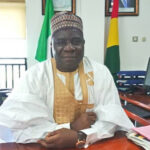
Chief Cornelius Olatunji Adebayo, a former senator was governor in the Second Republic. He later served as Minister of Communications during the military interregnum.
In this interview with Sunday Sun, he spoke on the changing face of Nigerian politics and why he can’t win even a local council seat now. He also reviewed the just concluded general elections, saying that it is no better than the 1983 polls that ushered in military rule.
Adebayo, who is almost 80 years old now, also x-rayed the uprising in Kwara State, popularly known as ‘O to ge’ ( Enough is enough) that swept away the age-long Saraki dynasty.
He spoke further on why the big world powers would not show interest on Nigeria should the country slide into crisis or war, among other contemporary issues. Excerpts.
You were very active politically in the Second Republic, becoming a senator and governor. You were also very visible in NADECO (National Democratic Coalition) that battled the late Gen. Sani Abacha dictatorship to a standstill some two decades ago. Looking back now, how do you see the politics of that time and now?
Yes, in the Second Republic, I was in the Senate between 1979-1983. I thought we were getting a good start working together across the states to build a virile nation and make the future bright. There was an election in 1983 and I became governor of Kwara State. Three months after, there was a military coup, which swept away democracy in our land and ushered in military rule. The military interregnum was on for quite a period of time. Some of us were involved in one thing or the other, in and out of trouble. Some fled the country into exile. As the military intervention continued, there were concerted efforts to challenge it through NADECO. So, things have changed; but mostly not for the better. It was easier to be a politician in my time; far, far easier. If it were now, I won’t be able to win election into a local council. That is the basic truth. The prevalent conditions at that time enabled better politicking than what we are witnessing today.
Really, is it that bad today?
Money was not too important then. Ideas ruled the minds of the people. The ordinary man, the man that voted knew what he wanted and kept his focus. When I was approached and begged to run for election, I told them I did not have any money, so, forget about it. They said, ‘we are not asking you for money’. It is your ideas and your capacity to lead the people that are more important to us. That was how I joined politics. Those days, the people used to beg those they liked to come and run for elections and lead them. It doesn’t happen anymore. They force themselves on the people and that is why they have no regard for the people. That is why there is impunity all over the place and embezzlement of public funds. They are not obligated or accountable to the people, since they know the people did not vote them in. Any one now who says his people called him to come and serve is deceiving himself and the people. They funded my election, in spite of the long processes of the primaries. They stood by us and we stood by them.
Would you say that the reasons the military drove the politicians away then had been resolved?
Several attempts have been made to resolve the issues over time. We thought one way or the other; we shall continue to have improvements in the polity. But that is still far-fetched. Even the recent elections have not been totally settled because there are still contentions surrounding it. The elections that are being applauded in some quarters now are not as good as the one of 1983. It is not better anyway. There is nothing to compare them with. People begin to wonder, are we ever going to make any headway or improve on our circumstances the way we are going? That election was not as bad as the one that brought the current government into power. People are saying and asking when we are going to have good representation of the people; people genuinely and validly elected by the people to represent them. Some of us who worked with ideals under Awolowo are somehow lost and out of place over the turnout of events.
In the last four or five decades of nationhood, politicians and the military have shared power at various times. Between these two classes, who would you hold responsible for the poor state of the nation?
Well, if you emphasize the performance of the military, they would ask whether you are satisfied with those who were ruling before their intervention. People forgot what we were struggling for, forgot the need for a new political set-up that will settle and gladden the hearts of the people we were representing. We haven’t got it right altogether, but that doesn’t mean that they should be disruptive. It can get worse and worse as we have recently experienced. When people are elected, we should give them a chance. The military are not the only set of people who have the knowhow to change things or work on the economy. Give them the chance to correct things themselves and as much as possible leave out money from politics.
Someone won election in 1993 and the military annulled it, and that led to a long struggle to de-annul it through NADECO. Lives were lost in the process, many were bloodied and others fled into exile. Going by recent political developments, do you think lessons were learnt or can Nigeria walk that path again?
I don’t think so. But more importantly, I wish, I hope, I pray it will never happen again. It was too much. I was a victim. I was arrested, imprisoned, and released. When I was hunted again, I had to go on exile. I hid in several West African countries before I found my way to Canada. It is not a system that we want to see again. The world is tired of intervening in our affairs again, because we have what it takes in Africa to offer leadership. You will not be surprised if the world powers turn the other way in the event of an outbreak of violence or civil strife again. We are looked upon as African leaders and we must not bring ourselves low before them. We helped to stabilize many African countries. We helped South Africa and many others to gain freedom. Whenever and wherever there was trouble we sent our soldiers there and the world admired us. Having attained this height in their estimation, it will be ironic for us to allow the big powers to intrude into our affairs because we cannot put our house in order. I don’t think we should allow anything like that to re-occur.
During your days in the struggle as NADECO activist, you were in West African countries for two years before you fled to Canada. How did you survive moving from one hideout to the other?
It was a very difficult time. I operated underground. There were friends and supporters in Nigeria, and those I met there who were offering assistance and support. There were also people who were in constant touch with home in terms of security information, which enabled us to plan and evade security people. I remember that within nine months I moved to 16 different, small, shameful, bad hotels in Abidjan. If I had good money, I would have stayed in better hotels. It was a rough time. One was not sure of the next day.
If it happens again, will you still take up the battle?
I don’t have a choice, but to be with the people. I have a passion to always stay with the masses and not even age or disability can stop me from doing that.
Apart from money which you identified as the bane of Nigerian politics, what other thing do you believe is behind our stunted political growth?
Interference in the electoral process is another hydra-headed problem. Any interference in the electoral process designed to create personal, group or special profit at the expense of the nation will also create instability. That is the road we have been treading for some time now and it whittles down confidence in the system. If Nigeria can borrow a leaf from Kwara State which unleashed ‘O to ge,(Enough is enough) then we can get back on track.
What kind of leader do you dream of or wish for Nigeria?
The kind of leaders we had at the beginning of what is Nigeria. The leaders who fought for independence and led the nation before the military intervention. There are also good leaders now who are making positive efforts in leadership without placing too much premium on money. That is the kind of leadership we are looking for.
People like the late Azikiwe, Awolowo, Ahmadu Bello; are they the people you are talking about?
They are the people I am talking about. I had the privilege of working with people in that category in my early days in politics. Even in my student days in the secondary school, we met them, interacted with them, and they impacted on us their leadership style and vision. The brand of politics they played may have contributed to the strong Nigerian brand and the sustenance of nationhood despite all odds.
What were their distinctive features? What stood them out from the present crowd?
Their concern for the ordinary man. Their determination to make the country better than they met it. Their vision and commitment to make Nigeria an exemplary nation in Africa, and that Nigeria can be the best country in Africa and contribute to world development. They lived exemplary lives. They did not swim in opulence. When Sardauna died, how much did they find on him, or in his house? When Tafawa Balewa died, he had no house, he had nothing. He lived a life of service to the people. The military came and cited corruption as reason for coming. Where was the evidence of corruption? They had none. But they proceeded to take us back. They underdeveloped the country. All through the years they were in power, there was no meaningful development. That is why the country is still struggling. The pioneer political leaders encouraged and propped up younger people to take after them. That was how people like us got into politics by learning at their feet. But the military truncated the ideals and the new breed politicians are just coasting along without proper grounding.
There is so much disunity in Nigeria today. People canvass many factors as responsible for it, including basic orientation. Now, how do you think the nation can get round the bend in solving the problem of disunity? Is zoning of political offices a good factor in achieving this?
I think we should get back to the point where military interruption took over. Nigeria needs to be reorganized to allow people live comfortably anywhere of their choice without intimidation, molestation or blackmail. Nigeria should accommodate minorities in the scheme of things. We have the issue of people in Kwara State who are minorities. We have them in the Middle Belt. There is the issue of religion and ethnicity. All of them drag the nation back and should be addressed. If we let people be who they are and then we go back to true federalism, we will be making a giant leap. There should be no question of putting personal interest over national interest in all matters. Our leaders should shun religious and ethnic sentiments and inculcate patriotic instincts in the younger ones who are always said to be the leaders of tomorrow. We need to do away with presidential system of government and go back to parliamentary system, which was what we started with and it was working. Parliamentary system is compact and lean and does not involve the huge expenses involved in governance, especially in the legislature.
For an enhanced unity in Nigeria, do you believe in the rotation of political offices among the geo-political zones or sub-nationalities?
Obviously, it is necessary, so that people will have a sense of belonging to the nation. Where it is not done, it might never get to some people and it may cause distrust and restiveness. If we continue with the presidential system, it is necessary to accommodate all sections of the country in governance for the sake of equity, and justice. That way, power can go round to every section of the country. We run a multi-ethnic nation and must be sensitive and conscious of our plurality.
Recently, there was a mass movement in Kwara State that torpedoed the ruling political dynasty. It was called ‘O to ge’. Do you recommend it to Lagos where there is also a political dynasty of almost two decades?
I believe in it. Enough is enough. In a proper democratic setting, there should be nothing like political dynasty in this modern time. What happened in Kwara State was democracy in action. The people decided that enough was enough and took their destiny in their hands. It was a big challenge for the people. ‘O to gee’ came as a spontaneous desire of the people. It was the reality of the peoples concern and desire. Enough is enough. It was a clean sweep; a total change. We got more than we prayed for.
Do you think it will last?
I hope it will last.
Don’t you think that sweeping off political leaders the way it was done in Kwara State will bring forth a new set of political leaders who will also foist their dynasty on the state with time? A case of replacing a dynasty with another?
Whoever wants to build another dynasty will not forget in a hurry what we just passed through. Nobody is going to allow one build and sustain a political dynasty of the nature we uprooted again. The person will definitely think twice before embarking on it. There will be no more abuse of the peoples trust and governance. The journey has just begun. You have to note that this ‘O to gee’ was unprecedented in our political history. Never joke with the peoples resolve and power.
I would like you to review the various electoral bodies in Nigeria since independence and compare them with the present one- INEC?
For me, the one we had in the First and Second Republics, FEDECO stands out. The recent one – INEC is not good enough and does not inspire confidence in the electoral process. Are you not a witness to what has been happening?
Specifically, what and what makes INEC the worst electoral body ever in Nigeria ?
You need not search far. The indiscriminate postponement of elections was never there before. It was a novelty from them. There is also the declaration of inconclusive results. Creating confusion all over the place certainly cannot make a good electoral umpire.
What is your view on the composition of the leadership of the 9th National Assembly, especially in terms of zoning?
I am a democrat. I think the majority should have their way on the floor of the House. Imposition of leaders by outsiders or the party is not democratic. The lawmakers should be allowed to choose their own leaders in a proper democratic order.
Do you think there should be ‘O to ge’ in Lagos to uproot the political dynasty of Tinubu?
Nobody gave us lectures before we did the ‘O to ge’ in Kwara. It is the circumstances that determine what the people want and do. It took long in coming, but when it came, it was swift and decisive. Those who were swept out did not see it coming. The totality of the involvement of the people stunned everyone. It is the people that will determine that and not an individual like me. I hope it can be averted. The one in Kwara should be an example to other states of the federation where you have similar situations. In Kwara, I can tell you that nobody consciously sat down to plot for it. To the best of my knowledge, no meetings were convened.