Follow Us on Google

Geoffrey Anyanwu, Awka
The Anambra State Association in the United States of America (ASA-USA) is worried that the Government is doing little or nothing about the healthcare of the indigent population of the state.
The group was overwhelmed by what it saw on ground during this year’s medical mission; in fact, they did not bargain for what they saw.
Their challenge was how to cope with the large number of people who trooped out in the various centres/communities for medical attention; many of them presenting even very basic cases that good primary healthcare service could easily handle.
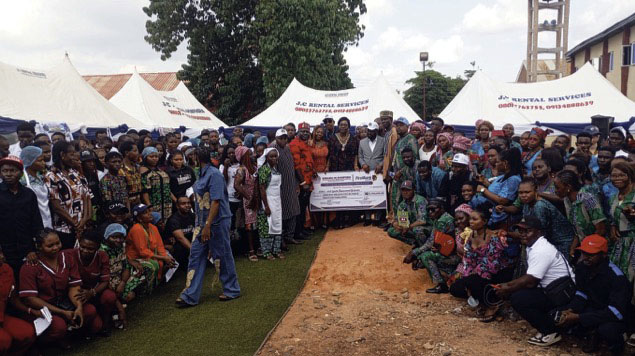
The outreach programme took place in seven communities: Awka-Etiti, Ojoto, Ihite, Nnewi, Nkwelezunaka, Ozubulu and Enugwu-Agidi where according to its National Vice President and Chairperson of this year’s mission, Emma Eziakor Snr, over 1000 people were attended to in each community.
They described this edition as the most successful so far, disclosing that it cost the association over $150,000, excluding what their members who were around contributed to augment as they had to buy drugs locally when all the medications they came with were exhausted.
Eziakor said: “It’s unbelievable that state governments will take so much for granted, even in the United States which is very advanced country, they still have health fairs, where people who have not seen physician for two, three years even five years, have the opportunity to be screened and given information as to how they live their lives, very worthy lives.
“The truth is that we cannot just let things go on a fly, we have to take care of the people; a lot of people are sick; a lot of people need help. So many of them like I said less privileged or you say indigent to a certain extent but for the most fact, these are people seeking help and they want to get medication that are not adulterated.
“It’s very important that the governments, government officials, they take into consideration what they need to do to improve the healthcare of the citizens.”
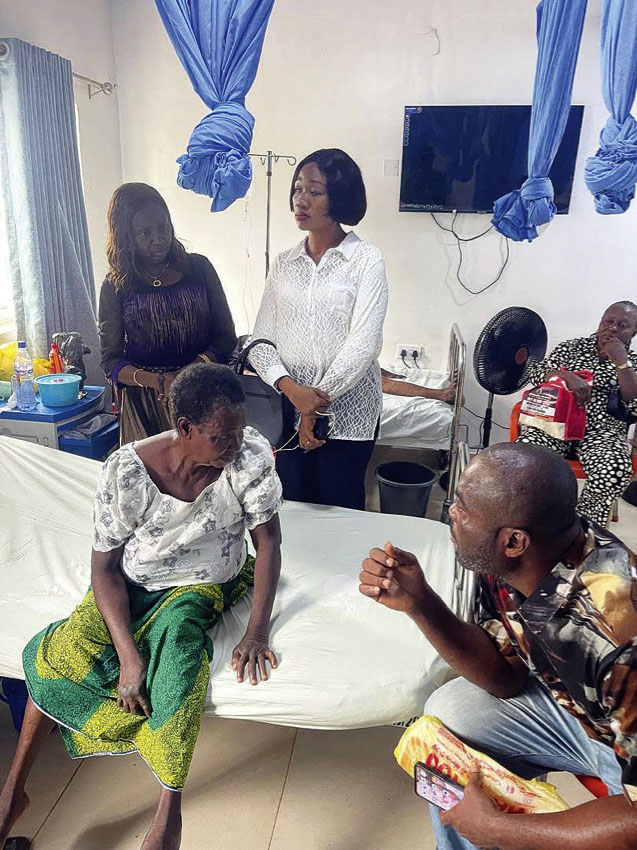
Also, Dr. John Nwaofia, a rehab specialist who was in the team from US said: “I look at people, I feel sad, often I feel very angry because our leaders are taking care of themselves; they can travel abroad for treatments but the basic things the common man can’t get. I had seen some 50-year-old lady yesterday, who has severe kneel arthritis, she can’t walk, she had to be supported by her family members and all I could do for her is to put some steroid into her kneels which only can give some minimal release but what she needs a knee replacement and you have somebody back into the society gainfully employed but we don’t have that, so that is one of the sad situations that we have.”
While the report of the research and development unit on the prevalent ailments in the communities visited was being expected, Eziakor Snr said that they discovered that a lot of people were suffering from high blood pressure, diabetes and so many other ailments: “At the end, we will be able to determine what is predominant in various communities so that healthcare officials can target the type of diseases they have in their communities.”
Daily Sun gathered that arrangements were put in place for the referral of critical cases to specialists to handle. A member of the team, Christian Nwigwe, said that they identified about 14 critical issues at Ihite, which the sponsor asked them to provide the details for a follow up to see that they get the proper care recommended for them. He said that it was the same at Awka-Etiti, Ojoto and Nnewi, “all the towns we had critical issues we stumbled into that you just ask yourself, if it’s not this mission how would these people survive the next day?”
According to the mission leader, the group came with 20 personnel from the US and recruited about 80 persons locally; consisting of nurses, physicians and pharmacists that augment those from the US.