Follow Us on Google
• INEC weighs options as festering insecurity threatens elections
From Fred Itua and Romanus Ugwu, Abuja
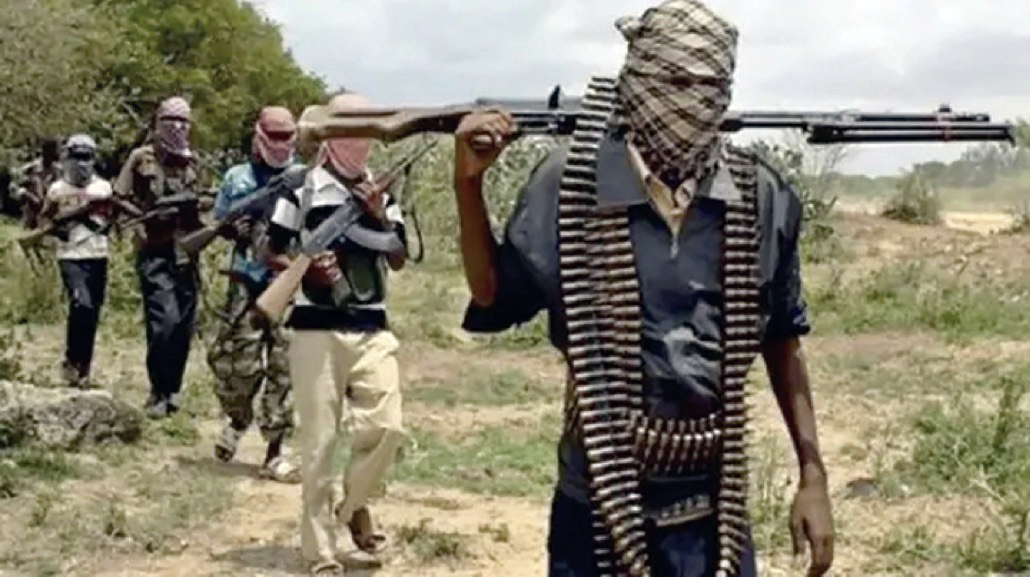
No fewer than five million registered voters in six northern states risk being unable to cast their ballots in next year’s general elections, as bandits and terrorists have taken effective control of dozens of communities in many local government areas, findings by Daily Sun have shown.
Findings indicate that many local government areas across Zamfara, Katsina, Sokoto, Niger, Borno and Yobe states are now largely outside the control of government authorities. In many of these areas, armed groups restrict the movement of residents, impose levies on communities and, in some cases, administer local affairs in place of government structures.
Using Nigeria’s 2023 registered voter figure of just over 93 million, security sources told Daily Sun that the affected councils alone could account for in excess of five million registered voters whose access to polling units cannot currently be guaranteed ahead of the elections scheduled for 16 January and 6 February 2027.
In Zamfara, security sources said more than 100 communities across all 14 local government areas remain under bandit influence, despite a sustained military campaign that has killed several prominent warlords in recent years.
In Katsina, armed groups no longer hold any council outright, but findings indicate they retain control of communities across ten local government areas. Twenty of the state’s 34 councils are said to have reached informal truces with these groups, in some cases involving the release of detained gang members in exchange for hostages.
In Sokoto, bandit networks operating from the Sabon Birni, Rabah and Isa axis have extended their activities into parts of neighbouring Katsina State.
In Niger State, Shiroro and Rafi local governments have recorded repeated attacks, resulting in fresh waves of displacement.
In Borno, Guzamala, Marte, Abadam, Kala Balge local government areas and parts of Askira Uba remain largely inaccessible to civilian administrators, even as Maiduguri and other urban centres remain heavily secured.
This is not the first election cycle in which insecurity has affected voter access. In 2015, the Independent National Electoral Commission (INEC) restricted special voting arrangements for displaced persons to Borno, Adamawa and Yobe states, although Bauchi and Taraba states also hosted large displaced populations at the time.
Boko Haram was reported to have fined villagers in Monguno for collecting their voter cards during that period.
In 2019, INEC declared the governorship elections in Adamawa and Bauchi states inconclusive after violence and irregularities disrupted voting in several local government areas.
The commission subsequently published a report following the emergence of footage showing underage children being presented as voters at an internally displaced persons camp in Borno State.
In 2023, documented cases showed bandits exercising control over large parts of Zamfara and other North West states, making it difficult for electoral officials to deliver materials safely to some areas.
Responding to the findings, a source in the commission’s media and information unit, who spoke on condition of anonymity, said INEC had a security framework in place to guide its approach to volatile areas ahead of the 2027 elections.
The framework, the source said, is built around the Inter Agency Consultative Committee on Election Security, known as ICCES, which brings together security and paramilitary agencies at federal, state and local government levels, with the police serving as the lead agency.
“Before an election, there is usually an impact assessment carried out to identify the flashpoints. We have concluded arrangements to focus on those areas during this exercise, to ensure the elections are held successfully without our officials or materials being threatened. The commission will do the same ahead of the 2027 elections.”
The source cited the conduct of recent elections in Anambra and Ekiti states as evidence that the framework has worked in the past. An earlier governorship election in Anambra State took about five days to conclude, the source said, owing to disruptions in some volatile areas.
The most recent Anambra poll, by contrast, was concluded in a single day following coordination among ICCES members, even in areas previously considered volatile, and a similar outcome was recorded in Ekiti State.
According to the source, both elections had flashpoints identified in advance, allowing INEC to conduct voting in about 490 polling units flagged as areas of concern, following the deployment of additional security personnel.
However, Daily Sun’s findings cover a wider area than the states cited by the source, spanning six states and dozens of local government areas where, according to security sources, police presence has been largely absent for an extended period.
It remains unclear whether an approach applied to isolated flashpoints in individual states can be extended across a region where government authorities have limited or no operational presence.
Asked directly whether elections might not be held in some of the affected areas, the source declined to comment specifically, saying only that concerns over elections not holding in volatile areas “should not be entertained.”
INEC Chairman, Professor Joash Amupitan, has said inclusivity, described as ensuring no eligible voter is disenfranchised, will be among five guiding principles for the commission ahead of the 2027 elections.
Officials who spoke to Daily Sun on condition of anonymity, however, acknowledged that ensuring inclusivity would remain difficult in areas where the commission cannot safely deploy personnel, ballot materials or biometric equipment.
Civil society groups have raised concerns that a repeat of previous patterns in 2027 could result in significant portions of the electorate being excluded from the process, potentially affecting the perceived legitimacy of the outcome in affected states.
Analysts have also cautioned that continued exclusion of these communities from the electoral process could further entrench the influence of armed groups in the affected areas.
INEC has maintained that adequate security arrangements will be made ahead of the 2027 general elections.