Follow Us on Google

From Adesuwa Tsan, Abuja
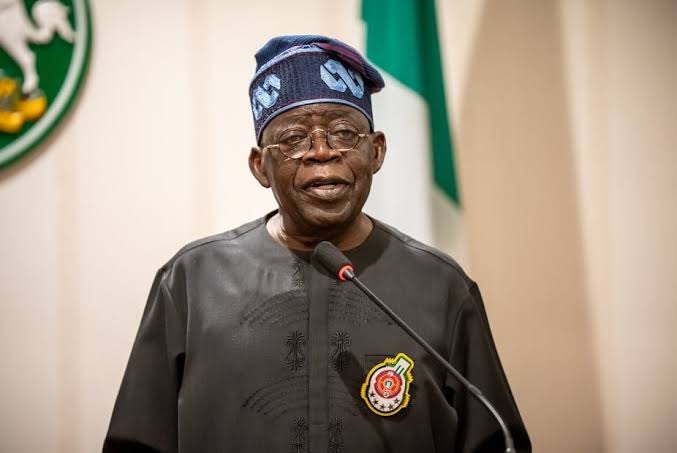
Barely five weeks to the end of the 2026 fiscal year, President Bola Tinubu has asked the National Assembly to repeal and re-enact the N68.32 trillion Appropriation Act, proposing a reduction of about N3.15 trillion in statutory appropriation, even as the Senate yesterday approved a $20.52 billion and €1.045 billion supplementary external borrowing plan for 2026 and 2027, as well as a N10.79 trillion external borrowing request to finance the 2026 budget deficit.
The revised Appropriation Bill, which scaled second reading yesterday, seeks to authorise the withdrawal of N65.18 trillion from the Consolidated Revenue Fund of the Federation, against the N68.32 trillion earlier passed by the National Assembly, while retaining a fiscal deficit of N31.4 trillion, equivalent to about 5.6 per cent of the country’s Gross Domestic Product (GDP).
However, the revised fiscal framework accompanying the presidential request puts aggregate expenditure at N66.1 trillion, against N68.3 trillion in the earlier approved budget, creating a distinction between the expenditure figure contained in the presidential communication and the statutory appropriation sought in the bill.
The Senate subsequently referred the bill to its Committee on Appropriations, directing it to report back within one week, and suspended plenary until December 1 to enable lawmakers to concentrate on the exercise.
In his letter addressed to Senate President Godswill Akpabio and read at plenary, Tinubu explained that the proposed repeal and re-enactment of the Appropriation Act was intended to align government expenditure with existing obligations and available resources.
Under the revised fiscal framework, projected Federal Government revenue, including that of government-owned enterprises, stands at
The fiscal deficit, including project-tied loans, remains unchanged at N31.4 trillion, while planned new borrowing is put at N29.2 trillion, comprising N18.4 trillion in domestic borrowing and N10.7 trillion in external borrowing.
Tinubu said the adjustments would regularise certain expenditures incurred by the Nigerian National Petroleum Company Limited (NNPCL) on behalf of the Federation, address under-provided debt-service obligations, recognise issued capital warrants and supplementary commitments, and accommodate reforms in ministries, departments and agencies (MDAs) and special accounts.
He explained that while most capital provisions for MDAs consisted of amounts already appropriated, some new capital and overhead provisions had been included to accommodate priority national interventions.
These, he said, included the completion of critical road projects, protection of agricultural production, reduction of production costs, improvement of agricultural productivity, enhancement of market access and measures to address water vulnerability.
Tinubu maintained that the adjustments would prioritise existing commitments, improve the credibility and execution of the capital budget and maintain fiscal restraint.
On external borrowing, the President explained that the proposed facility was intended to finance existing borrowing provisions rather than expand the borrowing envelope.
“The proposed 7.7 billion dollars external borrowing, equivalent to approximately N10.3 trillion at N1,346.5 to one dollar, is intended to finance the existing foreign borrowing provision and does not increase the borrowing envelope,” he said.
Tinubu urged the Senate to give the proposal accelerated consideration to facilitate the implementation of the revised budget and settlement of outstanding government obligations.
“I therefore request the kind cooperation of the Senate for expeditious consideration and passage of the Bill to facilitate the orderly implementation of the revised budget and settlement of existing obligations,” he stated.
Leading the debate, Senate Leader, Opeyemi Bamidele, drew attention to the proposed fiscal deficit of 5.64 per cent of GDP, noting that it exceeded the three per cent benchmark stipulated under Section 12 of the Fiscal Responsibility Act, subject to the exceptions provided by law.
He urged the relevant committees to establish the legal and economic justification for retaining the deficit at that level, while subjecting the projected N33.72 trillion revenue, N26.23 trillion capital allocation and outstanding contractual obligations to scrutiny.
Bamidele also warned against making budgetary provisions without corresponding implementation capacity, arguing that completing existing projects would deliver greater economic value than continually embarking on new ones without guaranteeing their completion.
“One of the greatest challenges confronting our public financial management system is not always the absence of budgetary provisions, but the gap between appropriation and actual implementation,” he said.
The Senate Leader also urged the legislature to subject all borrowing arrangements to rigorous scrutiny, including full disclosure of their terms and conditions.
Supporting the bill, Chairman of the Senate Committee on Appropriations, Solomon Adeola, said the proposed review was intended to reposition the budget for greater efficiency and effectiveness.
He assured the Senate that his committee would submit its report within one week, prompting Akpabio to propose the suspension of plenary to enable members of the 73-member committee to concentrate on the assignment.
Akpabio described the exercise as a national priority requiring lawmakers to put political considerations aside.
Other News
“We do not have time to waste,”the said, adding that the revised budget was intended to align government priorities with prevailing realities and ensure that social services received the necessary attention.
Garba Maidoki, who also supported the review, appealed for adequate funding of constituency projects and ongoing infrastructure interventions in rural communities.
He specifically requested the inclusion of the Bimini-Yauru to Zuru road project in Kebbi State, arguing that the N2 billion previously appropriated for the 80-kilometre road was inadequate.
According to him, the completion of the project would help reduce incidents of banditry and other crimes along the axis.
Akpabio subsequently directed the chairman of the Appropriations Committee to liaise with the Budget Office to ensure that the project was captured in the revised budget.
Meanwhile, the Senate approved the Federal Government’s $20,517,755,901 and €1,045,083,643 supplementary external borrowing rolling plan for 2026 and 2027, following consideration of the report of its Committee on Local and Foreign Debts.
The lawmakers also approved a N10,790,360,835,481 external borrowing request to finance the deficit in the 2026 Appropriation Act.
Vice Chairman of the committee, Tokunbo Abiru, presented the report on behalf of its chairman, Aliyu Wamakko.
Defending the borrowing requests, Deputy Senate President Jibrin Barau dismissed concerns that the proposed facilities would push Nigeria beyond internationally recognised debt sustainability limits.
He put the country’s debt-to-GDP ratio at about 35 per cent, saying it could rise to 42 per cent following the proposed borrowing, which, according to him, would still be below the 70 per cent threshold.
Barau clarified that the $20.52 billion and €1.045 billion facilities would not be accessed immediately, explaining that individual projects and funding requests would be assessed against stipulated requirements and national priorities.
“The first request is not something that is going to be drawn down immediately. It is based on requirements. If the requirements are fulfilled, and the requests are in line with our national objectives and priorities, then that will be done on an individual basis,” he said.
He further explained that the borrowing arrangement accommodated the financing requirements of state governments in addition to those of the Federal Government.
On the N10.79 trillion facility, Barau said the borrowing was already provided for in the 2026 Appropriation Act and was necessary to facilitate budget implementation.
Adeola, who also supported the borrowing requests, stressed the need for effective legislative oversight to ensure that the borrowed funds were judiciously utilised.
He explained that while the first borrowing arrangement covered the financing requirements of both federal and state governments, the second was specifically intended to finance the 2026 budget deficit.
Adeola cited the Lagos-Calabar Coastal Highway, Sokoto-Badagry Superhighway and Kaduna-Kano railway project as examples of infrastructure interventions for which borrowed funds were being deployed.
He urged relevant committees of the National Assembly to intensify monitoring of ministries, departments and agencies responsible for administering the facilities.
“Emphasis should be placed on the recommendation of the committee. And that is one area that I strongly believe we should focus on. That is judicious application of this borrowed money.”
Akpabio disclosed that the first borrowing request was transmitted to the Senate on October 2, 2026, and that the Committee on Local and Foreign Debts spent about six weeks examining the proposals before submitting its report.
He explained that the approval would enable the Federal Government to approach the international financial market, identify suitable funding sources and negotiate favourable terms and conditions.
The Senate subsequently adopted the committee’s recommendations through a voice vote, approving both borrowing requests.
It also committed the 2026 Revised Appropriation Bill to the Committee on Appropriations for further legislative consideration, with a one-week deadline for the submission of its report, before adjourning plenary until December 1.