Follow Us on Google
By Agatha Emeadi
In April 1985, the military regime then headed by late Major General Muhammadu Buhari, after securing the approval of the Supreme Military Council, ordered the execution of three Nigerians for trafficking in narcotics or hard drugs.
By then Nigeria was a small piece on the chess board of transit routes for narcotics. To combat this, the military regime opted for the extreme step by having the traffickers executed. For a while, fear gripped other drug couriers. Somehow, after the Buhari regime was ousted on August 27, 1985, the subsequent regimes and civilian administrations tended to have relaxed the iron grip of his regime.
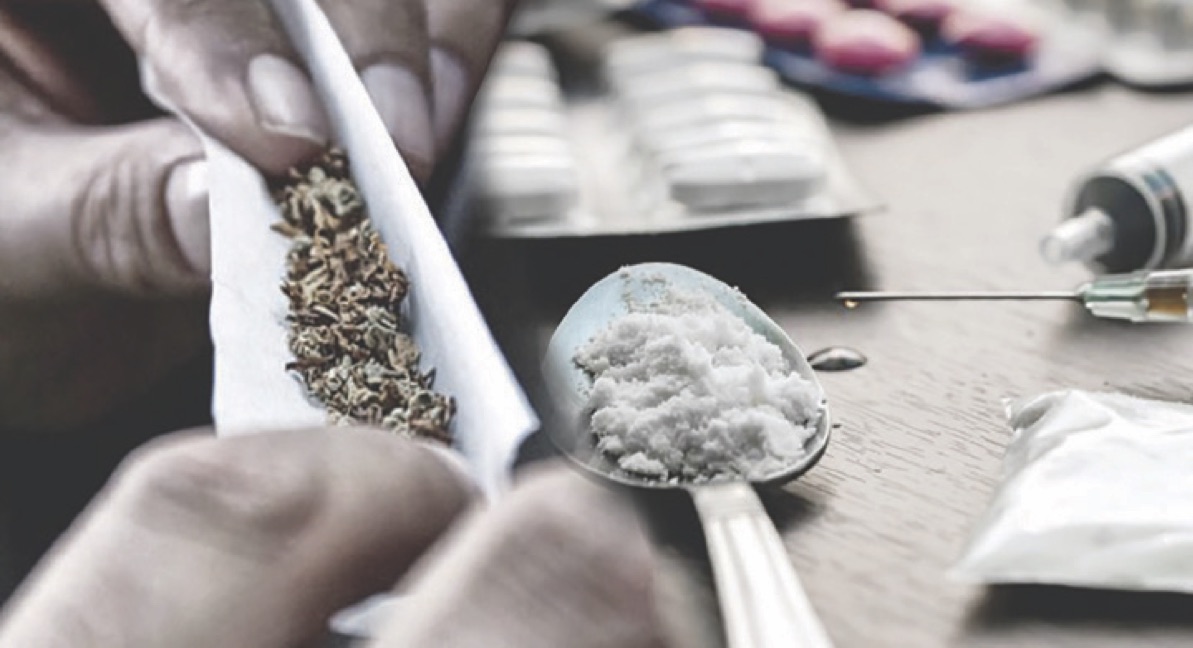
Before long, Nigeria’s role as a narcotics transit point began to grow stronger. In the intervening 40 years from 1985, Nigeria has metamorphosed into a fast-growing narcotics consumption nation, a trend that is pulling in its youths just like the octopus wraps its eight arms around the prey and pulls with such power as a python coils around and squeezes the prey to death. Make no mistake about this, experts warn, mass youth death from narcotics consumption will befall the nation if the country does not sit up and get angry with dealing with the looming disaster. Leaders in the political and corporate governance spaces, faith-based organizations, mothers associations, educational institutions and all manner of groups need to rise up and declare zero-tolerance to narcotics, these experts stress.
It is against this background that concerned parents, influencers, OAPs (on-air-personalities) and everyone else should view the step taken by a Federal university in the South West geopolitical zone, to conduct toxicology tests on the fresh students it offered admission in the 2025/2026 academic year. Passing the toxicological test was set as the first high hurdle before students, even if the student made 9As in WASSCE (West Africa Senior Secondary Certificate Examination) and scored 365 in UTME (Universal Tertiary Matriculation Examination). The toxicology test preceded the usual mandatory medical tests. The university insisted that each student must be accompanied by a parent, to witness the first stage of the screening. Those who failed the toxicology test lost the provisional admission right on the spot.
As Sunday Sun gathered, the university had witnessed an alarming increase in the consumption of narcotics by students. To stem the tide, it resolved to start a discouragement and strict enforcement regime by publicly starting the screening and clearance protocol with the toxicology test as the first step.
The unyielding determination of the university to enforce its decision was amply demonstrated when a female fresh student, 20-year-old Esther (not her real name), failed the compulsory test. Her result showed positive instead of negative. She was automatically disqualified and the hard-earned admission withdrawn. The young lady was visibly devastated and cried her heart out; she was almost inconsolable. It was such a rude shock to her and to many who had erroneously thought the test was a mere exercise to fulfill all righteousness.
When Esther’s tears subsided a bit, other parents who accompanied their children for the toxicology test made suggestions on what she could do. From the gentle inquiry made by sympathetic parents, a picture emerged as to how such fate befell her. Filled with remorse, she said: “I got a job as a waitress in a lounge on the island while waiting for my admission. A lot of men visit the lounge and do stuffs there. That was where I was introduced to substances that make one a bit high. But I am ready to quit both the job and the drug immediately to be part of the university system like my mates.”
The National Drug Law Enforcement Agency, NDLEA, has been battling the drug barons who control the trafficking network in the country. The barons go to great lengths to conceal their operations, in terms of importing and re-exporting drug consignments to foreign destinations. Equally, they strenuously try to cover the internal distribution network for narcotics such as crack, heroin, cocaine, metamphetamine and some other drugs, which addicted Nigerian men, ladies and youths now consume.
People among the elite who can afford cocaine, instances of drug-related travails have often broken on social media, when the stories of individuals undergoing treatment in rehabilitation centres got leaked by their acquaintances.
Until recently, narcotics consumption was more associated with men. But these days, ladies are becoming as hardened as the men in using narcotics. From smoking shisha, more ladies are ascending the ladder of narcotics consumption, oftentimes introduced to drugs by their boyfriends and other lovers.
The story of the beautiful female undergraduate alleged to have killed the chief executive of a popular broadcasting company easily comes to mind. While the relationship with CEO lasted and until his demise, she enjoyed a lavish lifestyle of designer clothes and drugs.
At the Psychiatric Hospital, Yaba, a scene played out one evening while this reporter sat among other visitors who had come to visit their children and wards on admission at the facility and undergoing treatment for exposure to different drugs. During the visiting hours, Sunday Sun met with Cherish, who had come to visit her younger sister at the health facility. She stood in front of the heavy iron gates and requested to see her sister. Not long after she caught sight of her beautiful sister, Nneoma, walking with a stagger towards the gate, somewhat dazed, her eyes sleepy. Two female psychiatric nurses walked behind her. One of the nurses told Cherish to hurry up, informing her that Nneoma had just taken evening injection, which was making dizzy. Affectionately, Cherish hailed her sister: “Nne-Baby. You are looking fine today. Very soon you will come back home, so we will all celebrate.” Nneoma’s eyes were still dull as she tried to look up. She could not respond. The nurses discharged Cherish, so the sister could get back to her bed. As the Nneoma and the nurses turned back to the ward, tear dropped rolled down the cheeks of Cherish as she watched her baby sister deal with after effect of drugs.
After she had calmed down a bit, a conversation ensued and she told the story of what happened to Nneoma.
Her words: “She accompanied her friends to a party where she ate cake that was laced with narcotic substances. When my parents saw her reaction at home, my mum went after her friend and had her arrested by the police. The friend confessed that at the party they attended together, laced-cakes were served with warnings to the effect …’If you are not a partaker, please do not eat oo, e get why.’ Tolu said that my sister insisted on tasting, and ate a good quantity of the cake saying that tasted nice. Initially, she was fine, but far into the night she began to act abnormally. She came back home dizzy and off track. Ever since she came back from that party, she has not been herself. That is why she has been here in the last one month.”
In the same vein, four female students (names withheld) of a popular private university were rusticated because of drug related offences. The school private university is alleged to be a haven for drug peddling among the youths, including girls. The four young undergraduates were roommates. While two were into drugs, the other two were not. The two female offenders were caught. During interrogation, it was gathered that one of the girls was introduced into the illicit substance by her boyfriend on campus. The other two who were not into drugs were sent away for knowing about their bad conduct and failed to inform the authorities of the school.
Studies have shown that substance intake among girls is not predominantly significant like that of the boys. However, concern is growing about this development, creating a strong need to tackle it headlong.
Dr. Evelyn Eziagu, a psychiatrist in the Department of Mental Health, University of Uyo Teaching Hospital (UUTH), who spoke with Sunday Sun expressed concern that young girls now take drugs just like the Statistically, she said that among every 10 teenagers brought to the psychiatric clinic, six are boys while four are females. This is scary, she said and gave this explanation on why girls are consuming substances: “Generally, there are so many factors that make people use substances. There are some biologic factors where people self-medicate themselves. A certain female student was presented to us some time ago in the clinic with depression, but she did not know she was depressed, but could remember her mood was low. She needed something to give herself relief from the problem she was facing and started using cannabis. This is what I mean by biologic, knowing there is a problem and trying to manage it with substances.
“Then again, there is the psychological factor where young ladies may try to cope by using substances when they may not really have a problem, but are psychologically stressed, exposed to certain conditions and then, they drink to help themselves calm down which we call mal-adaptive coping.
“A girl has been jilted by her boyfriend, and then she is struggling with what she went through, she starts with a little alcohol and graduate to substances thinking it will help calm her down. From a little alcohol to a little thing and then they could end up taking more than expected. A case of ‘I am struggling to sleep because of my love-tango challenge’ – that is what I mean by mal-adaptive coping. Psychological stress can also make people use substances. Looking at the environment, there are some female schools that seem to be notorious in taking substances. I remember a female student I am managing who started using substances on account of peer pressure in school. It is an all-female secondary school. She decided to experiment as well as the girls in the school. Down the line she became dependent on the substance and had some behavioral problems resulting from taking the substance.”
However, for young females that have been exposed to narcotics, recovery is possible in several instances. On whether the girls recover completely after being treated in a clinic, Eziagu said: “Some do while some do not. Substance use disorders are a chronic relapsing disorder. Unfortunately, some of them come out and after sometime, they get back again, it is just like a psycho. I also have some patients who have actually been shown abstinence for months to years. It greatly depends on the individual’s determination to stop using substances. Yes, people come out clean, only to relapse when there is a single use of substance again.”
Medical Director of St. Theresa Psychiatric Hospital, Agbala, Owerri North, Imo State, Prof. Jude Ohaeri, is a professor of psychiatry. At one time, he practiced in Kuwait, where he was the only professor of psychiatry in the whole country for many years. In an interview with Sunday Sun, he gave insight on why young boys and girls are now trying out narcotic drugs and also proffered suggestions on the way out. He said: “It is so because the youthful age is the age of experimentation. The way out will be good governance which includes everything, the rule of law, and social support. We can demystify an old long tradition which says when someone is mad and gets to the market, cannot be brought back; it is not correct. Such people on the road who are vagrant it is due to lack of social support and not severity of the illness; though both work hand-in-hand. Social support is a major thing, even without money, the little gain that would have been achieved would be able to maintain a substance victim. This is because when a patient is brought to the clinic and be sure she takes her medications seriously it is a very important index of good prognosis.”
Prof. Ohaeri also warned that another narcotic substance known in local parlance as mkpurumiri is bad, stressing that nobody should take it because it contains methamphetamine which is exogenous. It is a mixture of ingredients and added molecules and cooked up.
Dr. Jombo Jombo, consultant psychiatrist informed that “Psychoactive drugs are substances that when let into the body can alter mental functions and ultimately alter behaviour. A sunset of drugs will experience mental breakdown and manifest gross behavioral abnormalities. Women do not abuse drugs like men. From my practice, prevalence among women is less than 3% of drug abusers. But more impactful, societal expectations of women as home builders, caregivers will suffer. Women are more liable to mood fluctuations than men.”
Beyond the known and costly narcotic drugs, which are not affordable by people in the low income group, there are much cheaper ones. These low-grade drugs are equally highly addictive and clearly e dangerous. According to Jombo, those who went that route never really recovered.
“They became street junkies. Same study informed that the likes of Mkpuru-miri, lipton soaked with regal gin, tramadol, codeine, dry pawpaw leaves, hypo in La Casera and Tom-Tom in Lacasera should be avoided. Other dangerous local and cheap mixtures include spirogyra, gum,10 days urine, methylated spirit in codeine, methylated spirit in coke, dry plantain leaves, cannabis (Igbo) in regal gin, burnt tyres, burnt bitumen and soaked, used menstruation pads. All these should be avoided completely by youths especially girls,” he said.