Follow Us on Google
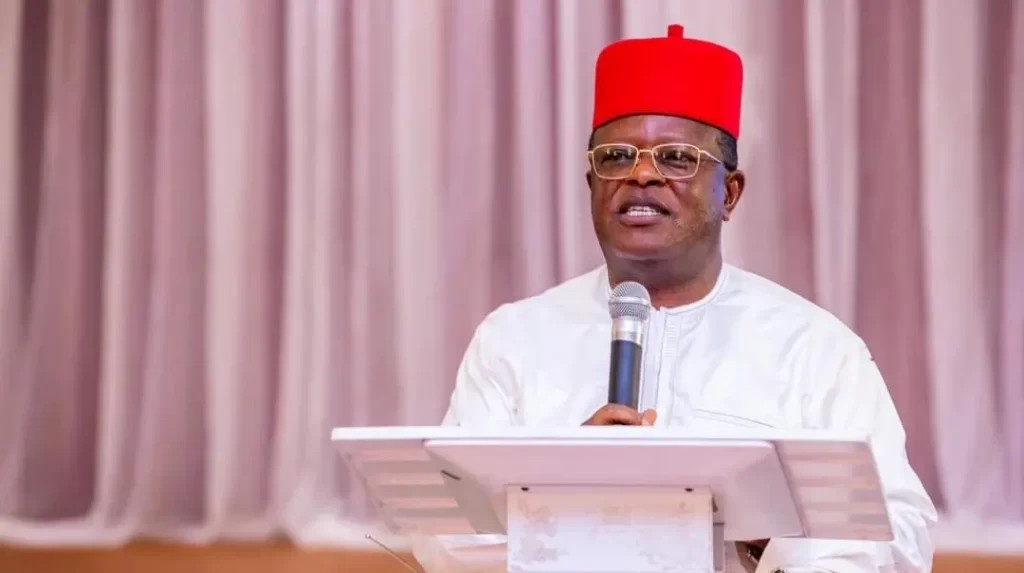
When people talk about leadership in public works, they often mean good intentions. What has made HE Sen. Engr. David Umahi, CON different is something more concrete: visible action, difficult choices, and a clear shift in how government projects are handled. For ordinary Nigerians who live with bad roads every day, that difference matters.
Nigeria’s development challenge has been the long gap between policy announcements and implementation. Roads are among the clearest symbols of this problem. When they fail, commerce slows, safety declines, and national unity weakens. Any administration serious about reform must therefore treat infrastructure not as a slogan, but as a foundation.
President Bola Ahmed Tinubu, GCFR has approached this responsibility with a clear understanding of what is at stake. From the outset, his leadership has emphasized hard decisions, structural reform, and measurable results. His administration’s posture suggests a belief that progress is driven by competence, courage, and consistency. Nowhere is this clearer than in his handling of infrastructure and public works.
One of the most telling choices of President Tinubu has been his appointment of HE Senator Engr. David Umahi, CON as Minister of Works. It shows priorities, and the decision sent a strong message that technical knowledge, proven delivery, and accountability matter. By entrusting one of Nigeria’s most sensitive and capital-intensive ministries to a trained engineer with a track record of execution, the President demonstrated seriousness about moving the country from endless planning to visible progress.
Engr. Senator David Umahi’s public career has been defined by action. Long before his current role, he built a reputation as a leader willing to confront difficult realities directly. As Governor of Ebonyi State, he challenged conventional thinking about what a resource-constrained state could achieve, prioritizing durable infrastructure, insisting on value for money, and pushing projects to completion where others might have settled for excuses. Those years shaped a leadership style marked by firmness, technical attention, and an insistence that public funds must translate into public value.
As Minister of Works, Umahi has carried that same mindset onto the national stage. He stepped into a sector burdened by abandoned projects, cost overruns, weak supervision, and public distrust. Instead of lowering expectations, he raised standards. Stalled projects were revisited, timelines questioned, costs scrutinized, and contractors held more firmly to account. The focus shifted from ceremonial commissioning to actual delivery and long-term durability.
What makes this moment different is the alignment between presidential leadership and ministerial execution. President Tinubu has not only appointed a capable minister, he has backed the work with political will, clarity of purpose, and public support. That trust has created room for decisive action in a ministry where hesitation has historically been costly. It is an indication of a President who understands that reform requires empowering those who can deliver, while still demanding results.
Engr. Umahi stands out today because his record shows a consistent pattern: identify problems honestly, apply technical and managerial discipline, and push for outcomes that people can see and use. His work under President Tinubu’s administration illustrates how leadership choices at the top can unlock performance across government.
The 21 reasons that follow show why David Umahi is widely regarded by Nigerians as an extraordinary personality. They are grounded in actions, challenged systems, and measurable results. These achievements were made possible by a President who chose competence and backed it with authority. Together, they are the model of governance Nigerians increasingly expect and deserve:
1. He confronted abandoned roads head-on.
Projects that had become symbols of neglect were no longer avoided. He took them on directly, set timelines, and returned repeatedly to ensure work did not stall again.
2. He replaced desk supervision with physical presence.
Instead of relying on reports, he showed up unannounced at sites. That alone changed contractor behavior across the country, because excuses no longer survived inspection.
3. He revived the Aba–Port Harcourt Road.
This road had come to represent everything wrong with federal infrastructure. Its revival sent a clear message: even the most difficult failures can be fixed.
4. He demanded value for money.
Inflated costs and weak engineering designs are now questioned openly. Approval is no longer automatic just because paperwork looks complete.
5. He enforced contractor accountability.
For the first time in years, non-performing contractors face sanctions instead of endless extensions. Performance now has consequences.
6. He speaks plainly to citizens.
When funding is tight or delays occur, he explains why in clear language. People may not like delays, but they appreciate honesty.
7. He introduced durable solutions where needed.
In flood-prone and heavy-traffic corridors, concrete pavements are used to ensure roads last longer and reduce constant repairs.
8. He balanced projects across regions.
Federal roads are treated as national assets, not regional favors. This has reduced long-standing feelings of exclusion.
9. He welcomed scrutiny at the National Assembly.
Oversight is treated as a citizen’s right, not an insult. That posture has helped rebuild trust in public accountability.
10. He led with engineering logic.
Decisions are guided by soil conditions, traffic load, and lifespan, not politics or sentiment.
11. He restored confidence in federal delivery.
People now expect progress because they see machines on site and workers active, not just promises.
12. He fixed failed designs, not just surfaces.
Instead of endless patching, chronic collapse points are redesigned from the foundation up.
13. He linked roads to economic growth.
Trailer parks, port access roads, and industrial corridors are prioritized because they unlock trade and jobs.
14. He keeps the public informed.
Inspections are followed by updates and visuals that show what has actually changed, not vague assurances.
15. He made leadership visible again.
Citizens can now associate projects with responsibility. When something goes wrong, they know who to question.
16. He pushed for realistic timelines.
Deadlines are based on engineering realities, not press statements made for applause.
17. He reduced waste through early redesigns.
Correcting scope and design early prevents repeated failures and long-term cost overruns.
18. He strengthened inter-agency coordination.
Road projects now align better with ports, transport authorities, and state governments, reducing duplication and conflict.
19. He raised professional standards.
Engineers and project managers are held to clear benchmarks, restoring pride in technical competence.
20. He changed how excuses are handled.
Instead of vague explanations, there are now clear reasons, clear responsibilities, and clear next steps.
21. He redefined what completion means.
A road is no longer “done” because asphalt was laid. It is done when drainage works, shoulders are stable, and the design can endure years of use.
The above are just tip of an iceberg in what makes Umahi extraordinary. Roads are treated as long-term assets, public funds as a sacred trust, and leadership as a responsibility that must be seen, not hidden. That shift is not abstract. Nigerians experience it every day, on the roads they travel.
Francis Nwaze, FIPMD
Senior Special Assistant to the Honourable Minister of Works (Media)