Follow Us on Google
Urges electorate to shun political gamblers
__________________________________________________________________________
From Juliana Taiwo-Obalonye, Abuja
The Minister of the Federal Capital Territory (FCT), Nyesom Wike, has warned Nigerians that changing the ethnic or regional group controlling political power will not end marginalisation unless governance becomes more inclusive, accountable and focused on delivering tangible benefits to citizens.
Wike, who urged the electorate to reject what he described as political gamblers exploiting grievances to advance personal ambitions, said Nigerians must look beyond ethnic sentiments and power rotation in deciding who deserves public office ahead of the 2027 general elections.
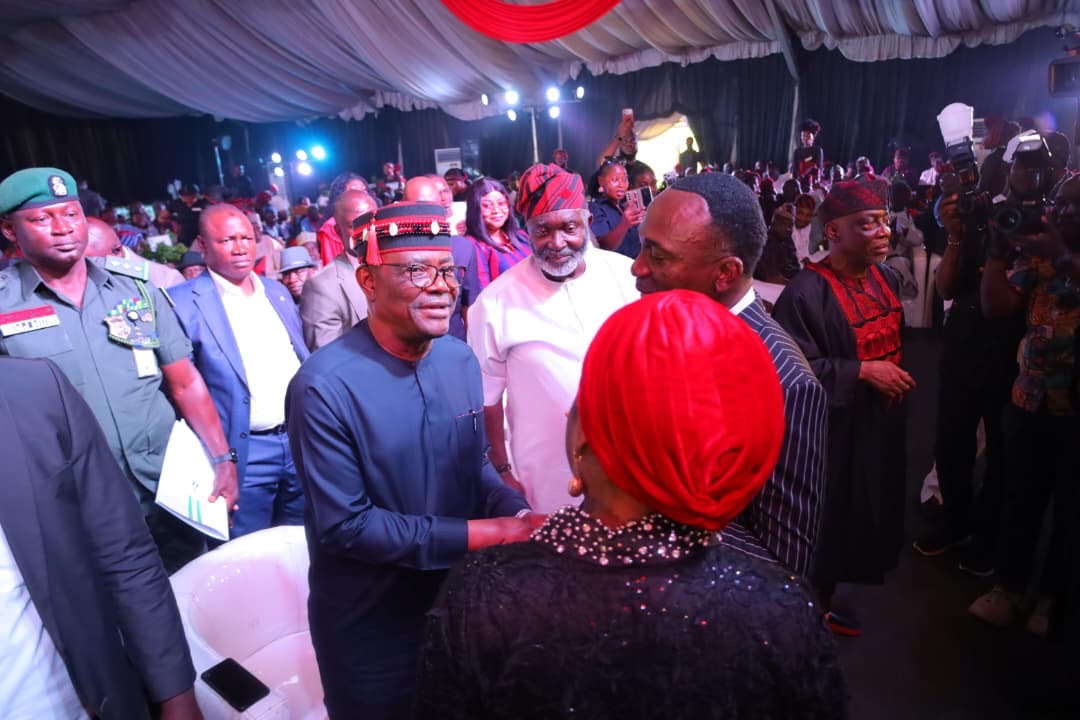
The minister spoke on Thursday at the inaugural Idoma Hall of Fame induction ceremony, organised in collaboration with Och’Idoma as part of the Idoma Centenary Plus celebration.
Delivering a keynote address titled ‘People, Politics and Power Play in Nigeria: The Agitation for Equity and Fairness’, Wike cautioned against politicians who capitalise on perceptions of marginalisation to seek power without demonstrating a genuine commitment to public service.
He questioned the sincerity of politicians who, according to him, failed to identify with disadvantaged Nigerians while occupying public office but now visit internally displaced persons (IDP) camps to celebrate their birthdays because they want to become president.
The FCT minister argued that such gestures should not automatically convince Nigerians of a politician’s commitment to the welfare of the downtrodden, urging voters to examine the records, motives and performance of those seeking their mandate.
He maintained that the agitation for equity and fairness must not become a platform for political opportunism or a contest over which ethnic group or region should control public resources.
“One of the enduring difficulties of our political life is the tendency to convert public power into private possession,” Wike said.
He warned that when public office becomes an instrument for personal accumulation, public resources are diverted towards private interests, while citizens outside the circle of privilege continue to experience exclusion.
According to him, replacing one group with another at the corridors of power would not resolve the problem if the benefits of governance remained concentrated in the hands of a privileged few.
“If one group replaces another at the table while the benefits remain fundamentally exclusionary, the occupants have changed, but the injustice has not,” he said.
Wike also challenged Nigerians to reconsider how they define marginalisation, arguing that genuine advocacy for fairness must be consistent and not determined by whether a person’s ethnic group or political allies are in power.
He said those who protest exclusion when their communities are disadvantaged but remain silent when others suffer the same treatment are not necessarily seeking justice.
Other News
“If we complain about marginalisation only when our own people are excluded, but become silent when others are marginalised after our people gain power, we are not opposing injustice; we are seeking access to its privileges,” he said.
The minister insisted that the credibility of demands for equity depended on the willingness of individuals and political leaders to defend fairness even when it did not serve their immediate interests.
He said Nigeria needed a political culture in which public office was treated as a trust rather than an entitlement, while the country’s ethnic and cultural diversity should be a source of national strength rather than a basis for exclusion.
On the federal character principle enshrined in the 1999 Constitution, as amended, Wike said the provision was designed to promote national unity and prevent the domination of public institutions by a few states or sectional interests.
However, he cautioned that the pursuit of equitable representation should not undermine competence, stressing that public appointments must balance inclusion with the ability to deliver results.
“A Nigerian should not be excluded from public office because of where he or she comes from; neither should competence become irrelevant once a candidate’s identity satisfies a representational expectation,” he said.
Wike said the performance of political leaders should be assessed by the impact of their decisions on citizens rather than the ethnic or regional identities of those occupying positions of authority.
He listed access to jobs, quality education, healthcare, infrastructure, electricity, security and economic opportunities among the tangible indicators by which political inclusion should be measured.
According to him, the appointment of a prominent political office-holder from a particular community would have limited significance if residents continued to grapple with unemployment, inadequate public services and economic hardship.
The minister acknowledged that Nigeria had adopted several mechanisms to accommodate its diversity, including federalism, state creation, revenue allocation, zoning and rotational presidency.
He, however, maintained that such arrangements could not independently guarantee fairness without accountable leadership, effective institutions and a commitment to serving the common good.
Wike also warned against a zero-sum approach to politics in which the advancement of one community was interpreted as the defeat of another.
He called on political leaders to build institutions that serve all Nigerians rather than pursue arrangements designed primarily to benefit their supporters or ethnic constituencies.
The minister commended the organisers of the Idoma Hall of Fame for establishing a platform to recognise distinguished sons and daughters of the community, preserve its history and inspire future generations.
The induction ceremony formed part of the Idoma Centenary Plus celebration.