Follow Us on Google
President Bola Tinubu’s decision not to embark on a state-by-state campaign tour ahead of the 2027 general election is a deliberate strategy to prioritise governance and sell his administration’s record, his Senior Special Assistant on Media and Special Duties, Tunde Rahman, has said.
Rahman, who defended the President’s campaign strategy, said the approach would combine a broad political coalition with grassroots mobilisation, allowing Tinubu to pursue re-election without allowing governance to grind to a halt.
He also dismissed criticism of the inclusion of opposition politicians in the All Progressives Congress (APC) Presidential Campaign Council, arguing that the move demonstrated the President’s ability to build alliances beyond party boundaries.
In an article titled “Tinubu’s Campaign Strategy and the Unnecessary Political Storm,” Rahman said the President was offering a results-based campaign rather than one driven by endless rallies and political theatrics.
“President Tinubu is offering a results-based campaign,” he said, adding that the inauguration of the campaign council marked “a shift from emotional politics to evidence-based politics.”
The presidential aide’s defence followed criticism of the campaign council’s composition and the decision, based on a recommendation by Progressive Governors Forum chairman and Imo State Governor Hope Uzodimma, that Tinubu should not be required to campaign physically in all 36 states.
Rahman maintained that neither decision should be interpreted as a sign of weakness or disregard for any part of the country.
He argued that the inclusion of opposition figures reflected an effort to expand the President’s political base ahead of the election.
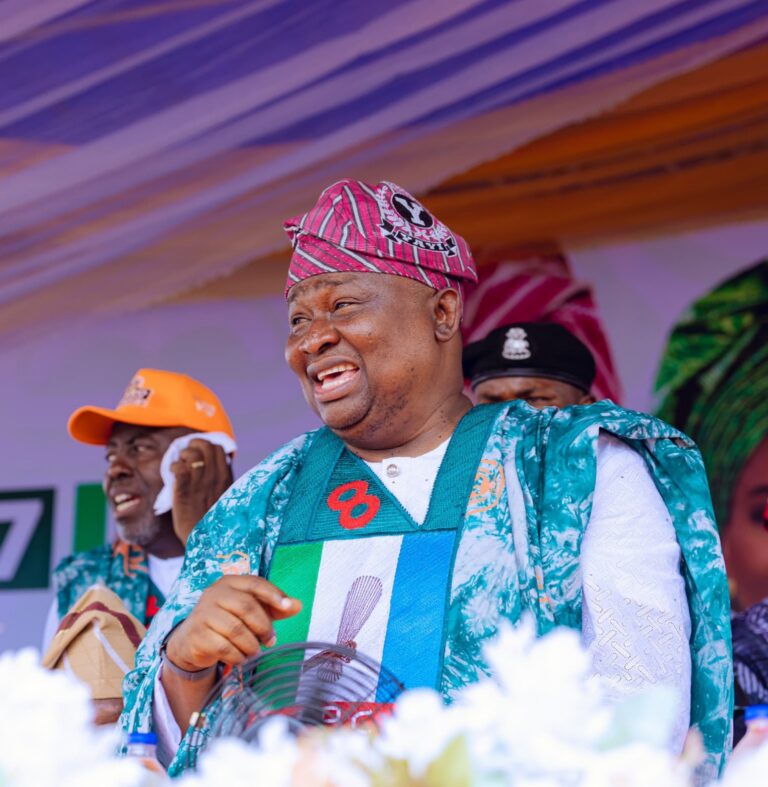
Among those appointed as campaign coordinators are Osun State Governor Ademola Adeleke of the Accord Party, Anambra State Governor Chukwuma Soludo of the All Progressives Grand Alliance (APGA), and the Minister of the Federal Capital Territory, Nyesom Wike, a member of the Peoples Democratic Party (PDP).
Adeleke is to coordinate the campaign in Osun, Soludo in Anambra, while Wike is to coordinate activities in Rivers State and the FCT.
According to Rahman, the Renewed Hope coalition was never intended to be restricted to APC members but conceived as a broader national political movement.
“The Renewed Hope coalition was never meant to be an APC-only choir. It is a national movement,” he said.
He added that the participation of politicians from opposition parties should not be seen as evidence of the ruling party’s weakness.
“In a democracy, when your opponents start seeing reason in your vision, you don’t slam the door shut; you leave it wide open and welcome all comers,” Rahman said.
The presidential aide cited previous elections to support his argument that broad political alliances have played significant roles in securing re-election victories in Nigeria.
He referenced former President Olusegun Obasanjo’s political manoeuvres ahead of the 2003 election, former President Goodluck Jonathan’s outreach to Tinubu ahead of the 2011 election, and the coalition of legacy opposition parties that produced the APC and helped Muhammadu Buhari win the presidency in 2015 and secure re-election in 2019.
Rahman said the lesson from those elections was that political parties seeking national victories must build alliances beyond their traditional strongholds.
“The point is straightforward: to win Nigeria, you must carry Nigeria along,” he said.
On the decision to limit Tinubu’s physical campaign appearances, Rahman argued that the President had already traversed the country extensively during the 2022 campaign, when he sought Nigerians’ mandate to implement his reform agenda.
He said the President should now be allowed to concentrate on governance while the campaign council, party structures and political allies mobilise support across the country.
“A sitting President campaigning in all 36 states for months would ground governance,” Rahman said.
“The President has chosen to let his record campaign for him in many states, while deploying a robust council, surrogates, and grassroots structures to cover the field.”
He argued that the effectiveness of a campaign should not be measured solely by the number of states visited by a presidential candidate but by the reach and effectiveness of the political structures established to mobilise voters.
“What matters is presence—not just physical presence, but the presence of campaign structures, party agents, projects, and benefits,” he said.
Rahman also cited the nationwide organisational approach adopted by former United States President Barack Obama’s campaigns as an example of how political parties could mobilise support without relying exclusively on a candidate’s physical appearances.
He said Tinubu’s strategy would allow him to campaign while continuing to attend to government responsibilities, including security funding, federal allocations to states and engagements with foreign dignitaries and international investors.
The aide further defended the administration’s economic and social policies, citing what he described as improvements in economic growth, naira stability and investor confidence, alongside infrastructure development, the Nigerian Education Loan Fund (NELFUND) and the Consumer Credit Corporation (CREDICORP).
He said the administration intended to use its projects and policy outcomes across the six geopolitical zones to make its case to voters ahead of 2027.
He dismissed the criticism of the campaign strategy as an attempt to reduce the election contest to rallies and political noise, insisting that the administration’s record should remain central to the debate.
In his view, the wider coalition reflected the administration’s determination to consolidate support across party lines, while the limited state-by-state campaign schedule would preserve the President’s capacity to govern.
“Elections are not won by who shouted in the most states, but by who delivered in the most homes,” Rahman said.