Follow Us on Google
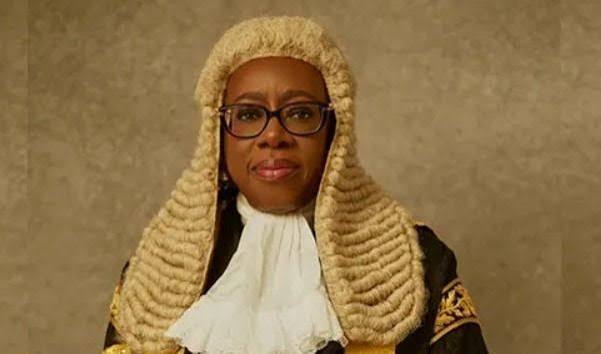
From Godwin Tsa, Abuja
Chief Justice of Nigeria (CJN), Justice Kudirat Kekere-Ekun, has again warned judges against political association and conduct capable of compromising their impartiality in handling disputes arising from the 2027 general elections.
She also cautioned lawyers against forum shopping and filing multiple suits seeking substantially similar reliefs, warning that such practices could produce conflicting orders, undermine judicial processes and expose the Judiciary to avoidable embarrassment.
Kekere-Ekun renewed the warning on Monday in Abuja at the ceremony marking the Supreme Court’s 2026/2027 legal year, five days after delivering a similar caution to judges of the National Industrial Court of Nigeria.
At the Industrial Court’s legal-year ceremony on Wednesday, October 7, she had reminded judges who might be appointed to election petition tribunals that politically sensitive disputes demanded heightened impartiality, restraint and detachment. She urged them to avoid associations and public engagements capable of creating a perception of political alignment.
“Whether sitting in this court or performing a tribunal assignment, you must remain conscious that your conduct will be closely scrutinised,” she had warned.
The earlier admonition also extended to lawyers, whom she cautioned against pursuing parallel proceedings in different jurisdictions in search of favourable outcomes, and against using public commentary to pressure courts or attack judges personally.
Returning to the subject on Monday, the CJN stressed that no judge should behave in a manner that jeopardises the absolute impartiality expected of the Bench.
“Elections inevitably generate heightened political activity and strong emotions,” she said. “They also bring before the courts disputes that may have significant consequences for individuals, political parties and the country.”
She said the Judiciary must handle such matters with the same calmness, detachment and fidelity to the law that it brings to every other dispute.
“Judicial officers must remain conscious that every word they speak and every action they take during an electoral period will be subjected to scrutiny,” she said.
She urged judges to exercise restraint, avoid political association or conduct capable of creating an appearance of partiality, and remain within the boundaries imposed by their oath and the Constitution.
On the conduct of lawyers, Kekere-Ekun said choosing a court or division perceived to be more favourable, or filing multiple suits seeking substantially similar reliefs, could undermine the orderly administration of justice.
“It can also create the unfortunate impression that parties are seeking not justice according to law but a particular outcome from a particular court,” she said.
Other News
She warned that political disputes must not overwhelm the courts to the extent that other cases are delayed or denied timely attention.
“The Judiciary must remain available to all litigants, and the urgency or public prominence of political litigation should not come at the expense of other legitimate claims awaiting determination,” she said.
Counsel, she added, owe courts full candour about related proceedings and must respect the jurisdiction and processes of other courts.
“The responsibility of counsel extends beyond securing an immediate advantage for a client; it includes a duty to protect the integrity and orderly functioning of the judicial process,” she said.
The CJN also called for the protection of judicial appointment processes, describing the selection of judicial officers as one of the most consequential responsibilities of the National Judicial Council and the Federal Judicial Service Commission.
“A Judge does not merely occupy an office; he or she carries the authority of the Constitution and the confidence of the people,” she said. “For that reason, the processes through which judicial officers are selected must command public confidence.”
She said recent appointments reflected efforts to strengthen candidate evaluation through structured assessments, professional and peer feedback, and background checks. Shortlisted candidates are also open to public comment on their integrity and professional reputation.
However, she warned that the process must never become a trial by publicity or a platform for settling personal scores.
Kekere-Ekun condemned the growing use of social media to turn professional disagreements into personal attacks, ridicule, threats and harassment.
“We must resist this culture,” she said. “There are proper channels for criticising judgments, reporting professional misconduct and complaining about the conduct of judicial officers or legal practitioners.”
She insisted that the administration of justice cannot be left to “anger, intimidation or trial by social media.”
“A Judge should be able to decide according to law without fear of personal retaliation,” she said.
“A lawyer should be able to make a legitimate submission without being subjected to intimidation. A member of staff should be able to perform his or her duties without harassment. The dignity of the profession is the collective responsibility of the Bench and the Bar.”