Follow Us on Google
From Femi Folaranmi, Yenagoa; Isaac Job, Uyo; Aniekan Aniekan, Calabar; Tony Osazuo, Benin; Tony John, Port Harcourt
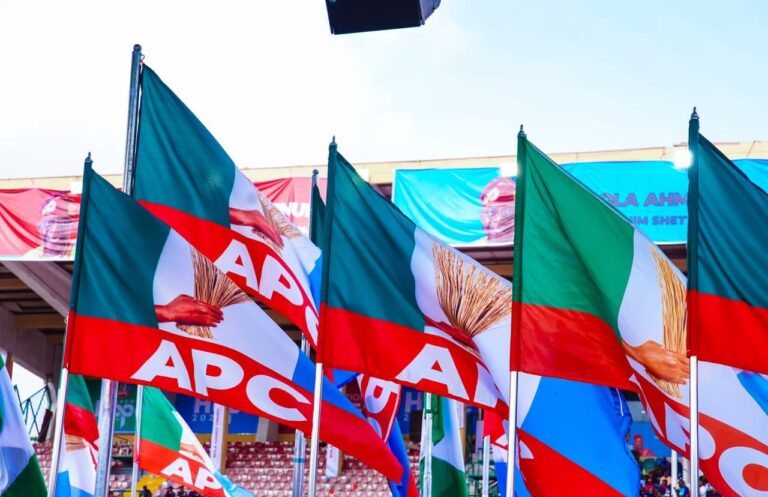
As of May 29, 2023, when President Bola Ahmed Tinubu of the All Progressives Congress (APC) was sworn in, only Bassey Otu, governor of Cross River State, was a member of the President’s party out of the six governors in the South-South region. The zone had for years remained a stronghold of the Peoples Democratic Party (PDP), which had dominated its politics since 1999. Less than six months before the 2027 elections, however, that picture has been completely upturned.
The APC’s political wave has swept through the region, breaking down the walls of resistance in Akwa Ibom, Bayelsa, Delta, Edo and Rivers states, leaving the PDP with a diminished footprint in a zone it once controlled almost entirely. Where issues such as the clamour for resource control, environmental remediation for polluted communities, developmental projects and the broader demand for true federalism might ordinarily be expected to dominate political discourse, the reality on the ground tells a different story.
Instead, elite loyalty, expressed through the mass defection of governors and a significant segment of the political class, including former militant leaders, from the PDP to the APC, has come to define the region’s politics. Alongside this has come the deployment of federal might in Rivers State, simmering resentment among citizens towards the ruling party, and the enduring pull of oil politics, all combining to shape the contest ahead of 2027 far more than questions of resource control or environmental justice.
Governors in Akwa Ibom, Bayelsa, Delta and Rivers have variously defended their defections as acts of political survival, strategic realignment or simple pragmatism, framing their moves as being in the interest of their states rather than a betrayal of the platforms that brought them to power. In Akwa Ibom, Governor Umo Eno has openly linked his defection to the biblical example of the children of Issachar, who understood the times and moved with them, arguing that aligning with the centre positions the state to benefit from federal patronage and to support President Tinubu’s re-election bid.
Yet, not every state in the zone has embraced the APC’s expansion without resistance. Cross River remains led by an APC governor who inherited the state from the PDP through the ballot box rather than defection, and its politics continue to be shaped by a distinct set of local grievances, chiefly the long running battle to recover the state’s lost oil wells. Meanwhile, in Rivers, Bayelsa and Delta, opposition figures, some newly aligned with the African Democratic Congress (ADC) and the Nigeria Democratic Congress (NDC), are working to build a credible counterweight to the APC’s growing dominance, even as ex-militant leaders and federal patronage networks continue to anchor support for the ruling party across the creeks and waterways of the Niger Delta.
These currents point to a South South region whose 2027 contest will be decided less by the traditional grievances of resource control and environmental degradation, though these remain potent undercurrents, than by the calculations of a political elite negotiating access, patronage and survival within a rapidly APC dominated landscape.
The rest of this analysis examines how each of the region’s six states, Akwa Ibom, Cross River, Rivers, Bayelsa, Delta and Edo, is likely to play out among the four main political parties, the APC, the PDP, the ADC and the NDC, as the country approaches the 2027 general elections.
Akwa Ibom: Elite consolidation meets resistance
In Akwa Ibom State, the APC, already strengthened by the presence of the incumbent Senate President and former governor, Senator Godswill Akpabio, received a further boost with the defection of Governor Umo Eno. Eno’s decampment, along with that of the majority of the state’s political elite, has been widely linked to considerations of political survival and self preservation rather than ideological conviction. The governor made no secret of this calculation, framing his move as a decision to take Akwa Ibom to the centre in order to support President Tinubu for a second term so that ongoing reforms could be completed.
The state’s Commissioner for Information, Aniekan Umanah, has been among the most vocal defenders of the defection, listing the benefits of the state’s new alignment with the Federal Government, including the Calabar to Lagos Coastal Highway project and the Ibom Deep Sea Port initiative. Umanah has also lent credence to the political survival theory behind the move, arguing bluntly that the governor would have had no viable political platform on which to contest re election in 2027 given the leadership crisis that has rocked the PDP in recent times.
He has further argued that access to federal government projects and interventions, including the recently approved Federal University of Agriculture and an Air Force base at Eket, would not have been possible without the improved relationship that followed the defection, adding that the region’s long standing agitation for resource control has not been entirely abandoned, since the state believes true federalism is gradually taking shape through proposals such as state police and increased fiscal devolution.
Even former Governor Emmanuel Udom, who had remained outside the APC and might once have been expected to lead opposition to the ruling party, has appeared to fall in line with elite solidarity, recently declaring his support for President Tinubu’s reform agenda. Nonetheless, pockets of resistance remain. The Chairman of PDP Advocates for Peace and Justice, Dr Tom Fredfish, has dismissed Eno’s defection as a journey to political irrelevance, arguing that nothing tangible has changed for ordinary Akwa Ibom people since the alignment with the centre and vowing that opposition voters would use the ballot box to challenge the governor in 2027.
For the APC, the state appears firmly secured for now, but the PDP’s residual structures, together with any inroads made by the ADC or NDC among disaffected voters, could yet complicate what currently looks like a comfortable path to re election for the ruling party.
Cross River: Oil wells, a reconfigured PDP and the turnout question
Cross River presents one of the more genuinely competitive contests in the region, shaped by three distinct issues, the state’s long running bid to recover its lost oil wells, a PDP that appears to be regrouping after years of fragmentation, and a worrying pattern of declining voter turnout. Since Cross River lost its littoral status and its oil wells following the ceding of parts of the Bakassi Peninsula to Cameroon and two subsequent Supreme Court judgements, successive administrations had largely remained indifferent to the struggle to regain the state’s oil producing status.
Governor Otu, however, has revived the campaign, citing new hydrological evidence and surveys to support the case for restoration, a push that has drawn support from stakeholders including a former Speaker of the State House of Assembly and House of Representatives hopeful, John Gaul Lebo. At a solemn assembly in 2025, the governor expressed optimism that the chances of regaining littoral status were very high.
A favourable resolution before 2027 would hand the Otu administration significant political capital and potentially unlock additional revenue for infrastructure across the state, an outcome that would clearly favour the APC. An unresolved outcome, by contrast, could limit the governor’s ability to point to a major deliverable on a grievance that has defined the state’s politics for decades.
Beyond the oil wells dispute, the PDP in Cross River appears to be regrouping after a period of internal fragmentation. A key development has been the party’s nomination of Alphonsus Eba, the immediate past chairman of the APC in the state and a close ally of former Governor Ben Ayade, as its deputy governorship candidate. Regarded as a grassroots mobiliser, Eba’s emergence on the PDP ticket introduces a new dynamic, since he may draw segments of Ayade’s former political structure back towards the opposition.
This factor, combined with the fact that Ayade’s camp has yet to fully accept the outcome of the Cross River North senatorial primary, in which Ayade lost to Senator Jarigbe Agom, suggests the APC will not have an entirely smooth ride in the state, particularly if Governor Otu remains distant from the political survival concerns of the Ayade family.
The PDP’s prospects have been further strengthened by its choice of Arthur Jarvis as governorship candidate, a decision stakeholders say aligns with the state’s unwritten zoning arrangement and has rekindled the party’s chances. The APC’s standing among voters also faces headwinds from prevailing economic conditions, including the rising cost of living and widespread poverty in rural areas. In 2023, the Labour Party, though it lost the governorship contest, won the presidential vote in the state along with a handful of state assembly seats, evidence of a shift in voter behaviour that may not simply reverse itself.
A significant portion of that Labour Party support base, drawn largely from young voters, professionals, entrepreneurs and politically unaligned citizens, appears to be gravitating towards the newly formed NDC in the state amid continuing economic hardship. Compounding all of this is a trend of declining voter turnout in recent election cycles. The APC has said it is targeting three million votes in the next general election and is working to maximise the opportunity presented by the ongoing Continuous Voter Registration exercise, though whether that target translates into actual turnout remains genuinely uncertain.
Rivers, Bayelsa and Delta: Patronage, militancy and the politics of loyalty
The political dynamics in Rivers, Bayelsa and Delta States follow a broadly similar pattern, shaped as they are by their shared status as the states worst affected by oil pollution and environmental degradation from decades of relentless exploration. In these states, resource control is as much a matter of identity as of policy, and while environmental degradation and derivation fund grievances still feature prominently in the discourse surrounding 2027 among civil society groups, academics and think tanks, that discourse has been substantially overshadowed by patronage politics, high stakes manoeuvring and elite realignment.
Other News
Local elites, critics say, only find it convenient to invoke resource control and environmental degradation when they are actively seeking votes, while the influence of opposition figures struggling to build a solid base capable of dislodging the APC adds a further layer of complexity.
In Rivers State, environmentalists and oil producing communities have kept the agitation for environmental remediation firmly on the front burner, pushing for state legislation that would guarantee oil producing communities direct benefits from the thirteen per cent derivation fund. In Ogoniland specifically, the political bloc there has insisted that oil production will not resume until longstanding grievances over political marginalisation are resolved. Yet, the APC led Federal Government, working through the former state governor and Minister of the Federal Capital Territory, Nyesom Wike, and the National Security Adviser, Nuhu Ribadu, has made significant inroads into Ogoniland.
The appointment of several Ogoni indigenes to key federal agencies and parastatals, including within the oil sector, the posthumous pardon and honours extended to the Ogoni Nine, among them Ken Saro Wiwa, and the establishment of the Federal University of Environment and Technology have given the APC meaningful political mileage in a community once defined by its resistance to federal authority.
Though the underlying agitation for resource control and pollution clean up remains part of everyday conversation in Ogoniland, residents appear to have softened their once rigid posture, an outcome that clearly benefits the ruling party.
Wike’s growing influence across Rivers politics, particularly his broad base of grassroots support, is likely to be a major determinant of how the state swings in 2027. Through what is known as the Rainbow Coalition, the minister effectively controls elements of both the APC and PDP structures in the state, positioning him to shape the direction of votes among members of both parties who remain aligned with him. In Bayelsa, meanwhile, the bulk of the political elite has rallied around Governor Douye Diri, who has justified his own alignment with the centre by pointing to the takeover of the second phase of the Nembe to Brass Road project and waivers granted for the importation of critical gas turbine components as tangible reasons for the state to back President Tinubu.
Working alongside the Minister of State for Petroleum, Senator Heineken Lokpobiri, and the Managing Director of the Niger Delta Development Commission, Sam Ogbuku, the governor has been able to galvanise substantial support for the President within the state. A broadly similar pattern has played out in Delta State, where Governor Sheriff Oborevwori, his predecessor Senator Ifeanyi Okowa, and the former militant leader Government Ekpemupolo, popularly known as Tompolo, have jointly rallied support for the ruling party.
Central to politics across all three states is the continuing influence of former leaders of the defunct Movement for the Emancipation of the Niger Delta. Figures such as Tompolo in Delta State, King Ateke Tom, Victor Ebikabowe, popularly known as Boyloaf, Joshua MacIver and Pastor Rueben in Rivers State, Eris Paul, known as Ogunboss, in Bayelsa State, and Asari Dokubo, the leader of the defunct Niger Delta Peoples Volunteer Force, have all been persuaded to lend their support to the APC in the region.
The Federal Government has consolidated this support base through the Presidential Amnesty Programme, which includes stipends for former militants and scholarships for beneficiaries, alongside lucrative pipeline surveillance contracts that have helped retain the loyalty of ex militants and, by extension, their followers scattered across communities throughout the three states.
Investigations suggest that when some political figures floated the idea of former President Goodluck Jonathan entering the 2027 presidential race, it was Tompolo who intervened to advise against the move, making clear that the region’s former militant leaders would not support such a bid. To underline his support for the APC, Tompolo now leads a group called Door to Door that is actively campaigning for President Tinubu’s re election, while the continued construction of the East West Road and the Coastal Road remain projects that APC supporters are using to woo voters across the region.
Despite this growing support, the party will face serious opposition, particularly in Rivers and Bayelsa. The evidently partisan posture adopted by the APC led Federal Government during the feud between Wike and former Governor Siminalayi Fubara, and the treatment meted out to Fubara even after his own defection to the APC, has produced a substantial body of opposition figures determined to work against the ruling party’s interests in Rivers State. These opposition elements, disaffected by what they view as Tinubu’s political posture in the state, have found refuge in the ADC and the NDC in their bid to unseat the APC. They have found a natural leader in former Governor and former Minister of Transport Chibuike Amaechi, now the ADC’s vice presidential candidate, widely regarded as the only political force in Rivers State and, indeed, the wider South South capable of mounting a genuine counterbalance to the APC.
Analysts believe the rift between Wike and Fubara is far from over and could yet snowball into the 2027 governorship contest. While Fubara is not expected to seek re election himself, there has been speculation that he may throw his support behind the NDC’s governorship candidate, Dumo Lulu Briggs, believed to be a relative. Should an alliance between Amaechi, Fubara and Lulu Briggs materialise, it would give the Wike aligned political machine a genuine run for its money, though the resulting contest is likely to be so fierce that it risks discouraging ordinary voters altogether, potentially fuelling voter apathy across the state.
In Bayelsa, the two main opposition parties appear to be working at cross purposes rather than in concert. The NDC remains implacably opposed to anything associated with the APC, while the rejuvenated PDP, under the leadership of a Wike associate, George Turnah, is supporting President Tinubu nationally even as it works against Governor Diri locally. While the PDP intends to work hard to secure victories in federal and state legislative contests, it is simultaneously expected to throw its weight behind the President’s re election bid. For the NDC, the calculation is entirely different. The party’s national leader and former governor of the state, Senator Seriake Dickson, is expected to lead an opposition challenge against the very political structure he once built, with his own senatorial district of Bayelsa West likely to become a fiercely contested battleground as APC aligned forces work to prevent his re election and, by extension, blunt his standing as the NDC’s national leader.
In Delta State, Senator Ovie Omo-Agege appears unlikely to lead any serious NDC opposition to the President, since his defection to the party is widely believed to have been driven primarily by the circumstances of his own senatorial primary rather than any broader ideological commitment. It is considered likely that he will instead work to deliver votes for President Tinubu, even while running against his own party’s presidential candidate, purely to secure his Senate seat.
Edo: A contest decided by local performance
In Edo State, Governor Monday Okpebholo has repeatedly boasted of his ambition to deliver 2.5 million votes for President Tinubu, yet the underlying political dynamics in the state differ markedly from much of the rest of the region. Present economic realities, chiefly the survival pressures created by low purchasing power amid the high cost of goods and services, alongside the visible impact, or lack thereof, of federal and state government projects and programmes, are likely to determine how Edo voters cast their ballots in 2027.
Edo voters appear considerably less preoccupied with resource control agitation, the emergence of Amaechi as the ADC’s vice presidential candidate, or even the fact that the wider South South region is now dominated by the APC, than voters elsewhere in the zone. As is often observed, all politics is ultimately local and issue based, and while the state of the economy is a shared concern across the country rather than one peculiar to Edo, residents will inevitably judge the governor’s performance in applying enhanced revenue allocations from the Federation Account towards fulfilling his campaign promises.
Voters are expected to assess government performance in key sectors such as education, health, agriculture, infrastructure and security, all of which have a direct daily impact on their lives, alongside how effectively Governor Okpebholo mobilises support, having consistently reminded citizens that the financial resources funding projects in the state have been provided by the Tinubu led Federal Government.
The broader alignment of South South states with the APC, coupled with the ongoing Coastal Road project, a highly cherished undertaking among Edo people, could yet produce a bandwagon voting pattern in favour of the ruling party, depending on how effectively the APC is able to convince residents of its achievements in the region.
The ADC and the NDC, both of which draw significant support from former PDP members and aggrieved defectors from the APC and the Labour Party, are expected to mount a genuine challenge to the ruling party in the state. Beyond the factors already outlined, the ultimate outcome of the election is likely to hinge on how successfully the APC manages to reconcile with its own aggrieved members, many of whom remain bitter over the conduct of the state’s contentious party primaries.
A region in flux
Taken as a whole, the South South’s journey from a PDP stronghold to a region now dominated in five of its six states by the APC represents one of the most dramatic political realignments anywhere in Nigeria since 2023. Yet that dominance rests on foundations that are, in several states, considerably shakier than the headline picture of near total APC control might suggest. In Akwa Ibom, elite consolidation around the governor masks continuing resentment among PDP loyalists who view the defection as a betrayal rather than a strategic necessity. In Cross River, a genuinely competitive contest is emerging around the littoral status dispute and a reorganised PDP ticket. In Rivers, the unresolved rift between Wike and Fubara threatens to reopen deep fractures within the ruling coalition itself, while in Bayelsa and Delta, opposition figures aligned with the NDC and the ADC are attempting, with varying degrees of coherence, to convert lingering grievances over resource control and environmental degradation into electoral challenges.
Only in Edo does the contest appear likely to be decided on relatively conventional grounds of local economic performance rather than the patronage networks and oil politics that dominate elsewhere in the zone.
For the PDP, the ADC and the NDC, the path back to relevance in the South South will depend heavily on their ability to exploit these fractures without simply fragmenting the opposition vote further, a risk clearly visible in Bayelsa’s divided opposition and in the uncertain alliance building under way in Rivers. For the APC, the central challenge will be managing an unwieldy coalition of governors, former militants, ex PDP grandees and federal patronage networks without allowing internal rivalries, whether between Wike and Fubara in Rivers or between competing camps in Cross River, to undo the gains of the past three years.
As the region moves closer to 2027, it is this tension between elite consolidation and unresolved local grievance that will likely determine whether the APC’s remarkable capture of the South South proves durable or whether cracks already visible beneath the surface widen into a genuine opposition revival.