Follow Us on Google
From Fred Itua, Romanus Ugwu, Ndubuisi Orji, Adesuwa Tsan, Okwe Obi, Idu Jude, Abuja; Noah Ebije, Kaduna; Jude Chinedu, Enugu; Bamigbola Gbolagunte, Akure; and Femi Folaranmi, Yenagoa
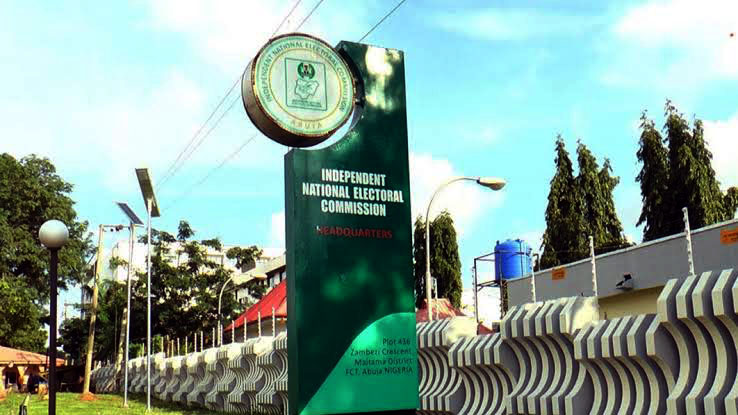
The Independent National Electoral Commission (INEC) has entered the final stretch before the 2027 general elections amid assurances of readiness and persistent public doubt. Political parties, ethnic and regional organisations and community leaders told Daily Sun that funding, insecurity, logistics, the reliability of technology and the commission’s freedom from political pressure had remained unresolved. Supporters of the commission, including leaders of the ruling party, cited off cycle elections as evidence of progress. Their confidence, like the scepticism of critics, was largely conditional on delivery.
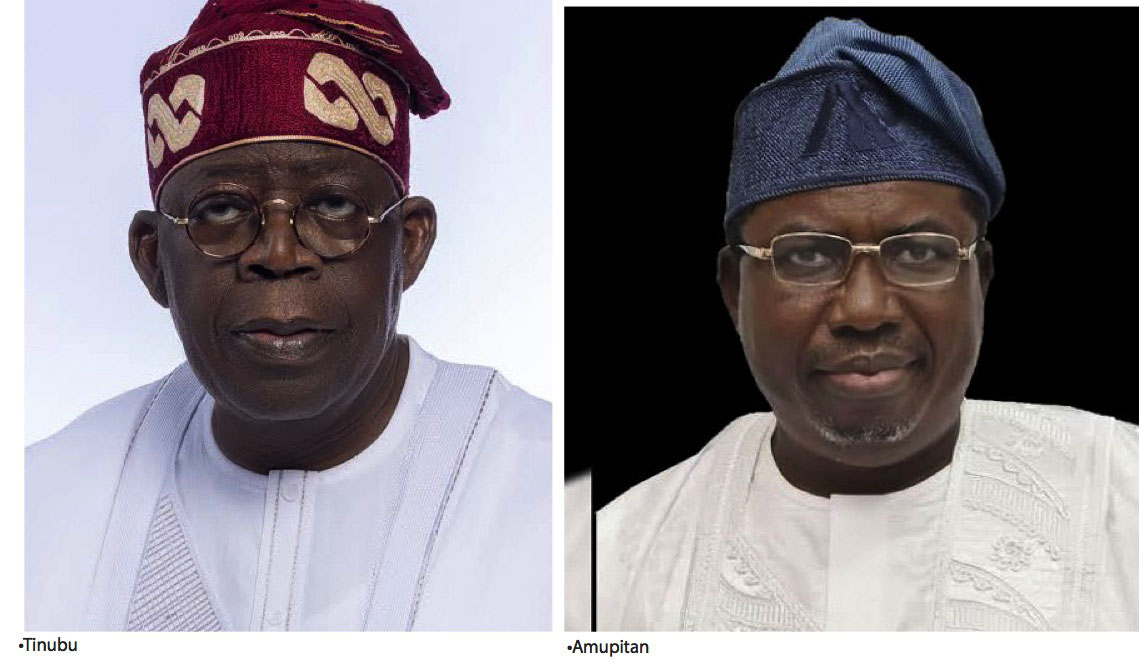
INEC has told Nigerians and international observers that it is prepared. It has published its timetable and announced plans to deploy artificial intelligence and other technological tools. Its Chairman, Professor Joash Amupitan, has assured the country that the commission is determined to conduct elections that reflect the will of the people. The Nigeria Democratic Congress (NDC), through its National Publicity Secretary, Mr Osa Director, noted that INEC had said its timetable complied with the Constitution and the Electoral Act.
The reactions gathered across the political and social spectrum, however, revealed a gap between those assurances and public confidence. Respondents raised concerns about money, security, the conduct of officials and the memory of 2023. Others expressed measured optimism.
Behind each concern was an ordinary person. There was the voter who would have to reach a polling unit, the young corps member who would have to operate a device in an unfamiliar community, and the agent who would have to wait through the night for a result to be counted. Their experience of the election, respondents suggested, would depend on whether the arguments below were settled before polling day.
Funding and the question of readiness
Funding was the concern most frequently cited, although respondents disagreed on whether the commission’s difficulty was real. The National Publicity Secretary of the Arewa Consultative Forum (ACF), Professor Tukur Muhammad-Baba, said the details INEC had recently released on the elections had left many critical questions unanswered, which had reinforced doubts about the commission’s resolve and capacity.
He pointed to the shortage of funds, which the Chairman himself had acknowledged, and said it had been difficult to believe that the matter was being raised barely three months before the polls. He questioned the Federal Government’s sincerity of purpose and asked what the commission had done about the problem until then. “Just sitting down and waiting for some magic?” he asked. He also wondered aloud whether the complaint had been a form of blackmail, adding that he hoped it had not.
The National Chairman of the All Progressives Congress (APC), Professor Nentawe Yilwatda, spoke through his Special Adviser on Media and Information Strategy, Mr Tooki Abimbola. He described the commission’s concerns about funding as legitimate institutional matters that had deserved serious attention. An election involving more than 100 million registered voters and thousands of polling units, he noted, had required adequate funding, early planning and effective logistics. Among the things he said might change before polling day, he listed the timely release of funds, so that there would be no last minute pressure on procurement, logistics or personnel.
The National Publicity Secretary of the Peoples Democratic Party (PDP), Mr Jungudo Mohammed, recalled that INEC had held a world press conference two days earlier to brief Nigerians on its preparations and had asked the Federal Government to release outstanding funds. Government, he said, should release every outstanding fund meant for the election. A member of the ACF Board of Trustees, Mr Anthony Sani, observed that INEC had disclosed no major challenge other than funding, from which he concluded that the commission had been on course. He named the timely release of funds as the immediate priority.
Director offered a contrasting account. He said the commission had been given every resource it demanded and therefore had no excuse for failing to deliver a transparent, free, fair and credible election.
Insecurity and the promise of inclusion
Insecurity was presented as a threat to both the conduct and the inclusiveness of the polls. Muhammad-Baba said one of the most glaring omissions in INEC’s released details had been a clear strategy for holding elections in areas ravaged by banditry and terrorism, where large populations had been displaced. He warned that, deliberately or otherwise, whole communities in the North might be unable to participate, which he said was likely to produce “abysmally low voter turnout”. The ACF, he added, had wanted firm assurances of adequate preparation, fair treatment for all contestants and an impartial process.
Yilwatda said there could be no credible election without a secure environment, and that INEC, security agencies, political parties and other stakeholders had to work together to protect voters, officials and materials. Responsibility for election security, he argued, could not rest on INEC alone. He called for stronger security in identified flashpoints so that Nigerians could vote without fear or intimidation.
The National Organising Secretary of the Labour Party (LP), Mrs Oluchi Opara, said any reasonable government owed its citizens the duty to secure lives and property. She urged the Federal Government to intensify its efforts against insecurity, which she said had claimed precious lives and damaged the economy, and described a peaceful environment as essential for credible elections.
The National Secretary of the New Nigeria Peoples Party (NNPP), Mr Dipo Olayokun, took a narrower view. Insecurity, he said, had never been the real problem in elections. The problem had been the recruitment of thugs, and the success of an election had always been a collective responsibility.
Director linked the security question to political conduct. He alleged violence, intimidation and threats to manipulate the election by the ruling APC, and urged the National Peace Committee, led by Bishop Matthew Kukah and General Abdulsalami Abubakar, to speak out. The APC’s own submission had called on parties and candidates to take responsibility for peaceful campaigns and to reject violence, vote buying and inflammatory rhetoric.
The shadow of 2023 and the transmission of results
The conduct of the 2023 general elections shaped many of the reactions, in particular the failure to upload presidential results to the commission’s portal in real time. Opara recalled that the election had seen several parties, including the LP, in and out of court over what INEC described as glitches, which she said many Nigerians had yet to fully understand. The elections, she added, had left many unanswered questions, and Nigerians should approach 2027 with high expectations.
The Convener of the South East Good Governance Project and Ohanaeze Ndigbo chieftain, Mazi Ikechukwu Bismarck Oji, observed that only the presidential election had suffered a glitch in 2023, and that this had raised concerns about the credibility of the process. He alleged that machines had sometimes been deliberately bypassed or sabotaged to change outcomes.
The campaign organisation of the Allied Peoples Movement’s presidential candidate, Mr Seyi Makinde, told INEC through its Director of Strategic Communications, Mr Richard Ihediwa, that the commission would have no excuse for failing to transmit results. Ihediwa said point of sale terminals had functioned even in remote villages and that devices could run for 48 hours after charging, so neither network nor power failure would be an acceptable explanation.
The LP presidential candidate, Dr Chibuzor Okereke, offered a more technical reading. Electronic transmission, he said, had simply meant using technology to aid the process, and the traditional certification of results had remained the anchor. A party that deployed agents to every polling unit would not need a glitch to know the outcome, because it would hold the certified Form EC8A that the law required to be posted at each unit, and any citizen could photograph it. He nonetheless described it as not good enough that results from 2023 had remained incomplete on the portal.
Okereke recalled that the Chairman had spoken of risk assessments, mock processes and technology testing, and had said that where the BVAS machines failed the election would be rescheduled. He added that the Chairman had declined to say that the transmission portal would not be attacked.
A former Social Democratic Party chairman in Plateau State, Mr Emmanuel John Kadiya, drew a different lesson from the Osun governorship election. Voters, he said, had stationed an agent at each unit and had waited for their votes to be counted and uploaded, which he took as a sign of the public’s growing insistence on transparency. Yilwatda said INEC had to close all operational and technological gaps and ensure that the systems deployed on election day worked reliably.
A former President of the Ijaw National Congress, Professor Benjamin Okaba, framed the matter as one of trust. Nigerians, he said, had continued to ask what caused the 2023 glitches, whether they had been fixed and whether the fix had been independently audited. INEC, in his words, had to show and not merely tell.
Logistics, personnel and the human factor
Several respondents looked beyond machines to the people and processes around them. Okereke argued that INEC could not continue to rely on the National Union of Road Transport Workers and what he called agbero groups to move sensitive materials. The country, he said, should contract registered transport and logistics companies bound by legal agreements. Logistical failures, he noted, had twice forced elections to be shifted.
He recounted an episode in which union members had taken election officials to a location and then abandoned them when their political interests were not served.
He also said National Youth Service Corps members serving as ad hoc staff should be adequately accommodated so that they would not be exposed to gratification from politicians. He recalled an occasion on which wrong access codes had been deliberately given to corps members, keeping them from operating card readers between 8am and 2pm. He added that he had not believed returning officers were the right people to determine results, since people had in the past forced them to swear oaths.
Oji asked why transportation and distribution of electoral materials had remained a problem despite INEC’s resources and experience. He alleged that logistical difficulties had sometimes been used as deliberate obstacles to transparent elections, and he identified the human factor, political interference and the sincerity of officials as greater threats to credibility than the supply of equipment.
Olayokun placed responsibility elsewhere. INEC, he said, had not been the one going to politicians. Politicians had gone to INEC to corrupt it, and the Chairman and management had made policies but had not been the ones in the field. Yilwatda said INEC had been deploying technology, additional BVAS machines and tighter logistical controls, and that its off cycle elections had provided useful operational experience, though he stressed that preparation was a continuing process.
Okaba described preparedness as resting on three tests. The first was the credibility of technology. The second was logistics: whether materials could reach places such as Bomadi, the Arogbo creeks, Borno and Lagos on time, since 2023 had shown logistics to be the weakest link. The third was people: whether some 1.5 million ad hoc staff would be well trained, well paid and insulated from pressure.
He estimated preparedness at 55 per cent and said the remaining 45 per cent had to be earned through transparency before February 2027. He proposed live public simulations of BVAS and IReV uploads in all 36 states and Abuja, early publication of a cleaned voters’ register, an Electoral Offences Commission, a joint code of conduct for the Police, the Army and the Nigeria Security and Civil Defence Corps, and civic education that went beyond jingles.
Independence and political pressure
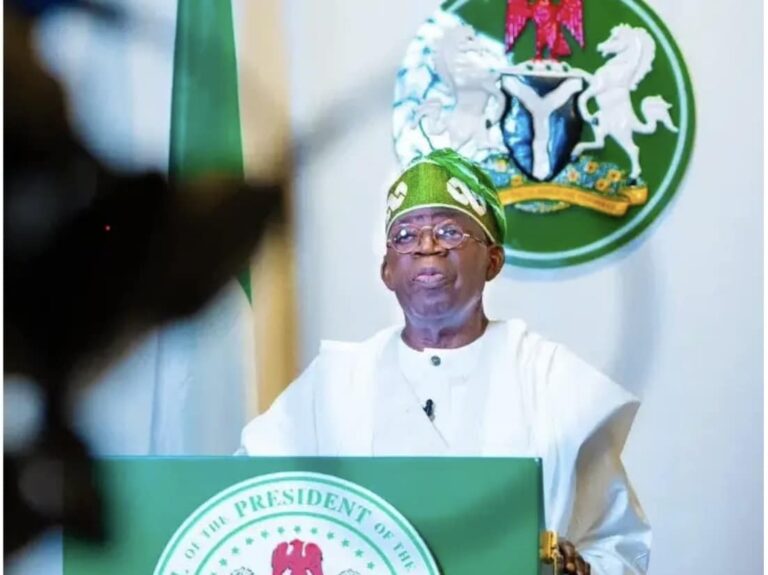
The most contested issue was whether INEC would be allowed to operate without interference. Yilwatda dismissed the insinuation that President Bola Tinubu would not allow a free and fair election. Through Abimbola, he said the President had a constitutional responsibility to protect democratic institutions and that there had been no reason to believe he would undermine the process. The APC, he added, should win through ideas, its record and the confidence of Nigerians.
Sani said he had not doubted the President’s resolve, observing that Mr Tinubu had been aware of high expectations and had publicly identified as a democrat. He pointed out that the APC had lost Lagos, Katsina and all five South East states in 2023.
Others were less certain. Opara said she hoped the President would not interfere with INEC’s constitutional responsibility and that she wanted to believe the commission was truly independent. The National Publicity Secretary of the LP, Barrister Ken Asogwa, said that on paper Amupitan had appeared well prepared, as a Senior Advocate of Nigeria and a professor of law. He nevertheless expressed concern about whether the leadership would be given the independence it needed.
Asogwa pointed to the FCT Minister’s reported declaration that he had to win the FCT and Rivers State for the President “by fire and force”, and to threats by governors against anyone in their states who did not support the APC. The credibility of the elections, he said, would depend on institutional independence as well as the integrity of INEC staff.
Director alleged that the President and the APC had not hidden their wish to win at any cost, and said INEC would not be given a free hand. He urged Nigerians to insist that their votes counted, and called on Nigerians and the international community to keep up pressure for compliance with the rules. Kadiya said he doubted that the Federal Government would give the umpire a free hand, though he suggested that a decisive margin of victory would leave less room for intervention than a narrow one. Mohammed said INEC had been on the right track but that the PDP had wanted a stronger commitment to neutrality and impartiality.
Okereke addressed a rumour that Amupitan had been part of the President’s legal team in the 2023 tribunal matters. He said he had not believed it, noting that it had surfaced during the Chairman’s National Assembly screening but that no party or individual had substantiated it beyond rhetoric. He added that he had never believed in personality as the basis for success, only in institutional order. Oji, for his part, said the Chairman’s utterances and actions had not so far given Nigerians sufficient assurance of impartiality.
Okaba called the question the defining one of 2027, and said the President’s own legacy depended on it. Independence under the Constitution, he observed, had needed political will in practice. He listed the signals he expected from the Presidency: no interference in INEC’s appointments and funding, no tolerance for officials or party loyalists who threatened voters, and a public commitment that security agencies would protect voters and not favour anyone. If the President granted a truly free hand, he said, history would judge him kindly whatever the outcome. If he did not, the election would be disputed before it began.
The Afenifere leader, Chief Kole Omololu, held the opposite expectation. He described the President as a democrat whom he had known for some time, and said he had not expected interference in the commission’s affairs. He pointed to the Osun governorship election, where, according to reports, the President had telephoned the eventual winner, Governor Ademola Adeleke, to congratulate him before the final result was formally declared. Adeleke, he noted, had not been the candidate of the President’s party.
Regional and ethnic perspectives
Concerns from regional and ethnic organisations differed in emphasis. The ACF’s submission centred on inclusion. It stressed that insecurity and displacement could keep large populations from voting and questioned the absence of any stated strategy for those areas. Sani, speaking from the same platform, urged INEC to exercise caution in implementing a Supreme Court judgment that had restored provisions of the Electoral Act earlier expunged by the Court of Appeal. He cited the number of candidates potentially affected and the fact that their defections had been encouraged by the Court of Appeal’s decision.
The South East perspective, expressed by Oji for the South East Good Governance Project and Ohanaeze Ndigbo, centred on neutrality and integrity. He said the commission had had an opportunity to restore public confidence by proving critics wrong. Nigerians, he said, had deserved an umpire whose neutrality would be visible from the deployment of personnel and materials to the collation and declaration of results. He warned that the country might not withstand the shock of a post election crisis.
From Plateau State, Kadiya said the creation of additional polling units would give voters a better chance to turn out. He described access to polling units, infrastructure and awareness as improvements achieved over 25 years. Okaba, speaking from the Ijaw perspective, framed access in geographical terms, asking whether materials would reach riverine communities such as Bomadi and Arogbo as reliably as they had reached cities.
Responsibilities of parties, politicians and citizens
A recurring theme was that credibility had not been the commission’s burden alone. Yilwatda said credible elections had been a shared national responsibility involving INEC, security agencies, parties, candidates, the media, civil society and the voter. He added that INEC had to communicate more openly about its preparations and challenges.
Olayokun said that as long as Nigerians believed elections concerned only INEC, problems would continue. He cited Osun, where he said voters had stood their ground at polling centres. He asked whether INEC could be blamed when a politician handed a voter large sums of money, and said the law enforcement agencies that should have checked such conduct had watched as negotiations took place.
Okereke said distrust of INEC had also been distrust of Nigerians, since the commission’s staff, from its Chairman to its ad hoc workers, had all been Nigerians, and polling units had been managed by community members. He said the capacity and funding of parties had remained a problem, because only ruling parties had appeared able to deploy agents to every unit. He added that pre election litigation had suggested that post election litigation was likely, and that the electoral process had not yet matured enough for people to accept results from the field.
Okaba made a similar appeal to citizens, urging them to refuse to sell their votes and to refuse to be used for violence. A credible poll, he said, had not been only INEC’s task but the task of all. Omololu directed his appeal at the opposition. He urged presidential candidates to concentrate on issues and to offer credible, practicable alternatives to the incumbent administration’s policies, particularly on insecurity, unemployment, energy, infrastructure, fiscal pressures and the cost of living. Promises, he said, should withstand basic economic scrutiny. If a candidate had said petrol could be sold at N300 per litre, Nigerians would be entitled to ask on what basis, and who would absorb the difference if the market cost were higher.
Voices of reassurance and conditional confidence
Not every respondent doubted the commission. Yilwatda said INEC had been substantially better positioned for 2027 than at this stage of earlier cycles, citing its published timetable, the start of its electoral programme and its deployment of additional BVAS machines. Promises, he said, had to be matched by performance, and INEC should be given the opportunity to show that it had learned from experience.
Mohammed said INEC had done well so far and asked Nigerians to give the Chairman the opportunity to handle the election. He cited the Osun governorship election and bye elections held about a month earlier, in which he said the will of the people had been reflected. Omololu said INEC had had no cause to fail given the period it used to plan, and that the commission should be judged by the quality of that preparation and not by speculation. Its experience of off cycle elections with BVAS, electronic result management and voter registration, he said, should be consolidated and its weaknesses addressed.
Opara expressed hope that preparedness would be significantly better than in 2023. She said Nigerians had been looking to the new leadership with renewed hope, and compared the expectation to the credibility witnessed in Osun. Okereke said he had absolute confidence in the technical and operational competence of INEC, and Kadiya said the people would be their own referee. Even among those who voiced confidence, however, the endorsements were conditional on delivery, on funding and on non interference.
Conclusion
The submissions have shown a widely shared expectation that the 2027 elections must reflect the will of voters, together with sharply divided views on whether INEC would meet it. Funding, security, logistics, results transmission and independence were raised by respondents from the ruling party, the opposition, ethnic and regional bodies and civil society, though they differed on where responsibility lay. Some placed it on the commission and the Federal Government, others on politicians who had compromised officials, and others on citizens and parties themselves.
Several respondents also pointed to the Osun governorship election as a recent reference point, which they cited as evidence of what the commission could deliver. Critics, however, held that one credible contest had not settled the question of a general election.
In the words of Yilwatda, Nigerians would judge INEC not by its preparations alone but by the quality of the elections it delivered.