Follow Us on Google
From Noah Ebije, Kaduna
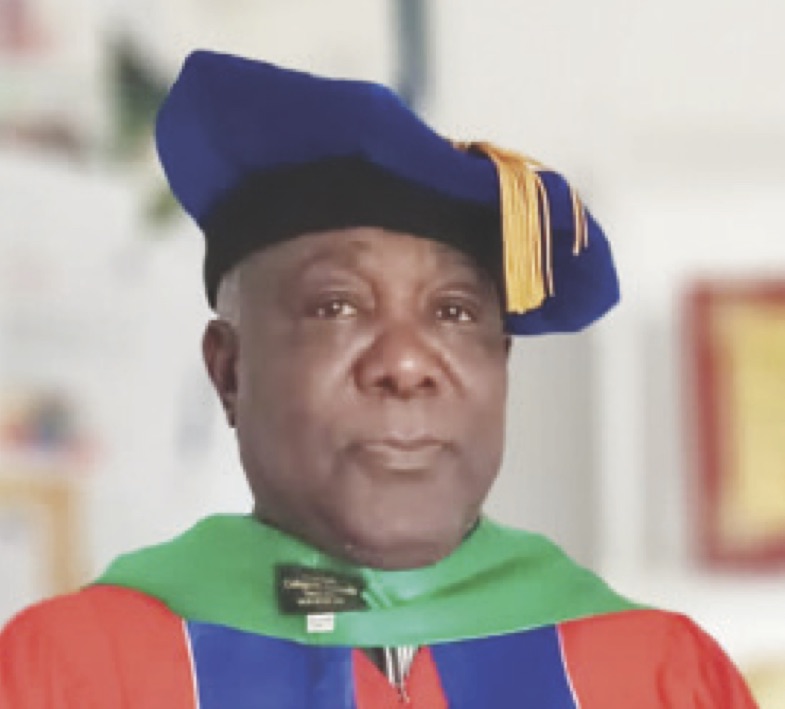
Prof. Bello Magaji is a Professor of International Law and the Dean of the School of Law at the American University of Nigeria (AUN), Yola.
He is an accomplished legal scholar and administrator with deep engagement in issues of international law, democratic governance, and legal education reform. He has contributed to academic journals and national policy conversations on law and development in Nigeria and beyond.
In this interview, Magaji warned that as much as incumbency has advantages to win the 2027 election, it does not guarantee automatic victory. He cited how former President Goodluck Jonathan, an incumbent lost the 2015 election to his arch opponent, Muhammadu Buhari.
As a Professor of International Law, what is your reaction to American President, Donald Trump’s capture of Venezuela’s President, Nicolas Maduro and the latter’s trial in court?
The action constitutes a serious breach of international law and a dangerous precedent in international relations. It would be a rude shock to any serious student of international law because it would amount to a brazen violation of Article 2(4) of the United Nations Charter, which prohibits the use of force against the territorial integrity or political independence of any state. Beyond that, it would also violate the principles of sovereign equality of states, non-intervention in domestic affairs, and immunity of sitting Heads of State under customary international law. Even where there are allegations of human rights abuses or dictatorship, the lawful routes are through international mechanisms such as the International Criminal Court (ICC), regional bodies, or UN-mandated processes, not unilateral action by another state. Such conduct would undermine the very foundations of the global legal order and could encourage powerful states to act as global policemen, which is precisely what the UN Charter was designed to prevent after the devastation of the Second World War.
One of the opposition parties in Nigeria, the African Democratic Congress (ADC), says Trump’s action in Venezuela is a lesson to Nigeria. Do you agree?
To some extent, yes, but with important qualifications. The lesson is not that foreign powers should intervene militarily or forcibly in sovereign states. Rather, the real lesson is that persistent abuse of power, erosion of democratic institutions and disregard for the rule of law can isolate a country internationally and attract serious diplomatic and economic consequences. For Nigeria, the real warning is internal: if democratic institutions are weakened, if elections lose credibility, and if accountability mechanisms fail, then external pressure through sanctions, travel bans, economic isolation, and diplomatic consequences may follow. But that does not justify illegal foreign intervention. The solution must always be domestic reform through constitutional and democratic means.
What is your stand on a Muslim-Muslim ticket for the 2027 presidential election?
I do not support it. Nigeria is an extremely diverse country with deep ethnic, religious, and regional sensitivities. Leadership at the highest level should promote national inclusion, balance, and confidence among all segments of the population. At a time when insecurity, distrust, and social fragmentation are already high, a same-faith ticket risks reinforcing perceptions of exclusion and marginalisation. Political strategy should not override the need for symbolic and practical unity in a fragile plural society like Nigeria.
Do you think the 2027 presidential election will be a walkover for President Bola Tinubu, given APC’s control of most states in the country?
It may appear so on paper, but Nigerian politics is rarely that predictable. Control of state governments does not automatically translate into guaranteed electoral victory at the federal level.
The performance of the economy, public perception of security conditions, the strength and credibility of emerging opposition coalitions such as the ADC alliance, youth participation and voter turnout and several factors could reshape the political landscape in the country. Nigerian voters have shown repeatedly that they can produce surprising outcomes when dissatisfaction becomes widespread. Therefore, while incumbency offers advantages, it does not guarantee victory. Remember Goodluck Jonathan, an incumbent, who lost to Muhammadu Buhari.
What is your reaction to President Tinubu’s tax policy, which has generated mixed reactions?
Tax reform is necessary for sustainable national development. No serious economy can function without an efficient and credible tax system. However, my major concern is the alleged irregularities and lack of transparency surrounding the tax gazetting process. For tax policies to succeed, they must be grounded in clear legal authority, proper legislative procedures and public confidence. If people believe that processes are fraudulent or rushed, even sound policies will face resistance. Beyond legality, government must also ensure that taxation is matched by visible public services and accountability. Citizens are more willing to pay taxes when they see tangible improvements in infrastructure, healthcare, education, and security. Without transparency and trust, tax reforms risk becoming socially and politically counterproductive.
Insecurity is a major socio-economic challenge in Northern Nigeria and the country as a whole. What is the way out?
The insecurity facing Nigeria today, whether in the form of terrorism, banditry, kidnapping, farmer-herder conflicts, or urban crime, cannot be solved by military force alone. It requires a comprehensive, multi-layered strategy that addresses both the symptoms and the root causes. First, there must be a serious reform of the security architecture. Our security agencies need better intelligence gathering, improved inter-agency cooperation, modern equipment, and stronger accountability mechanisms. Many security failures are not due to lack of manpower, but due to poor coordination, weak intelligence systems, and corruption within the system. Second, insecurity in Northern Nigeria is deeply linked to mass poverty, youth unemployment, and educational deficits. When millions of young people are idle, unskilled, and disconnected from the economy, they become easy recruits for criminal networks and extremist groups. Therefore, any serious security strategy must include large-scale investment in education, vocational training, agriculture, and small-business development, especially in rural and conflict-prone areas. Third, we must address governance failure at the local level. Many local governments are effectively non-functional, yet they are closest to the people and should be the first line of conflict prevention. Reviving local governance, community policing structures, and traditional dispute-resolution mechanisms can significantly reduce local conflicts before they escalate. Fourth, Nigeria must confront the problem of illegal arms proliferation. Our borders are porous, and weapons flow freely across the Sahel region. Without serious border control, regional cooperation, and arms-tracking mechanisms, criminal groups will continue to outgun communities and even security agencies. Fifth, there is a need for justice and reconciliation mechanisms in conflict-affected areas. Communities that have suffered violence often feel abandoned by the state. Without justice, compensation, and reintegration programmes, grievances remain and cycles of revenge continue.
In summary, insecurity in Nigeria is not just a security problem; it is a development, governance, and social justice problem. Until these structural issues are addressed, military operations alone will only provide temporary relief, not lasting peace.
Are you in support of American soldiers in Nigeria helping to rid the country of insurgency and insecurity generally?
No, I am not in support of foreign combat troops operating in Nigeria. While international cooperation is important, national security is a core element of sovereignty. Allowing foreign soldiers to conduct combat operations on Nigerian soil raises serious legal, political, and strategic concerns. First, it risks compromising Nigeria’s control over its own security intelligence and operational decisions. Second, it can create dependency, weakening our long-term capacity to build effective national institutions. Third, foreign military presence often comes with strategic interests that may not align fully with Nigeria’s national priorities. What Nigeria needs instead is technical assistance, intelligence sharing, training, equipment support, and capacity building, not foreign boots on the ground. The ultimate responsibility for securing Nigeria must remain with Nigerian institutions.
Some Nigerians have given religious coloration to America’s involvement in helping Nigeria fight insecurity. What is your reaction?
I strongly disagree with that narrative. International relations and security cooperation are driven primarily by strategic, economic, and geopolitical interests, not religion. Framing security partnerships in religious terms is misleading and dangerous. Such narratives can deepen religious divisions, fuel conspiracy theories, and distract from the real causes of insecurity, which are governance failures, poverty, inequality, and weak institutions. Nigeria’s security challenges are not a religious war; they are a consequence of systemic socio-economic and political problems. Reducing complex security issues to religious motives only worsens national cohesion and undermines rational policy discussions.