Follow Us on Google
• Six months to polls, courtroom battles, leadership wars keep PDP, NDC, ADC, LP in turmoil
From Fred Itua, Ndubuisi Orji, Adesuwa Tsan and Sola Ojo, Abuja
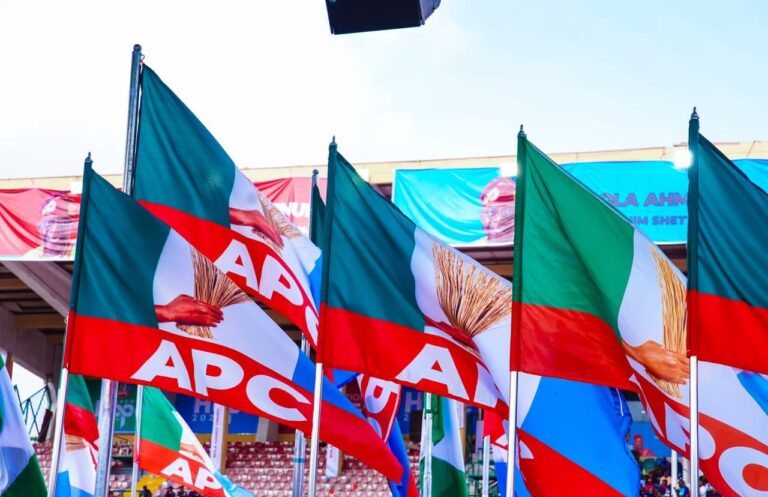
With barely six months to the 2027 general elections, Nigeria’s main opposition parties are sinking deeper into a season of leadership wars and courtroom battles, even as the ruling All Progressives Congress (APC) consolidates its structures and prepares to face a divided and depleted field.
From the Peoples Democratic Party (PDP), once the country’s dominant opposition platform, to the African Democratic Congress (ADC), the Labour Party (LP), and the Nigeria Democratic Congress (NDC), the story is the same.

Parallel leaderships, rival conventions, duplicated candidates and an unending procession of lawsuits before the courts hold sway. For thousands of candidates already cleared to contest next year’s polls, the result is a creeping sense of uncertainty, with many unsure whether the platforms on which they hope to run will survive the litigation that has consumed their parties.
In the PDP, the crisis has produced two parallel primaries and, consequently, two presidential candidates. The Abdulraman Mohammed led National Working Committee, which enjoys the backing of the Minister of the Federal Capital Territory, Nyesom Wike, has settled for former Cross River senator Sandy Onor as the party’s presidential flag bearer for 2027.
On the other side, the Tanimu Turaki led Interim National Working Committee insists it has nominated former President Goodluck Jonathan as the authentic PDP candidate. Last Wednesday, both camps issued certificates of return to their respective gubernatorial and National Assembly candidates at separate ceremonies, underlining just how entrenched the division has become.
For now, the Mohammed led faction holds the upper hand, as it is the leadership recognised by the Independent National Electoral Commission (INEC). The Turaki camp, however, has gone to court through its Board of Trustees, seeking an order compelling INEC to recognise it instead, one of at least two other suits on the PDP crisis currently before different courts.
Speaking at a recent National Executive Committee meeting at the party’s Wadata Plaza secretariat in Abuja, Wike declared that the battle for the PDP’s soul had already been won and lost, insisting the worst was over.
According to him, the access code that INEC issues to political parties for the 2027 process was due by 26 June, and his camp had nothing to fear.
But Ini Ememobong, spokesman for the Turaki led faction, dismissed the significance of the access code, arguing that what ultimately matters is whose candidates appear on the ballot. He likened the contest to a marathon rather than a sprint, recalling that his faction fielded a candidate in Ekiti without the benefit of INEC’s portal access.
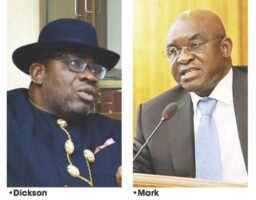
The ADC, which has presented itself as a coalition platform for the 2027 contest, is faring no better. The party is currently split three ways; there is a faction led by former Senate President David Mark, considered the mainstream bloc and presently recognised by INEC; a faction led by Kingsley Ogga; and another led by former deputy national chairman, Nafiu Bala.
The Mark camp counts former Vice President Atiku Abubakar among its prominent allies.
The ADC’s national publicity secretary, Bolaji Abdullahi, confirmed that the party is contending with three separate cases in court, including a suit by Bala challenging Mark’s leadership, a suit on the party’s deregistration, and another filed by aggrieved state chairmen.
Abdullahi, however, played down the disruption, insisting that the party has weathered legal assaults since its formation and would not be distracted.
Ogga, for his part, maintained that his camp’s case was about holding the party to its own constitution rather than serving any personal interest.
It is a sentiment shared by Ememobong of the PDP, who alleged that the wave of litigation rocking opposition parties had been deliberately orchestrated by the APC led federal government to keep its rivals in disarray.
Other News
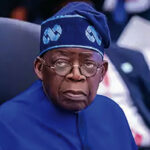
He pointed to past remarks attributed to President Bola Ahmed Tinubu, in which the president reportedly expressed satisfaction at seeing the opposition divided, as evidence of a state engineered strategy.
Abdullahi echoed the charge, describing the scale of legal harassment facing opposition parties as unprecedented in Nigeria’s political history, and warning that it does not augur well for the country’s democracy.
The LP offers perhaps the starkest illustration of opposition disarray. Despite a string of court judgments that, for now, favour the faction led by Nenadi Usman, the rival camp loyal to former national chairman, Julius Abure insists that the battle is far from over and is awaiting a final verdict from the Supreme Court.
The standoff has produced parallel structures, separate congresses and conventions, and remarkably, two presidential candidates for a single party.
The Usman led faction has settled on Dr Chibuzo Okereke, a governance expert and public policy scholar at Miva Open University, Abuja, presenting him through a consensus process as a reform minded candidate with a background in institutional development and accountability.
The Abure led faction, on the other hand, has nominated Prince Kennedy Ahanotu, its immediate past National Youth Leader, projecting him as a fresh and youthful face capable of mobilising young Nigerians, and insisting his emergence followed valid congresses conducted under its leadership.
The Abure faction’s Deputy National Chairman, Dr Ayo Olorunfemi, maintained that only the Supreme Court could finally settle the leadership question, and argued that even an adverse ruling could not automatically hand victory to the Usman camp’s candidates.
But Elder Yusuf Solomon Danbaki, a former Kaduna State LP chairman, now standing as a Kaduna Central senatorial candidate under the Usman faction, declared the fight already over, dismissing Abure’s parallel primaries as little more than a distraction.
With both sides claiming legitimacy and fielding rival presidential candidates, the LP heads towards 2027 weakened and divided against a resurgent APC.
Adding to the opposition’s woes is the unfolding crisis around the Nigeria Democratic Congress (NDC), a party that only months ago appeared to be emerging as a fresh rallying point for disaffected opposition figures.
The trouble began with a December 2025 judgment in which the Federal High Court ordered INEC to register the NDC after the party challenged the commission’s earlier refusal to recognise it.
But in a fresh ruling delivered on 26 June, 2026, the same court set aside that judgment, acting on an application from the unregistered Peace Movement Party (PMP), which claims it had sought registration using the same “Victory” symbol as far back as 2015.
The NDC insists that the latest ruling did not order its deregistration and maintains it remains a lawfully registered party pending its appeal.
The judgment has rattled nerves within its ranks, coming at a critical juncture as INEC begins uploading candidates for the 2027 polls.
Legal analysts say the ruling has created genuine uncertainty over the party’s status and could raise questions about the validity of its nominations should the litigation drag on, though the NDC dismisses such concerns, insisting its primaries followed the Electoral Act and INEC’s guidelines to the letter.
Beyond the courtroom, unease is spreading among the party’s rank and file. Sunday Sun gathered that some aspirants who paid substantial sums for nomination forms are anxious that the legal dispute could imperil their ambitions despite their financial and political investment, while disgruntled unsuccessful aspirants have added to the murmurs of discontent within the party.
The NDC leadership has sought to calm frayed nerves, insisting that the legal challenge is politically motivated and expressing confidence that the Court of Appeal will overturn the ruling.
National chairman, Cleopas Zuwoghe, maintained that the Federal High Court is not the final judicial authority in the land. He said the party still has faith in the Nigerian judiciary, adding that it would pursue the matter through the appellate process and remained confident that justice would prevail.
Across the PDP, ADC, LP and NDC, the pattern appears to be the same; internal power struggles spilling into the courts, parallel leaderships claiming legitimacy, and candidates left to navigate an uncertain path to the 2027 ballot.
Opposition figures argue that the convergence of these crises, at the same moment and just months before the polls, is no accident, but rather evidence of a coordinated effort to weaken their parties while the APC consolidates its grip on power.
However, the APC and handlers of President Tinubu have consistently denied any such design.