Follow Us on Google
From Godwin Tsa, Abuja
The Chief Justice of Nigeria (CJN) justice Kudirat Olatokunbo Kekere-Ekun and the Attorney General of the Federation and Minister of Justice (AGF) Lateef Fagbemi SAN have warned the media against misrepresentation and sensational reporting that could erode public confidence in the justice system and weaken democratic institutions.
The duo spoke separately yesterday in Abuja, at the annual conference of the National Association of Judiciary Correspondents (NAJUC), Abuja.
In her keynote address, Kekere-Ekun who underscored the critical role of the media in shaping public understanding of judicial processes, called on judiciary correspondents to uphold the highest standards of professionalism.
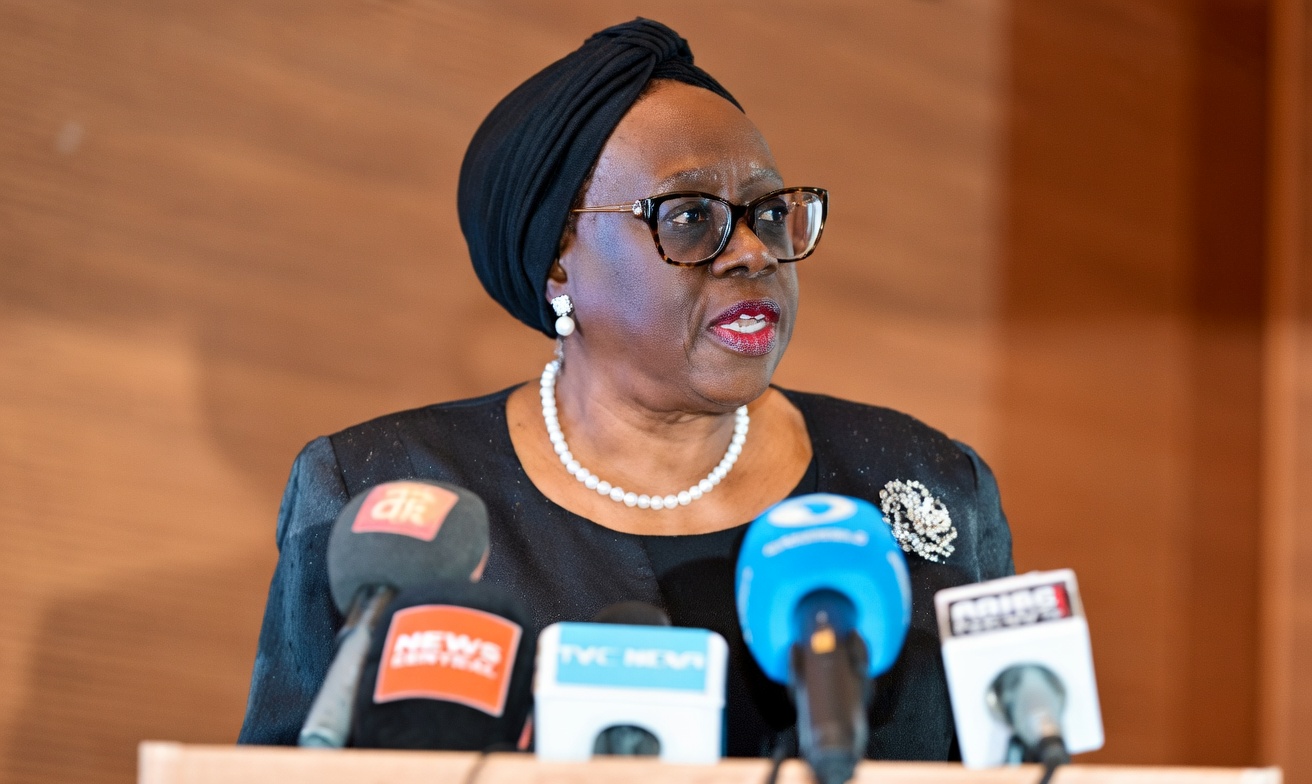
The CJN who was represented by the Administrator of the National Judicial Institute, Justice Babatunde Adejumo, emphasized that judiciary correspondents serve as a vital bridge between the Bench and the public, describing their role as “democratic in character” and indispensable to sustaining trust in the administration of justice.
While noting that the judiciary’s impact extends beyond courtroom decisions, Justice Kekere-Ekun warned that inaccurate, incomplete, or sensational reporting of court proceedings could undermine the Rule of Law, stressing that even the most well-reasoned judgments achieve their purpose only when properly understood by the public.
She said: “In every constitutional democracy, the strength of institutions is measured not only by the decisions they make, but by the degree to which those decisions are understood, trusted, and accepted by society.
“Misinterpretation or sensationalism can unintentionally erode confidence in the judiciary, while accurate and balanced reporting strengthens institutional credibility,” she stated.
Acknowledging the complexities of legal reporting, Kekere-Ekun noted that court proceedings are often technical and require careful interpretation, even as journalists operate under tight deadlines and editorial pressures.
She, however, charged media practitioners to prioritize accuracy, context, and fairness in their reports, especially as Nigeria approaches the 2027 general elections.
According to her, election-related disputes will test the resilience of democratic institutions, placing a dual responsibility on the judiciary to deliver impartial decisions and on the media to communicate such outcomes responsibly.
“At such moments, restraint, professionalism, and fidelity to truth become national imperatives. Misrepresentation can inflame tensions, while principled reporting promotes understanding and peaceful democratic processes,” she added.
Kekere-Ekun commended NAJUC for its commitment to capacity building and informed reportage of judicial activities, formally declaring the conference open and expressing optimism that its deliberations would further strengthen Nigeria’s democracy.
Other News
In his speech at the event, the Attorney-General of the Federation (AGF) and Minister of Justice, Prince Lateef Fagbemi, SAN, commended the role of the media in deepening democracy in the country, noting that the media through their reportage shapes political behaviours as well as expectations in any election.
To this end, he appealed to journalists in the country to shun political actors with divisive tendencies, and ensure the unity and development of the country.
“The activities towards the 2027 general elections have commenced and the media have their role to play. As the main bridge between INEC, political actors, and 90+ million potential voters, the press shapes expectations, trust, and behaviour before ballots are cast and after results are declared.
“It is on this note that I urge the media not to give room to political actors trying to tear the fabric of this nation. The media must remember we need to have our country first before we can talk about elections. That is why as stakeholders, the media must not be used as a tool of division. Those fanning the ember of hatred must be stopped”, the minister said.
Speaking further, Fagbemi, who was represented by the Special Assistant, on Legislative Drafting, Office of the AGF, Hussein Oloyede, took a swipe on those he described as “political desperadoes”, warning that they must learn to act responsibly and within the laws of the land.
“Those who have lost their sense of patriotism should know that they would not be allowed to set the country on fire. Let me state with respect, relevant government agencies will not be stopped from doing their work if anyone runs foul of the law.
“The government will not succumb to blackmail no matter whose ox is gored. Violence, hate speech or any other criminal tendencies will not be tolerated in any form”, he said.
He called on all Nigerians to show a sense of patriotism and protect the unity of the country, as the elections draw nearer, adding that the President Bola Tinubu-led administration sees the media as partners, hence, its doing everything to ensure journalists do their job without intimidation or any form of threats.
Earlier in his welcome address, the chairman of the National Association of Judiciary Correspondents (NAJUC), Abuja chapter, Mr Kayode Lawal, called for reforms of the judiciary to safeguard democracy ahead of the 2027 general elections.
While highlighting concerns over the integrity of Nigeria’s justice system, Lawal warned that conflicting court orders—particularly in politically sensitive cases—pose a serious threat to national stability.
He cited a recent dispute involving parallel rulings by the Federal High Court in Abuja and the Oyo State High Court over the 2025 convention of the Peoples Democratic Party (PDP) as a troubling example of judicial inconsistency. According to him, such developments risk undermining public confidence and could trigger political unrest.
“The situation is capable of causing chaos and setting the political stage ablaze,” he said, describing the trend as “worrisome and pathetic.”
The conference, themed “The Role of Judiciary in Deepening Democracy in Nigeria,” aims to foster dialogue between legal practitioners and the media while addressing systemic challenges in the judiciary.