Follow Us on Google
• Seeks disqualification over NYSC certificate
• Accuses President of flouting LG autonomy judgment
From Godwin Tsa, Abuja
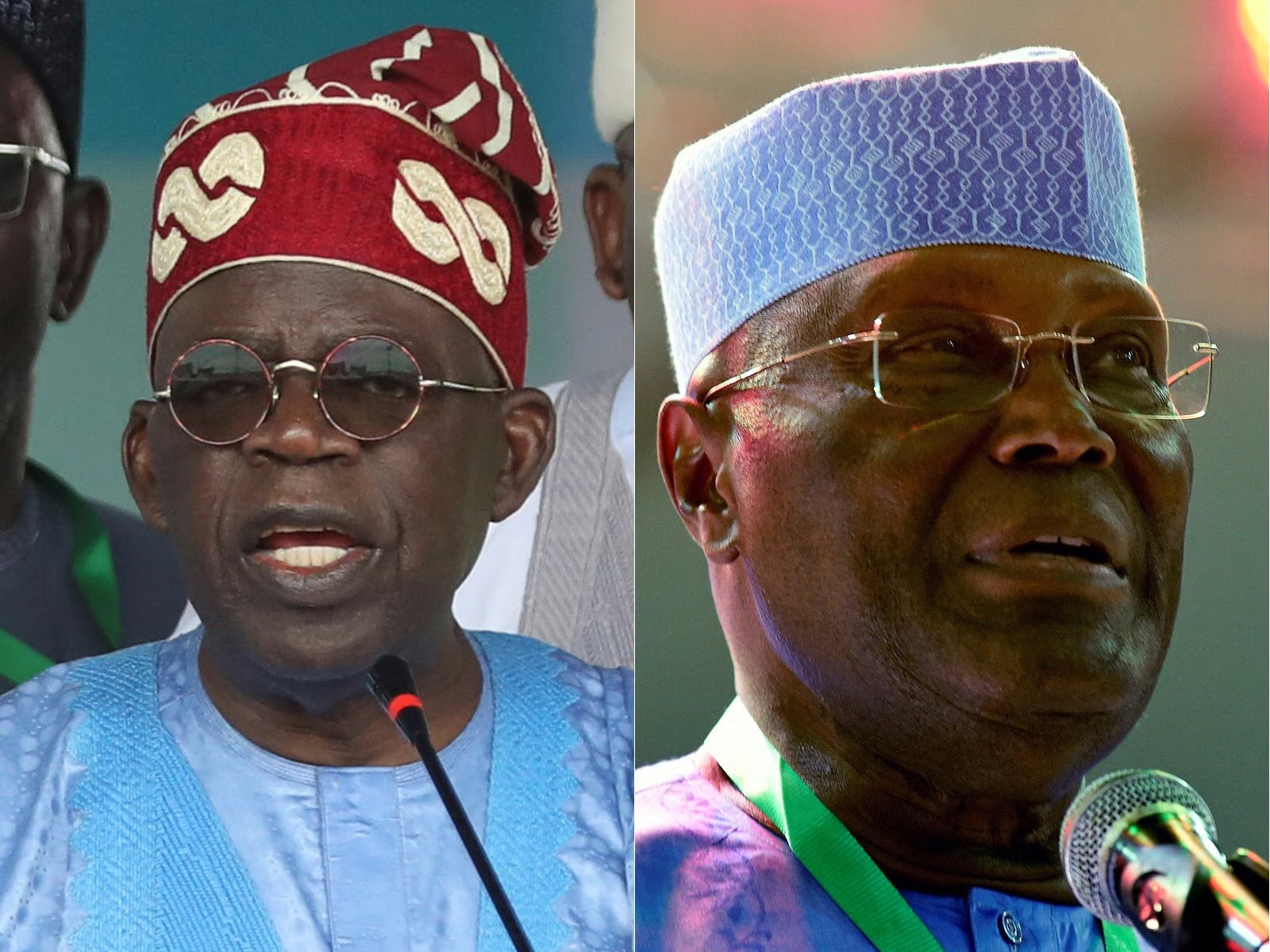
Former vice president, Atiku Abubakar, yesterday, opened two fronts in his battle against President Bola Tinubu ahead of the 2027 presidential election, pursuing a court action to disqualify the President over a disputed National Youth Service Corps (NYSC) certificate and accusing his administration of failing to enforce the Supreme Court judgment on local government autonomy.
Atiku, presidential candidate of the African Democratic Congress (ADC), is asking the Federal High Court in Abuja to bar Tinubu from seeking re-election over allegations surrounding an NYSC discharge certificate, while separately pledging to implement direct payment of federal allocations to the 774 local governments if elected President.
The legal offensive, however, suffered an early procedural setback as difficulties in personally serving Tinubu with the originating processes stalled proceedings.
Atiku’s counsel, Joseph Onu Silas, told Justice Inyang Ekwo that the plaintiffs had been unable to personally serve Tinubu with the Originating Summons and sought permission to effect service through other means.
Omosanya Popoola, who appeared for Tinubu, offered to accept the processes on the President’s behalf, but Atiku’s counsel declined, insisting that Popoola should first provide a written undertaking confirming that he had Tinubu’s authority to receive them.
An attempt by Dr. Alex Izinyon to persuade the court to direct service through Tinubu’s counsel failed to resolve the impasse.
Justice Ekwo consequently adjourned the matter to September 28 for further mention and to enable the plaintiffs regularise service.
Atiku and the ADC are challenging Tinubu’s eligibility for the 2027 election over an NYSC discharge certificate bearing the name “Tinubu Bola Adekunle,” rather than “Bola Ahmed Tinubu.”
Tinubu, the All Progressives Congress (APC) and Independent National Electoral Commission (INEC) are defendants in the suit.
Atiku alleges that the certificate does not belong to Tinubu and wants the court to determine whether its alleged presentation to INEC affects the President’s constitutional qualification to contest the election.
The allegation has not been judicially established.
The controversy over the NYSC document predates the current action.
During proceedings at the Presidential Election Petition Court in June 2023, Atiku and the Peoples Democratic Party (PDP) tendered certified copies of documents relating to Tinubu, including an NYSC discharge certificate bearing the name “Tinubu Bola Adekunle.”
The documents were tendered through subpoenaed witness Mike Enahoro-Ebah alongside Tinubu’s Chicago State University records, INEC nomination documents and a certificate of service from Mobil Nigeria Plc.
Counsel representing INEC, Tinubu and the APC objected to their admissibility, although the tribunal admitted them in evidence.
Atiku and the ADC are relying, among others, on Section 137(1)(j) of the 1999 Constitution, which provides for disqualification from election as President where a person has presented a forged certificate to INEC.
They are also relying on Sections 139(1)(a)(i) and 285(14)(c) of the Constitution and provisions of the Electoral Act, 2026
The plaintiffs are asking INEC to produce Tinubu’s Form CF001 submitted in connection with the 2023 and 2027 presidential elections.
Other News
“If the certificate belongs to Bola Ahmed Tinubu, let that be established before the court,” Atiku said in his affidavit. “These are questions that deserve answers, not political insults or presidential silence.”
Atiku and the ADC are also challenging provisions of the Electoral Act, 2026, which they contend unlawfully restrict who can challenge the qualification of a candidate.
They argue that statutory restrictions cannot override constitutional provisions governing qualification for the presidency.
The suit ultimately seeks orders barring Tinubu and the APC from participating in the 2027 presidential election should the court uphold the plaintiffs’ allegations.
Atiku and the ADC are represented by Edwin Inegedu and Joseph Onu Silas.
On the second front, Atiku accused the Tinubu administration of failing to implement the Supreme Court judgment granting financial autonomy to the country’s 774 local governments.
He pledged that an administration headed by him would ensure that allocations from the Federation Account are paid directly to councils.
In a statement issued by his spokesperson, Kenneth Okonkwo, Atiku said implementation of the judgment would strengthen grassroots development and the financial independence of local governments.
“My administration will respect court judgments, protect local government autonomy, ensure that public funds reach the people for whom they are meant, and restore true federalism,” he said.
The Supreme Court had on July 11, 2024, ruled that allocations from the Federation Account should be paid directly to the 774 local government councils rather than through state governments.
The judgment followed a suit instituted by the Federal Government against the 36 states over the administration and funding of local governments.
Atiku accused the Tinubu administration of failing to fully enforce the judgment because it was unwilling to confront state governors over control of council funds.
He further alleged that the situation was being exploited for political advantage ahead of the 2027 election.
“Yet, the current administration of President Tinubu has failed to enforce this judgment, seemingly to avoid confronting the gluttonous APC state governors who previously controlled these funds, as an enticement to them to use the local government funds to buy votes for Tinubu in the 2027 presidential election,” the statement said.
The Presidency has previously maintained its support for local government financial autonomy.
Tinubu had also warned governors that the Federal Government could resort to an executive order to enforce direct allocation to councils if the Supreme Court judgment was not implemented.
Atiku, however, said his administration would enforce the judgment and ensure greater financial independence for the third tier of government.
According to him, direct funding would bring development closer to Nigerians, help reduce poverty and strengthen the capacity of local governments to tackle crime and terrorism.
The two interventions has brought the contest between Atiku and Tinubu ahead of 2027 to both the courtroom and the political arena, with the former vice president simultaneously challenging the President’s eligibility for re-election and his administration’s record on compliance with a major Supreme Court judgment.