Follow Us on Google


…Warn parties, agencies, media platforms against violations
The Advertising Regulatory Council of Nigeria (ARCON) and other industry stakeholders have warned political parties, campaign organisations, advertising agencies and media platforms against publishing or broadcasting unapproved political advertisements ahead of the 2027 general elections, threatening sanctions and prosecution for violations.
They stressed that all political advertisements must be vetted and approved by the Advertising Standards Panel (ASP) before public exposure, regardless of the medium used, warning that the growing influence of digital platforms has made strict compliance with advertising regulations more critical.
The stakeholders gave the warning at a political advertising regulation engagement organised by ARCON in Lagos to sensitise political actors, media organisations and advertising practitioners to the legal requirements governing political campaigns.
In his address, ARCON Director-General, Dr Olalekan Fadolapo, who also represented the Minister of Information and National Orientation, said the engagement was organised to bring relevant stakeholders together to promote compliance and sanitise the political advertising environment ahead of the elections.
He explained that the participation of other ministries, departments and agencies reflected the wider implications of political advertising for society, electoral integrity and public order.
Fadolapo said ARCON was mandated to ensure that advertising remained legal, decent, truthful and responsible, particularly during politically sensitive periods when misleading or inflammatory messages could heighten tensions.
He reiterated that all advertisements, whether disseminated through traditional media or digital platforms, must be submitted to the appropriate regulatory body for approval before exposure.
“The violation during political season is unimaginable. This calls for a strict regulation of that environment. It is our responsibility to ensure full compliance with the law,” he said.
The ARCON chief assured the public that the council was prepared to enforce the rules, warning that it would not hesitate to sanction individuals and organisations found violating the regulations.
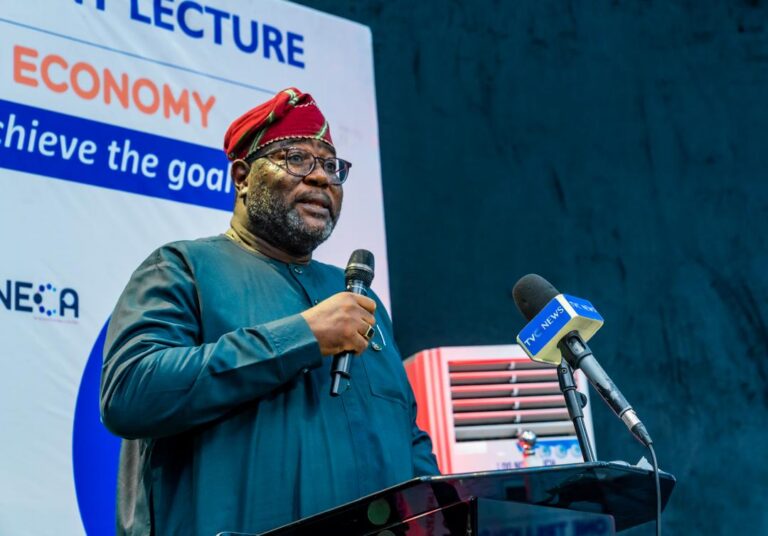
Delivering the keynote address, Director-General of the Centre for Media Law and Development (CMLD), S. Charles Odenigbo, described political advertising as one of the most sensitive areas of Nigeria’s advertising industry, particularly as election campaigns increasingly extend from traditional media to digital platforms.
He noted that the rapid transformation of the advertising ecosystem had made regulation more important, stressing that political communication must comply with the law irrespective of the advertiser’s political influence or financial resources.
According to him, the Advertising Regulatory Council of Nigeria Act, 2022, the Nigerian Code of Advertising Practice, the Electoral Act, the Nigeria Broadcasting Code and relevant electoral guidelines collectively establish obligations for political advertisers and other participants in the advertising chain.
Odenigbo said political advertisements must receive prior approval from the ASP before publication, broadcast or exposure to the public.
He explained that the requirement covers billboards, radio and television jingles, newspaper advertisements, social media content and other marketing communication materials.
The CMLD director-general recalled that ARCON had issued warnings in February and August 2026 over the exposure of unapproved political advertisements, including materials allegedly contravening religious and ethnic guidelines.
He said the February warning addressed what ARCON described as illegal and ultra vires directives issued by some state signage and advertising agencies concerning the submission and vetting of political advertisements, while the August notice urged political actors to exercise caution.
Odenigbo urged media organisations to reject unapproved political advertisements, regardless of whether they originated from influential politicians, governors or well-funded campaign organisations.
He also advised advertising agencies to educate their political clients on the applicable legal requirements rather than merely executing their instructions. State signage and advertising agencies, he added, should align their regulations with relevant federal standards.
He called on security agencies to ensure impartial enforcement of the law, irrespective of the political party or candidate involved.
Digital platforms not exempt
Odenigbo warned that the increasing use of digital media for political campaigns did not exempt advertisers from regulatory oversight.
He cited Article 85 of the Nigerian Code of Advertising Practice, which extends advertising regulation to internet-based and digital media, noting that political advertisements distributed through websites, blogs, X, Instagram, YouTube, TikTok, WhatsApp channels and podcasts remained subject to the applicable requirements.
Other News
He said influencers, political consultants, campaign organisations and candidates using digital platforms must ensure that their political communications were truthful, verifiable and appropriately identified where they constituted sponsored content.
He also called for responsible use of artificial intelligence-generated content and political data analytics, given their growing influence on political communication.
According to him, the origin of a campaign message on social media does not absolve the advertiser of responsibility for complying with the law.
Odenigbo further advised advertisers, agencies and media organisations to reject unvetted advertisements to avoid regulatory sanctions.
He explained that the ARCON Vetting Guidelines required political advertisements and commercials to be submitted to the ASP, established under Section 53 of the ARCON Act, 2022, for vetting and approval before publication, broadcast or exposure.
He added that advertisements must not be exposed until the ASP issues a Certificate of Approval, while copies of the certificates must accompany media placement instructions.
Representing the Independent National Electoral Commission (INEC), Badejo Babalolo called for the cooperation of stakeholders to ensure a peaceful electoral process.
He emphasised the need for responsible political communication as the country prepares for the 2027 general elections.
“We need to survive this election and we need support, we don’t need hate speech,” he said.
Similarly, Assistant Commandant Segun Adeogun of the Nigeria Security and Civil Defence Corps (NSCDC), who represented the Commandant, Dayo Keshinro, said security agencies had an important role to play in ensuring peaceful elections.
“As you know, police have been taking the lead during elections. I will encourage the forum to deliberate on what will make the election a peaceful one,” Adeogun said.
Chairman of the Heads of Advertising Sectorial Groups (HASG), Lanre Adisa, reaffirmed the advertising industry’s commitment to ethical and professional political communication.
Adisa said regulation should not be viewed solely as an enforcement mechanism but also as a means of promoting responsible communication and improving professional standards.
“As Chairman of HASG, I want to reaffirm our commitment to responsible, ethical and professional advertising,” he said.
“Regulation must be seen as an enabler of responsible communication, not merely an instrument of enforcement.”
He called for a culture of responsible advertising that would extend beyond the 2027 election cycle, urging stakeholders to embrace compliance as an essential part of political communication.
Providing details of the approval process, Chairman of the Advertising Standards Panel, Dr Emmanuel Agu, said political advertisements underwent the same basic vetting procedures applicable to other advertising materials.
He explained that advertisers were required to submit their materials to the panel, after which its 17-member committee assessed them against established guidelines and applicable laws.
Agu cited Section 53 of the ARCON Act, 2022, as the legal basis for the panel’s operations.
He disclosed that the ASP had provisions for vetting advertising materials within four hours, a measure that could help political advertisers meet tight campaign timelines while complying with regulatory requirements.
The engagement attracted representatives of political parties, regulatory agencies, electoral authorities, security organisations, advertising sectorial groups, media organisations and advertising practitioners to discuss compliance and responsible political communication ahead of the 2027 elections.