Follow Us on Google

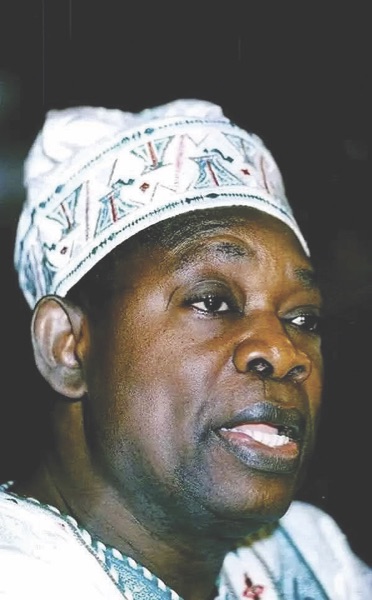
President of the African Sociocultural Harmony and Enlightenment (ASHE) Foundation, Prince Justice Faloye, has called for a return to the social democratic principles associated with Chief Obafemi Awolowo and Chief Moshood Abiola, describing economic welfarism as a pathway to addressing Nigeria’s growing economic challenges.
Faloye warned that Nigeria could experience deeper poverty, inequality and social unrest if the country continues to pursue neoliberal economic policies without adequate social protection for its citizens.
In a statement, he argued that the social democratic ideology championed by Awolowo, embraced by Abiola and retained in the framework of the Social Democratic Party (SDP) offers an alternative approach to governance and economic development.
According to him, successive administrations have pursued economic policies that have disproportionately benefited a privileged few while leaving a large section of the population struggling with poverty and declining living standards.
He maintained that Abiola’s political struggle should not be remembered solely through his personality, philanthropy or the circumstances surrounding the annulment of the June 12, 1993 presidential election, but also through the social and economic philosophy that informed his political ambition.
Faloye said Abiola’s commitment to social democracy, which included economic empowerment, social welfare and the redistribution of opportunities, was central to understanding the significance of his political movement.
He noted that although Abiola had received national recognition for his role in Nigeria’s democratic struggle, including the commemoration of June 12 as Democracy Day, the ideological issues surrounding his political ambition had not received sufficient attention.
He argued that Abiola’s social democratic principles were aimed at creating an economy in which national resources and economic opportunities would benefit a wider section of society rather than remain concentrated among a small group of wealthy and influential individuals.
Faloye also recalled Abiola’s international engagements before the annulled election, claiming that some Western governments were uncomfortable with his political and economic positions.
He cited Abiola’s advocacy for reparations for slavery and his commitment to economic redistribution as issues that, in his view, contributed to the reservations expressed by some Western interests about his potential leadership of Nigeria.
According to Faloye, Abiola’s political legacy should therefore be examined beyond ethnic and personality considerations, with greater attention given to the economic ideology he represented.
He drew parallels between the treatment of Abiola’s legacy and the tendency to associate South Africa’s liberation struggle exclusively with Nelson Mandela, arguing that such personalisation could overshadow the broader ideological principles behind political movements.
The ASHE Foundation president also identified Awolowo as one of the earliest Nigerian political leaders to implement social democratic policies through programmes that prioritised education, healthcare and housing.
He cited the former Western Region’s free education initiative, healthcare programmes and social housing projects as examples of how government intervention could improve living conditions and expand opportunities for ordinary citizens.
Faloye further argued that the philosophy of Afenifere, which he described as rooted in social democracy, should not be reduced to ethnic or regional politics.
He maintained that social democracy was a universal political and economic philosophy that could be adopted by societies seeking to reduce inequality and improve citizens’ welfare.
Explaining the ideological differences between social democracy and neoliberalism, Faloye said the former emphasised public welfare, economic inclusion and government intervention, while the latter placed greater reliance on market forces and private-sector participation.
He traced the historical development of Western economic systems to earlier periods of feudalism, colonial exploitation and plantation slavery, arguing that these systems helped concentrate wealth and economic power in the hands of a few.
According to him, the transition from agricultural economies to industrial production also exposed the limitations of an economic system that depended heavily on private capital without sufficient public intervention.
Faloye cited the Great Depression of 1929 as a turning point that forced Western governments to reconsider their economic policies and introduce measures aimed at supporting citizens and stimulating production.
He referred to former United States President Franklin D. Roosevelt’s New Deal programmes, introduced in 1933, and the post-war welfare policies associated with former British Prime Minister Clement Attlee as examples of government-led interventions that helped expand economic opportunities.
He argued that such policies contributed to improved living standards and wealth creation in Western societies before the economic shift towards market-oriented policies in the late 1970s and early 1980s.
Faloye identified former British Prime Minister Margaret Thatcher and former United States President Ronald Reagan as prominent advocates of neoliberal economic policies, which he said subsequently influenced economic reforms in developing countries.
He also linked the adoption of market-oriented reforms in Nigeria to the administration of former military Head of State, General Olusegun Obasanjo, particularly the withdrawal of education subsidies.
According to him, the shift away from welfare-oriented economic policies weakened the capacity of government to provide essential services and protect vulnerable citizens.
Faloye said Awolowo’s social democratic programmes in the former Western Region demonstrated how government investment in human development could contribute to economic growth and social mobility.
He, however, alleged that Nigeria’s military and political history had limited the influence of socialist and social democratic ideas in the country’s governance structure.
He claimed that political restrictions imposed during military rule weakened ideological movements and prevented social democratic principles from gaining wider acceptance at the national level.
On Abiola’s political experience, Faloye argued that the businessman’s popularity and relationships with influential domestic and international figures initially provided him with access to political opportunities.
However, he maintained that Abiola’s economic philosophy became a major point of contention as his presidential ambition gained momentum.
Turning to the current political environment, Faloye criticised the economic direction of President Bola Tinubu’s administration, arguing that its policies had increased the economic burden on ordinary Nigerians.
He claimed that rising poverty, declining productivity and reduced purchasing power reflected the consequences of an economic framework that placed insufficient emphasis on social protection.
Faloye also criticised what he described as the individualistic and patronage-driven tendencies associated with neoliberal governance, arguing that government responsibilities should not be transferred to private interests without adequate safeguards for the public.
He maintained that public subsidies, when properly designed and transparently administered, could stimulate production, create employment and generate wider economic benefits.
According to him, government intervention in strategic sectors could produce multiplier effects across the economy by supporting businesses, increasing household income and expanding access to essential services.
Faloye consequently called on Nigerians to pay greater attention to political parties’ ideological positions rather than allowing ethnic affiliations, personalities and regional considerations to determine their electoral choices.
He identified the SDP as a political platform that continues to advocate the social democratic principles associated with Awolowo and Abiola.
He also endorsed the party’s presidential candidate, Prince Adewole Adebayo, describing his advocacy for economic inclusion and social welfare as consistent with the party’s ideological foundation.
Faloye argued that the political debate ahead of future elections should focus on the economic philosophies candidates intend to implement and how their policies would improve the welfare of citizens.
He further cited Sweden, Norway and Germany as countries whose social welfare systems, in his assessment, demonstrate the benefits of combining market economies with strong public institutions and social protection programmes.
He contrasted their welfare arrangements with what he described as the more market-driven economic systems of the United Kingdom and the United States.
Faloye warned that continued economic hardship and widening inequality could deepen public frustration and create conditions for social instability.
He therefore urged political leaders to reconsider the country’s economic direction and adopt policies that prioritise employment, affordable education, accessible healthcare, housing and broader economic opportunities.
He maintained that Nigeria did not need to develop an entirely new economic model, arguing that the social democratic framework already provides a basis for building a more inclusive society.
For Faloye, the central issue is not the personalities or ethnic backgrounds of Awolowo, Abiola, Tinubu, Peter Obi or Atiku Abubakar, but the economic principles and governance choices they represent.
He said the SDP’s continued commitment to social democracy should be evaluated within the broader national debate about poverty reduction, economic development and the equitable distribution of opportunities.
He concluded that without a deliberate shift towards policies that improve citizens’ welfare and reduce inequality, Nigeria risks facing deeper economic and social difficulties.