Follow Us on Google
By Chinwendu Obienyi
It is safe to say that Nigeria’s banking sector closed 2025 on a note of strength, not strain. Faced with stubborn inflation, elevated interest rates and uneven credit demand, banks were expected to slow, retreat or tighten risk.
Instead, they adjusted their playbook.
Set against a backdrop of macroeconomic headwinds that tested the mettle of financial institutions across the globe, Nigerian banks, through recapitalisation, sharper pricing, stronger capital buffers and a push into technology and fee-based income, converted economic pressure into improved earnings.
The year became less about survival and more about strategy, revealing a sector that learned how to make money even when conditions were far from friendly.
Banks reinforced their position not only domestically but across Africa’s continental banking landscape.
Despite macroeconomic challenges, including high borrowing costs driven by a restrictive monetary policy stance, the Nigerian banking sector has, by numerous metrics, emerged stronger and more dynamic in 2025.
According to the Central Bank of Nigeria (CBN), the industry’s liquidity and capital adequacy ratios remained well above regulatory thresholds, signaling robust financial soundness. The liquidity ratio held firm at over 55 per cent through mid-2025, significantly above the minimum 30 per cent benchmark, reflecting ample capacity to meet obligations and support lending activities.
Meanwhile, the capital adequacy ratio (CAR) hovered above 13 per cent, underscoring the sector’s buffer to absorb shocks and maintain solvency. While the non-performing loans (NPL) ratio crept slightly above prudential limits, it remained broadly stable, a testament to banks’ disciplined risk management in turbulent conditions.
Moving beyond regulatory safety metrics, the broader financial picture throughout 2025 tells a story of sustained earnings growth and strategic asset expansion. By the end of the third quarter, Nigeria’s top banks had delivered some of their most remarkable profit performances in years, with strong net interest income, diversified revenue streams, and disciplined cost management emerging as recurring success factors.
Sector on the upswing
One of the strongest narratives to emerge from the 2025 numbers is the sector’s profit growth despite adverse conditions. Financial institutions such as FCMB Group Plc reported staggering expansions in earnings, with profit before tax rising by nearly 46 per cent year-on-year and profit after tax increasing by over 50 per cent. These gains were underpinned by higher interest income, normalized fee and commission earnings, and strategic balance sheet management that emphasised yield optimisation.
The robust performance was not limited to mid-tier players. Tier-1 banks, including industry giants such as GTCO, UBA, Access Holdings, Zenith Bank, and FBN Holdings, reported significant increases in shareholders’ funds and capital positions, illustrating both depth and breadth of financial strength across the competitive landscape.
Analysts attribute the profitability not only to traditional banking activities, but also to non-interest income diversification such as digital banking services, transaction fees, and treasury operations, all of which helped offset the dampening effects of tight credit demand in certain sectors.
Deposits and liquidity
In an intriguing twist to the narrative, banks found themselves holding record levels of deposits with the CBN even as they expanded their deposit bases overall. Data from the first nine months of 2025 showed that placements with the CBN’s Standing Deposit Facility (SDF) surged dramatically, a reflection of both excess liquidity in the system and the attractiveness of risk-free returns at high interest rates.
This dynamic has yielded a two-edged signal; On the one hand, it confirms that the sector is well-funded and liquid. On the other, it highlighted a hesitation among banks to aggressively extend credit, particularly to sectors grappling with high borrowing costs and uncertain demand.
Economists attributed this to the high Monetary Policy Rate (MPR), which stayed elevated through much of 2025 as part of efforts to tame inflation, as a key contributor to this trend. With the SDF offering near-risk-free returns close to the MPR, banks found it relatively more profitable to park funds with the central bank than to lend into riskier segments of the economy.
Nonetheless, the broader deposit and funding picture is still positive: total industry deposits grew significantly, reinforcing confidence in the financial system’s capacity to mobilize savings even amid economic headwinds.
Asset expansion
Although credit growth did not accelerate uniformly across all sectors of the economy in 2025, there were clear signs of asset base expansion within the banking industry. According to a report by Agusto & Co., total bank assets were projected to reach upward of N242 trillion by the end of December, driven by a combination of loan book expansion, investment securities, and balance sheet optimization strategies.
The expansion highlights a key trend: banks are broadening their scope beyond traditional corporate lending to encompass a mix of strategic investments, trade finance, and fee-based income streams, thereby enhancing both stability and future growth potential.
Recapitalisation and regulatory compliance
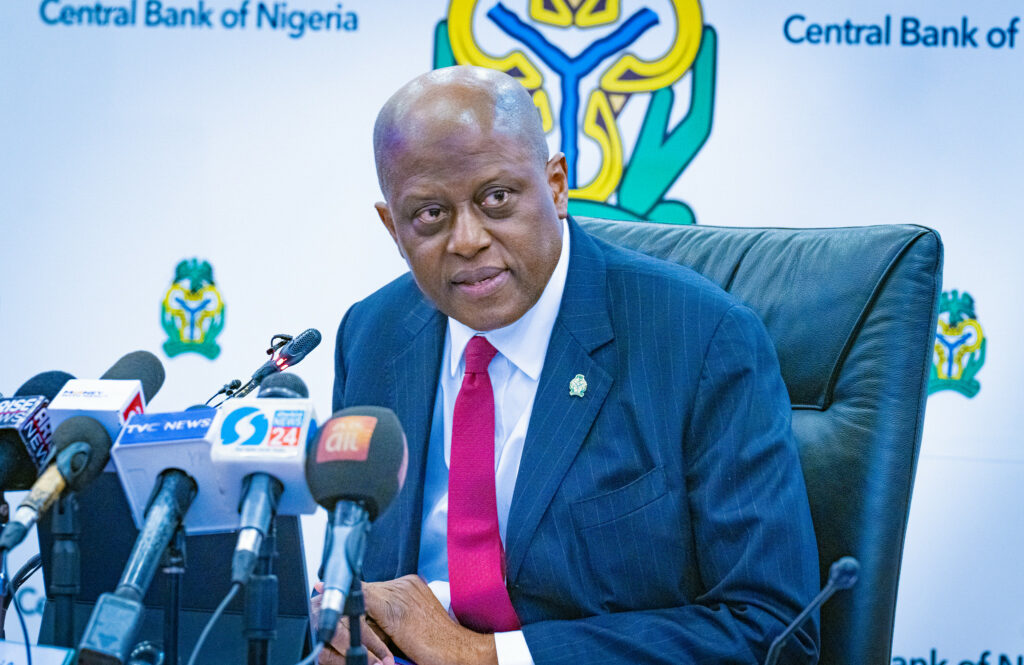
One of the most consequential policy developments shaping the sector in 2025 was the CBN’s recapitalization directive, which required banks to strengthen their capital buffers ahead of a March 2026 deadline. According to the CBN governor, Olayemi Cardoso, in his Post Monetary Policy Committee (MPC) address to newsmen, at least 27 banks have accessed the market to raise fresh capital through public offers and rights issues.
He added that 16 banks have already met or exceeded the new requirements, a clear testament to the depth, resilience, and capacity of Nigeria’s banking sector.
The broad capital-raising drive not only fortified banks’ balance sheets but also injected fresh investor confidence into the equity market, with bank stocks dominating Nigeria Exchange Limited (NGX) listings and capital market activity throughout the year.
By placing safety and solvency at the center of strategic planning, banks effectively positioned themselves for long-term resilience and competitive advantage.
FX market reforms
Perhaps the most visible sign of renewed confidence in the economy is the transformation of the foreign exchange market. Over the past year, the CBN has sustained the unification of the multiple exchange-rate windows. For example, the once-crippling multi-billion dollar FX backlog has been fully cleared, restoring credibility and giving businesses the confidence to plan.
The introduction of the Nigerian Foreign Exchange Code has established clear rules for transparency, ethics, governance, and fair dealing among authorised dealers while the deployment of the Electronic Foreign Exchange Management System (EFEMS) system, powered by Bloomberg B-Match, has transformed FX trading through mandatory order submission, real-time regulatory visibility, and enhanced price discovery.
Together, these reforms have reduced opacity and manipulation, and restored discipline to the market. The naira now trades within a narrow, stable range. The once-substantial gap between the official and parallel markets has shrunk to under 2 per cent, down from over 60 per cent. Foreign capital inflows reached $20.98 billion in the first ten months of 2025, a 70 per cent increase over total inflows for 2024 and a 428 per cent surge compared to the $3.9 billion recorded in 2023, reflecting a clear resurgence in investor confidence.
External sector progress
Nigeria’s external sector strengthened decisively in 2025, with the current account balance rising over 85 per cent to $5.28 billion in second quarter (Q2), up from $2.85 billion in first quarter (Q1). Bolstering our external buffers, foreign reserves reached $46.7 billion by mid-November, the highest in nearly seven years, providing over 10 months of forward import cover and significantly enhancing the economy’s resilience. Currently, the reserve stands at $45.21 billion as at December 17, 2025. Cardoso said, “What is most important here is that our FX reserves are being rebuilt organically, not by borrowing, but through improved market functioning, stronger non-oil exports, and robust capital inflows”.
While oil production improved modestly to an average of 1.45–1.52 million barrels per day in 2025, the truly encouraging development is the strong performance of non-oil exports. Supported by ongoing reforms and greater exchange-rate flexibility, non-oil exports grew by more than 18 per cent year-on-year (y/y), reflecting rising competitiveness under a truly market-driven FX framework.
As with foreign investor inflows, diaspora remittances have also strengthened with confidence returning to official channels following enhancements in transparency, settlement efficiency, and reporting. Remittances increased by approximately 12 per cent this year.
Fixed-income market reforms
A functional, transparent and liquid fixed-income market is critical for effective monetary-policy transmission and for mobilising long-term domestic savings. Hence, while working closely in the past year with the Securities and Exchange Commission (SEC) and National Pension Commission (PENCOM), both of whom have issued complementary rules, the apex bank has transitioned over-the-counter secondary market to a more transparent and robust regulatory framework that better serves investors and market participants.
These reforms, according to the CBN, are foundational steps towards ensuring that Nigeria’s financial markets can support deeper investment, accurate pricing, and stronger monetary-policy transmission.
“We expect continued progress into the new year, as implementation strengthens and market participants adapt to the higher standards of disclosure and discipline required. The CBN will do everything necessary to protect the financial stability that is rewarding us with improved international investor sentiment”, Cardoso said.
Regional influence and growing international confidence
The year 2025 was not only a domestic success story, it also reinforced the country’s financial institutions as continental powerhouses. Nigerian banks continued to dominate Africa’s rankings of top financial institutions, with multiple lenders featuring prominently among the continent’s largest and most influential players. This dominance extends beyond balance sheets: several Nigerian banks pursued cross-border ambitions throughout the year, exploring strategic acquisitions and partnerships in key West and East African markets. These expansions not only diversify revenue streams but also anchor Nigerian financial leadership within the broader Pan-African economic architecture. Furthermore, assessments by rating agencies have provided significant external validation of Nigeria’s reform trajectory.
Fitch, Moody’s, and Standard & Poor’s have all acknowledged the positive impact of Nigeria’s reforms, from stronger reserves to improved fiscal discipline and greater FX transparency. Across all three agencies, the direction is consistent: fundamentals are strengthening, reform credibility is rising, and Nigeria’s risk profile is improving.
Cardoso said, “These nuances matter and this is precisely why we must continue to tell our own story clearly, consistently, and confidently. These endorsements of Nigeria’s policy direction have translated directly into improved borrowing terms, increased investment inflows, and enhanced credibility”.
Payment system modernisation & digital finance
Nigeria’s digital-finance transformation gathered strong momentum in 2025, driven by the twin objectives of promoting innovation while safeguarding stability across the payments ecosystem. Earlier in the year, the CBN extended its Payment System Vision roadmap to 2028, underscoring its commitment to modernising payments infrastructure and strengthening cybersecurity resilience.
The expansion of digital payments has been notable. More than 12 million contactless payment cards are now in circulation, while the regulatory sandbox has grown to include over 40 fintech innovators, providing a controlled environment for safe experimentation and responsible scaling of new solutions.
Revised agent-banking guidelines have further strengthened anti-money-laundering safeguards, including the geo-fencing of high-risk areas, while enhancing consumer protection at the last mile. At the same time, improved integration among switching companies has advanced domestic interoperability, moving Nigeria closer to a fully seamless payments landscape.
Together, these reforms have positioned Nigeria as one of Africa’s most advanced digital payments markets. The country’s vibrant fintech ecosystem has produced eight of the continent’s nine unicorns, and by mid-2025 several leading fintech applications had exceeded 10 million downloads, with one surpassing 50 million, clear evidence of deep and growing consumer adoption.
Financial inclusion
Financial inclusion in Nigeria continues to deepen, with access to formal financial services now reaching 74 per cent of the adult population—approaching the global average. More than three million agent bankers currently serve communities across the country, extending the reach of the financial system to underserved and remote areas. Also, digital wallets, mobile money platforms, and fintech-enabled microcredit solutions continue to broaden financial options for households and micro, small and medium-sized enterprises (MSMEs), supporting entrepreneurship, consumption, and economic growth.
Despite strong headline numbers, challenges remain embedded in the system. High interest rates continue to suppress credit demand and strain borrowers’ cash flows, raising concerns about future asset quality if economic conditions deteriorate further. Inflationary pressures also threaten cost structures, particularly for banks with extensive physical branch networks.
However, the banking sector enters 2026 with cautious optimism. With inflation moderating and monetary policy easing, credit demand could recover, unlocking new growth opportunities. Stronger capital positions will allow banks to support larger transactions, infrastructure financing, and private-sector expansion.
Digital innovation and regional diversification are expected to remain central pillars of strategy, while recapitalisation may catalyse a new phase of consolidation and scale. Ultimately, the experience of 2025 reinforces a key lesson: Nigeria’s banking sector has matured into a more resilient, adaptive, and systemically important industry.
Experts’ views
Chief Executive Officer of Economic Associates, Dr Ayo Teriba, described 2025 as a “transition year” in which banks benefited from macroeconomic reforms but must now prepare for a lower-rate environment.
“The banking sector has performed well largely because reforms corrected pricing distortions in FX and interest rates.
But as inflation moderates and monetary policy begins to ease, banks will need to pivot from yield-driven profits to volume-driven growth,” Teriba said.
He added that recapitalisation would be critical for sustaining competitiveness. “Stronger capital allows banks to finance infrastructure, manufacturing, and trade at scale. That is where future growth will come from”, he said.
Speaking further, Chief Executive Officer of the Centre for the Promotion of Private Enterprise (CPPE), Muda Yusuf, said the resilience of banks in 2025 underscores the benefits of early balance-sheet discipline and regulatory tightening. According to him, while elevated interest rates boosted margins, the real strength was in improved governance and capital buffers.
“What we are seeing in the banking sector is not merely opportunistic profit-taking from high yields, but the outcome of stronger capitalization, better risk pricing, and tighter regulatory oversight. These factors have insulated banks from macroeconomic shocks more effectively than in previous cycles,” Yusuf noted.
However, he warned that prolonged tight monetary conditions could constrain real-sector lending if not gradually eased. “Banks are safe, but the economy also needs affordable credit. Striking that balance will define the next phase.
Conclusion
In a year defined by economic strain, banks demonstrated that strength, flexibility and strategic discipline can coexist with growth. By leveraging high-yield environments, reinforcing capital buffers, embracing technology, and maintaining prudent risk management, the sector not only weathered macroeconomic turbulence but emerged stronger.
As Nigeria works toward broader economic stability, the banking sector’s 2025 performance stands as evidence that financial institutions can serve as stabilising anchors, even when the broader economy is under pressure.