Follow Us on Google
…Set agenda for new year
By Bimbola Oyesola
As Nigerian workers took a leap into the new year with fervent hope and enthusiasm, year 2024 will continue to resonate as one of the most defining and challenging periods in Nigeria’s labour history. Marked by intense confrontations between organised labour and the government, it was a year shaped by economic challenges, including skyrocketing inflation, foreign exchange (FX) volatility, mass job losses, companies’ relocation and controversial policy reforms that tested the resilience of workers and industries alike.
Through a series of strikes, protests and negotiations, the Nigerian Labour Congress (NLC) and the Trade Union Congress (TUC) stood at the forefront, challenging policies they perceived as detrimental to Nigerian workers. Wage increases, fair economic policies and better living conditions dominated the national discourse, setting the tone for a year of heated labour activity.
A Rough Start: Electricity Subsidy Removal
The year began on a contentious note in February when the Federal Government announced plans to end subsidies on electricity, citing a surging debt to power generation companies, estimated at over N1.3 trillion. In April, the Nigeria Electricity Regulatory Commission (NERC) implemented a tariff hike for Band A customers, raising the cost to N225 per kilowatt-hour (kWh) from N68/kWh—a 240 percent increase.
The increase drew nationwide outrage because some argued that the power companies lacked the capacity to meet the contracted hours and would trim supplies to other users to satisfy their wealthier customers. Union leaders led protests in cities such as Lagos and Abuja, demanding a reversal. NLC president Joe Ajaero declared, “It is unethical to force Nigerians to pay higher tariffs for non-existent electricity. Families cannot survive when electricity bills consume half their wages.”
By April, inflation had reached record highs, compounding the effects of the subsidy removal and eroding workers’ purchasing power.
Minimum Wage Negotiations Heat Up
By May, labour agitation had shifted to the minimum wage. The unions demanded an upward review from the N30,000 benchmark to N615,000 to reflect inflationary realities and to keep to terms with the law guiding review after five years. The government initially proposed N60,000, but labour unions rejected this as insufficient. After several compromises, the unions lowered their demand to N400,000, which was still beyond what the government could afford.
Frustrated by stalled negotiations, the NLC and TUC declared an indefinite strike on May 31, crippling key sectors of the economy. The Trade Union leaders argued that a living wage was essential to help workers survive the relentless inflation.
A Nation Paralysed by Strikes
June saw an escalation of industrial actions with workers in strategic sectors such as energy and aviation joining the strike. Union members shut down major power substations, causing a complete national blackout, while some airlines suspended operations due to disruptions.
The strike’s economic impact was severe, drawing mixed reactions from stakeholders. The organised private sector (OPS) felt the impact more, with its advocacy body, the Nigeria Employers Consultative Association (NECA) warning of the dire consequences to the economy. While Labour leaders defended the action as necessary to protect workers’ welfare, business groups including, the Manufacturers Association of Nigeria (MAN) also warned of its toll on the economy.
NLC President Joe Ajaero justified the strike, “This strike is our last resort. The government has failed to listen to us, and we are now forced to use the only language they understand.” The government, under mounting pressure, resumed negotiations with labour, promising reforms to address their demands.
A Legislative Victory for Workers
Although Labour’s initial demand of N615, 000 minimum wage seemed like ‘Hoping for rain in a drought’, in a significant breakthrough, the National Assembly passed a bill on July 23 to increase the minimum wage to 70,000 naira per month, a figure closer to Labour’s demands . The bill also reduced the public wage review period from five years to three, ensuring more frequent adjustments to reflect economic conditions and realities.
Labour leaders hailed the move as a victory but cautioned against inflationary pressures eroding its impact. The TUC President Festus Osifo said: “This is a step in the right direction, but we must ensure the new minimum wage is not undermined by rising inflation.”
However, implementation remained inconsistent, with many states yet to adopt the new wage structure.
Inflation and Workers’ Struggle
Despite the wage increase, inflation—which surged past 34 percent by mid-2024—eroded real earnings. The cost of staple foods, transportation, and housing climbed by over 300 percent in some cases, leaving many workers struggling to make ends meet. Experts called for targeted economic interventions, arguing that inflation was not just an economic issue but a social one that undermined productivity and heightened tensions.
FX Volatility Disrupts Industries
The decision to float the Naira introduced volatility to the Forex market, severely affecting businesses. The manufacturing sector, heavily dependent on imported raw materials, faced rising production costs, forcing many firms to scale down operations or shut down entirely.
The Manufacturers Association of Nigeria (MAN) reported that over 40 percent of firms operated below capacity.
Suggesting ways to mitigate the impact, the president of National Union of Chemical, Footwear, Rubber and Non-Metallic Products Employees (NUCFRLANMPE), Bolarimwa Sunday, in an exclusive interview with Daily Sun, called on the federal government to “impose restrictions on the importation of goods that are already being manufactured locally.” Sunday also advocated for a special electricity tariff exclusively for the manufacturing sector.
“While the government’s stance has been to deregulate the power sector and remove subsidies, we emphasize that no nation can survive with the complete removal of subsidies in every sector. Even in advanced countries, there’s some level of subsidy.”
The aviation sector also struggled, with airlines unable to access FX for maintenance and fuel, sparking fears of layoffs.
September Tensions: Fuel Price Hike and Arrest of Labour Leader
In September, the government announced another fuel price hike, citing global market rates. The decision led to widespread outrage, with unions threatening renewed strikes. The arrest of NLC President, Joe Ajaero by the State Security Service further escalated tensions.
The TUC condemned the arrest as an attempt to suppress workers’ voices stating, “This government must understand that intimidating labour leaders will not silence Nigerian workers.”
Though negotiations resumed after Ajaero’s release, labour continued to push for comprehensive economic reforms.
National Industrial Relations Summit
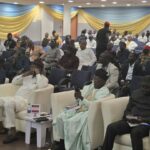
In November, President Bola Ahmed Tinubu inaugurated the 10th National Industrial Labour Relations Summit in Ilorin, Kwara State. The event brought together labour leaders, government officials, and industry stakeholders to discuss strategies for fostering industrial harmony.
President Tinubu emphasized collaboration, stating, “Labour and government must work hand in hand to achieve a Nigeria where workers are valued and empowered to thrive.”
Threat to job security
The year saw more companies relocating out of the country due to raw materials, which are now more expensive as a result of exchange rate instability.
President of the Chemical and Non-Metallic Products Senior Staff Association (CANMPSSAN), Segun Davies, lamented the mass exodus of manufacturers in the sector, which threatens job security for workers. “The increase in operational costs makes it challenging for companies to budget effectively or offer competitive prices, as exchange rates can vary multiple times a day. As a result, some companies are scaling down or even relocating their operations to countries with a more stable and reliable FX.
“And this has drastically affected our productivity and the workforce. We have a couple of companies in the manufacturing sector, and the majority of them are in our sector; the Chemical and Non-Metallic, which shut down recently and they moved their operations out of Nigeria. We’re talking about companies like PZ, companies like Procter & Gamble, we’re talking about companies like GSK Pharmaceuticals, Sanofi and many others.
You know what that means to our sector. It means that a lot of people are out of jobs.”
Projection for 2025:
In the New Year, though the impact of the new wage is yet to reflect on the workers’ wellbeing, with some states still dilly-dallying on the implementation, the two labour centres have insisted that Nigerian workers may be demanding for another wage increase to reflect the inflation in the country.
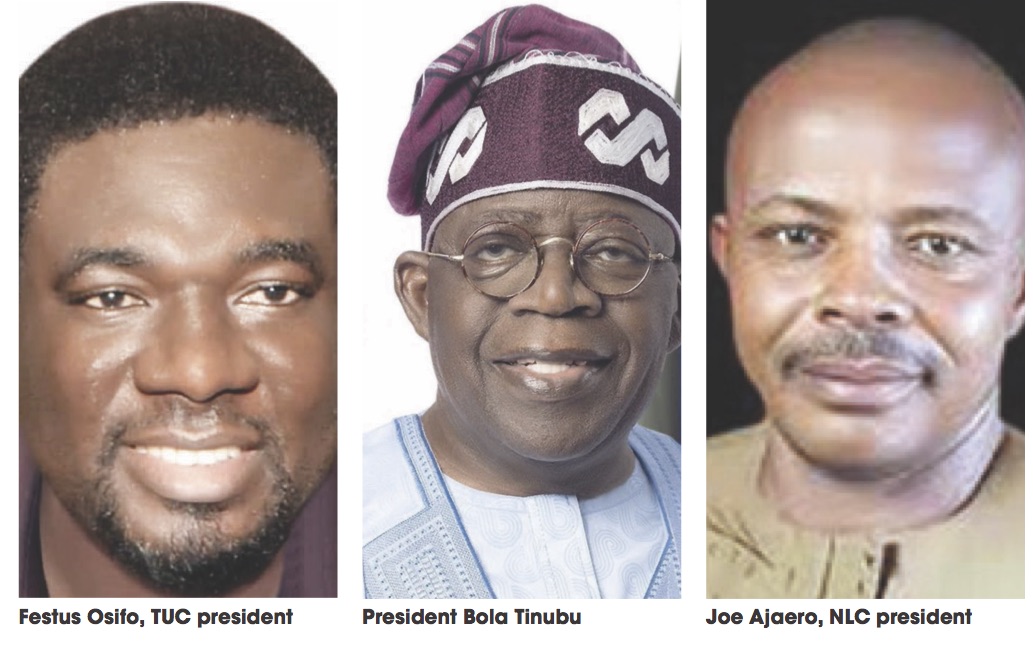
Both presidents of NLC, Joe Ajaero and TUC, Festus Osifo at a different forum said Labour would not hesitate to demand for wage review as the economy continues to impact on workers purchasing power.
The NLC President calling on government to ensure policies were not only drafted with honest intentions to make life better for Nigerians, said it should be without nepotism and strong-arm tactics.
The Congress in the new year wants government to adhere to the provisions of the 2024 National Minimum Wage Act starting from the beginning of the year, and ensure governance translates into real benefits for the people.
“Furthermore, given the economic realities imposed by recent government policies, we shall engage the government for a wage review to safeguard workers’ welfare. Our nation will become more productive when the incomes of workers are able to meet at least their basic needs, thus committing more to their work,” said the NLC president.
The TUC President, Festus Osifo also explained that there were plans to advocate for an increase of the ₦70,000 minimum wage to reflect inflation rates.
He noted that workers’ wages should rise in tandem with inflation each year, rather than waiting for five years between increases.
The TUC President insisted that instead of government waiting for five years to increase the minimum wage, it should look at the inflation of the last five years and try to make some adjustments.