Follow Us on Google
From Sola Ojo, Kaduna
As the preparations for the 2024 budget in Kaduna State begins, Partnership to Engage, Reform and Learn (PERL) and members of civil society working in different sectors of the economy have harped on the need for sustained advocacy on citizen’s budget leveraging on Community Development Charter (CDC).
Also known as participatory budgeting, citizens’ budget is a new approach in public budgeting in which locals prioritise their community needs and make the same available to their representatives in the form of democratic deliberation.
CDC on the other hand is a participatory budgeting process and social accountability tool that enables communities to prioritise and nominate developmental needs to inform the annual budget.
Already, at the tail end of the immediate past administration in the State, the Executive Council had approved the CDC protocol which many saw as progress concerning government and civil society relationship since the tool was driven by the civil society.
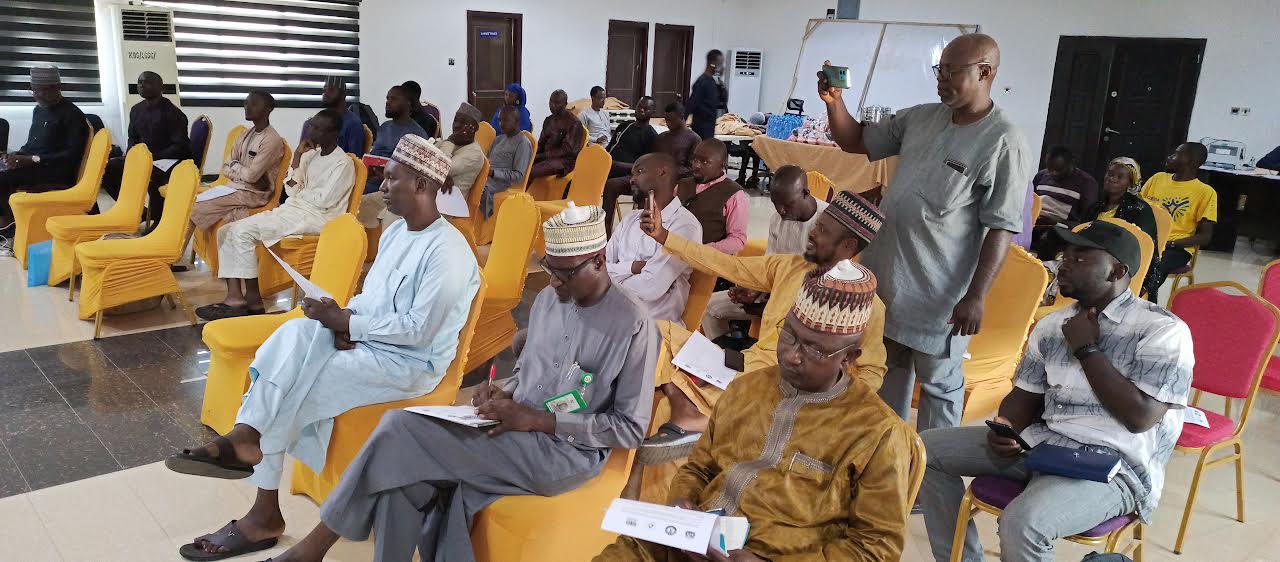
Team Lead, PERL in Kaduna State, Mr. Abel Adejor remarked at a one-day sustained citizen advocacy meeting on the implementation of the CDC framework to influence the 2024 State budget at sectoral levels in Kaduna State held at Conference Hall, Planning and Budget Commission, Kaduna, described effective service delivery for the citizens in Kaduna State as “key”.
“The CDC which is citizen input has continued to make an impact in Kaduna State which is what we have been using to engage the State government on budget discussions.
“In 2022, the State sent a memo that CDC should inform the State budget. We will continue to consolidate on the success of reforms we have in Kaduna State. We will be making an impact as we continue to make use of this tool”, he said.
He continued, “in 2017, we felt that the participatory budget system in Kaduna State was not deepening inclusive. As a result, some civil society, government officials and media traveled to Anambra State for cross-learning which is what is translating to what we are seeing today.
“We have trained champions across the 23 local government areas in the state to ensure participatory leadership at the local government level.
“So far, over 50 percent of the local government budget has been influenced by CDC. Now we are trying to see a possibility of exceeding that percentage. At the state level, citizens have been able to make their input through the State assembly which led to a 2.2% increase in the 2022 state budget.
“But this year, we didn’t see any significant improvement on that. So, we are trying to see how we can influence the 2024 budget both at the local government and state levels”, he noted.
Director of Budget in the Planning and budget commission, Mr. Idris Suleiman noted that the best way to see improvement in infusing CDC into the budget “is to have a comprehensive approach whereby all the wards representatives are identified to find a better way of doing this.
“The automation will go a long way in easing the process because that will make it real-time and transparent. We have received the community submission on CDC and we have made some observation and reviewed it.
“We are going to work on it. We are going to disaggregate all the CDC needs of the State according to sectors so that when we are sending the expenditure budget, we will then attach it with that so that it can be proactively included in the submission of all the sectors when they are preparing their budget”.
Kaduna Local Government Accountability Mechanism (KADLGMA) in collaboration with Planning and Budget Commission and Ministry for Local Government with support from PERL organised the meeting which has representatives of civil society coalitions and government officials in attendance.