Follow Us on Google

The politics of 2023 is now in focus. It is still some 27 months away to the 2023 presidential election but the interest it is generating among the federating geopolitical zones of the country says a whole lot about the desire of Nigerians to get through with the incumbent administration. This is because the national disappointment has been resounding. Not many want to pretend to habour any hope of a magical turnaround of the economy with the inflation rate hitting 14.23 per cent for the month of October. The prospects of exceeding 15 per cent by the end of November are very high, thus, wiping away any plans of a blissful yuletide, especially with the mindless hike in the pump price of petrol and electricity tariffs at a time when earnings witnessed a drastic drop due to the negative impact of the COVID-19 pandemic.
In spite of these, politicians have started regrouping and networking for the 2023 general election, which promises to be different because there won’t be an incumbent seeking re-election. This presents the political actors opportunity that they need to work out their schemes towards the presidency. Whatever it comes to, however, the issue of equity and justice will play a key role in determining which geopolitical section of the country mounts the saddle after the North-West.
This is not to say that politics respects equity, fairness and justice. Though a game of numbers, Nigeria’s brand of politics has, however, been differently unique. It is one where the presidency has been used to settle grievances that threatened the foundations of the republic. This thinking was majorly responsible for the shift of the presidency to the South-West in 1999 and later to the South-South in 2010. It also played a key role in the shift of the office to the North-West in 2007 and 2015. However, the predominant political arrangement, among leading political parties, has been a swing of the presidential pendulum between the North and the South. That arrangement has been majorly responsible for the peaceful rotation of the office between the two divides since 1999.
Within the context of that rotatory arrangement is the unexplained reality of the president eluding the South-East and the North-Central since 1999. This, logically, calls for a swing of the pendulum to the two geopolitical zones in 2023. Looking back to 1999, Olusegun Obasanjo held the office for eight years. That means that the South-West held the office for eight years. Obasanjo was assisted by Atiku Abubakar, from Adamawa State, which, geopolitically, is in the North-East. Going by that logic, the South-West and North-East administered the presidency of Nigeria between 1999 and 2007. And it satisfied the rotatory principle of the ruling party, PDP.
The principle was also sustained when the late Umaru Musa Yar’Adua was paired with Goodluck Jonathan for the presidency in 2007. Again, logically, that brought about a presidency managed by North-West and South-South. The unfortunate termination, by death, of that presidency saw the pendulum swing to Jonathan and Namadi Sambo bringing to reality a South-South and North-West presidency. The change of guard in 2015 brought in a North-West and South-West presidency through Muhammadu Buhari and Yemi Osinbajo. Logically, therefore, four geopolitical zones, North-West, North-East, South-West and South-South, have administered Nigeria since 1999. This leaves South-East and North-Central hanging on the roll. And if justice and peace should give birth to national cohesion, 2023 should be time to swing the pendulum to those two geopolitical zones.
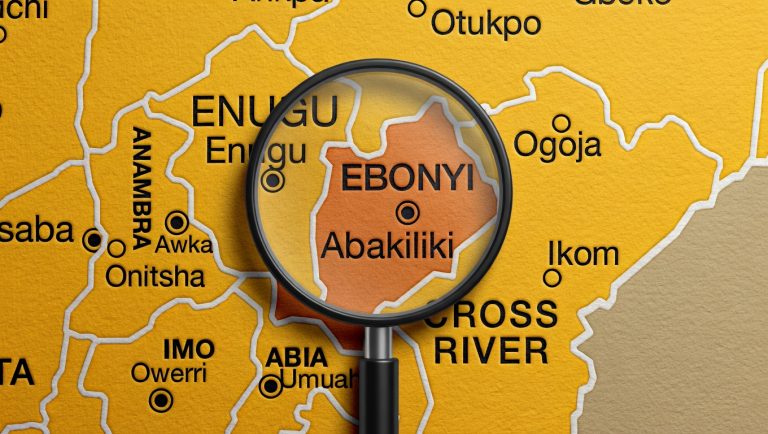
However, since the incumbent head of the government of Nigeria is North-West, it would be morally injudicious to argue in favour of North-Central for the Presidency. Rather, a combination of South-East and North-Central should bring the cycle to its full course with the South-East leading the charge while the North-Central produces the running mate. This also sustains the North-South rotatory principle of both the PDP and All Progressives Congress (APC). It also makes logical sense because, as it is, the North has been in the presidency for a total of 16 years, ending 2023 (Buhari eight years, Yar’Adua three years and Sambo five years plus). Similarly, the South-West has had 16 years in the presidency with Obasanjo and Osinbajo sharing eight years each while the South-South enjoyed five years-plus against eight years for North-East. Shouldn’t South-East and North-Central ‘enjoy’ the next eight years in the presidency?
This is the position that South-East leaders and political negotiators ought to trade with PDP and APC. Of course, almost everyone is aware that the abuse of the rotationary principle by PDP caused it the pain it now bears. However, it can still make things better by returning to that table and negotiating a new round of rotations, beginning with the South-East. The same applies to APC, which, as far back as 2014, agreed to a power rotation principle between the North and the South. Both parties see the need to sustain the peace of the country by carrying every geopolitical segment along through the rotation of power; 2023 thus provides a good opportunity to practically demonstrate this as was the case in 1999 when both PDP and APP presented presidential candidates from the South-West.
However, the quest for inclusion in this regard ought not to be interpreted as an Igbo demand. No, it is a South-East demand. Both are different. The demand is for the 2023 pendulum to swing to the South-East geopolitical region. Not to the Igbo people of Nigeria. Those who demand that the presidency should be zoned to the Igbo nation make the mistake of suggesting that those who had occupied the office in the past did so on the strength of their ethnic nationalities. I disagree. Obasanjo did not become President in 1999 because he is of the Egba ethnic nationality. There was no known ‘agreement’ to make an Egba man the presidential candidate of the PDP in 1999 neither was there any such agreement to make a Jada his running mate, or a Fulani or Ijaw to fly the party’s flag in subsequent elections. The decisions had always been to shift power to a particular geopolitical zone and pair with another from the opposite side while respecting the North-South power rotation policy of the political party. Buhari did not become President in 2015 because APC zoned the presidency to the Fulani. APC zoned the office to the North and that of national chairman of the party to the South. Therefore, the demand for power to shift to the South-East in 2023 is one that respects the progression of power shifts since 1999 and has nothing to do with the Igbo. If the Igbo dominates the South-East zone, then that becomes beneficial accident of creation, which the creator of the universe will explain, if asked to. In that case, we shall need some researchers to volunteer to go meet him, question him and get answers from him.