Follow Us on Google
By Moses Akaigwe
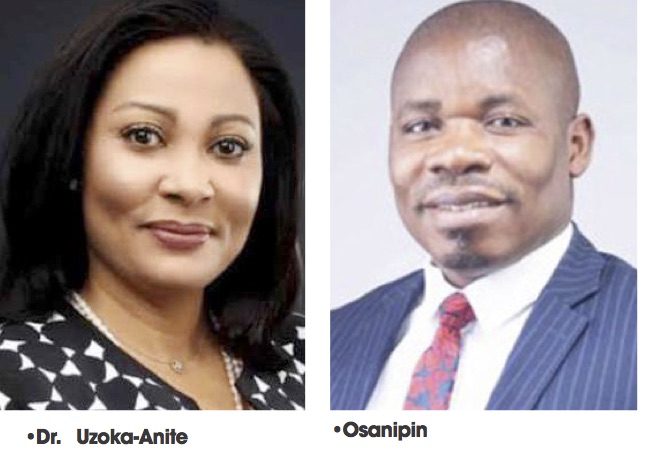
The recent passing of the headship baton at the National Automotive Design and Development Council (NADDC) headquarters in Abuja when Oluwemimo Joseph Osanipin succeeded Jelani Aliyu, came with an interesting irony.
Only a few months earlier (on July 10, 2023, precisely) Osanipin, who was until his appointment the Chief Executive Officer of Jet Motors, was at the council’s office dutifully showing some units of his company’s 14-seater electric bus to Aliyu, and seeking the council’s support.
In a remarkable switch, on Tuesday, October 17, Osanipin formally assumed duty, replacing Aliyu, who spent six years and five months in the NADDC saddle, having taken charge in May 2017, and was re-appointed by the then President Muhammadu Buhari on April 7, 2021.
Industry players that initially reacted to his appointment believe that, more than anything else, the new DG needs to prioritise getting the Nigeria Automotive Industry Development Plan (NAIDP) bill to become an act signed into law by the President.
Expectations are sky-high, and that is because the local auto industry has been in the doldrums, and therefore, in dire need of urgent intervention. This is no thanks to an interplay of harsh economic factors resulting in most auto plants currently utilising a very small percentage of their installed capacities, and others largely dormant.
And some of the factors include high exchange rate/scarcity of forex, scary interest rates on loans and increasing cost of running factories – which have ‘conspired’ to shoot up the prices of locally produced vehicles beyond the reach of most buyers at a time of dwindling purchasing power across board.
Therefore, uppermost in the new Director General’s priority scale should indeed be to collaborate with the Minister of Industry, Trade and Investment, Doris Nkiruka Uzoka-Anite, the reborn Nigerian Automotive Manufacturers Association (NAMA) and other stakeholders, to give the NAIDP a legal backbone.
This is in view of the obvious fact that an auto policy with legal support will attract serious investments and catalyse activities towards achieving the objectives of the NAIDP.
The Chief Executive Officer of the African Association of Automotive Manufacturers (AAAM), Dave Coffey, captured this in a recent interview where he said: “OEMs remain very interested in Nigeria. We need certainty of policy that has been passed into law and effectively implemented; this includes the required vehicle, fuel and parts standards to support investments.”
The industry has not recovered from the effects of the decline of assent by former Pres. Muhammadu Buhari to the Nigeria Automotive Industry Development Plan (NAIDP) Fiscal Incentive and Guarantees Bill passed by the National Assembly.
As a player in the industry, Osanipin is surely not unaware that lack of legal framework for the auto policy has discouraged many investors, including OEMs (some of whom have turned to Ghana where a similar, but more progressive policy took effect in 2019, about five years after Nigeria’s).
The case of Volkswagen which signed memoranda of understanding (MoU) with both Nigeria and Ghana in September, 2018, to invest in the two countries’ auto sectors, is heart-rending.
About two years later, in August, 2020, a brand new Volkswagen plant had come on stream in Tema, near Accra – helped by an auto policy modelled after Nigeria’s in 2019 while Nigeria continues to dither.
It was very unfortunate that neither the Goodluck Jonathan administration that took the noble initiative of introducing the NAIDP in 2013 (though it actually took effect in 2014) and the Muhammadu Buhari regime that ‘implemented’ it for eight good years, could give it the needed legal backing
Despite political intrigues and intense lobbying by those who felt that the NAIDP bill threatened their personal business interests, the 8th National Assembly passed the document, but a spanner was thrown in the works when former Pres. Buhari refused to assent to it in July, 2019.
And, as if that was not retrogressive enough, and still against the provision of the auto policy, the Federal Government introduced the 2020 Finance Act.
To the detriment of the domestic auto industry, the Finance Act reduced duty on imported buses from 35 percent to 10; slashed levy on fully built cars from 35 percent to 5 percent; and trucks from 35 percent to 10 percent.
To many industry stakeholders, including the Chairman of Innoson Vehicle Manufacturing Ltd, Nnewi, Dr. Innocent Chukwuma, and Dr. D. V. C. Obi, the provisions in the 2020 Finance Act could drive the industry to death unless they are reversed and measures put in place to ameliorate the damage so far done
Obi, who is the former Chairman of the Auto Group of the Manufacturers Association of Nigeria (MAN), said, “This (the Finance Act) is the clearest signal from the government that they do not care about the development of the local automotive industry.
Besides, the expected return of the NAIDP bill to the National Assembly as an executive bill never materialised within the life of the previous government. Rather, a new policy was drafted by the NADDC and the Industry Ministry with the help of KPMG.
Titled “2023-2033 National Automotive Industry Development Plan,” the new policy document which was an improvement on the 2013/14 version, was passed by the Federal Executive Council only a few days to the end of the Buhari administration in May, 2023. It was considered by many as one of the former NADDC DG, Jelani Aliyu’s achievements.
Whether the present government will (in the spirit of its Renewed Hope mantra), depart from the usual policy summersault that defines successive regimes in the country, by seeing the 2023 NAIDP bill passed and assented to, is at this stage a matter of conjecture.
But, Dr. Uzoka-Anite has, at least, given the industry something to hold on to when she assured at the recent stakeholders’ meeting convened by the NADDC in Lagos, that she was “committed to expunging bottlenecks trade and investment in the automobile industry where all players can get access to support from the government.”
But, there was a caveat: That the automakers must first self-regulate and also invest more in quality standards and after-sales support .
In working towards the success of the 2023 NAIDP, Osanipin will have willing allies in the Nigeria Automotive Manufacturers Association (NAMA) which seems to have recently reinvigorated itself after a period of near dormancy that followed the death of the hardworking and versatile Associate Executive Directive Director, Arthur Madueke on Monday, July 6, 2014.
Feelers from the fold of the new NAMA which constituted a seven-member board chaired by Bawo Omagbitse, a General Manager in PAN Nigeria, Kaduna, indicate that members believe that, if it successfully goes through the process of becoming law, and implemented with a sincere sense of purpose, especially on the part of government, the new policy will take the industry out of the woods.
At the NADDC/stakeholders’ meeting in Lagos, Omagbitse made a presentation on behalf of NAMA which contained very robust suggestions on how to give the auto industry a boost.
But, the new DG and other drivers. of the 2023 NAIDP should not be under the delusion that the worst days of treachery and sabotage against the auto policy have receded into the past.
The auto industry has not forgotten how, ahead of the coming into effect of the NAIDP in 2014, a vigorous negative campaign spear-headed by some auto import barons, and supported by the top echelon of the Customs, second-hand (tokunbo) importers and other interests, was mounted to stall it.
That the powerful opponents with heavy war chests and their allies didn’t quite succeed in that campaign was largely because Pres. Jonathan had in his cabinet patriotic like-minded people, namely Dr. Ngozi Okonjo-Iweala and Dr. Olusegun Aganga, Finance and Industry Minister, respectively, who saw through the ineffectual onslaught..
The government also listened to sound reasoning from the local auto industry represented by the NAMA secretariat manned then by Arthur Madueke.
But not to be daunted, the cabal took the lobby to the National Assembly, failed again, and finally went to the President.
It was learnt that the then Pres. Buhari bowed to the anti-policy pressure when he heard that the various incentives to investors in form of rebates and tax holidays, including the pioneer status incentive, would affect the efforts to shore up the revenue accruing to the Federal Government as the economic outlook continued to look discouraging.
It was not impossible that the allegation that was rife then got to the Presidency that some assemblers were abusing the provision in the auto policy that permitted them to import a certain number of fully built vehicles based on the number locally assembled.
This calls for a more serious oversight by relevant Federal Government agencies like the NADDC and self-regulation on the part of NAMA even as efforts are made to ensure that the 2023 NAIDP gets legal endorsement.
The point being made here is that working towards getting the new NAIDP to become law won’t be like a stroll in the park, because the forces against the auto policy of years ago are still lurking around.
This is against the reality that the economy is even in a more parlous state today than it was when NAIDP was first introduced 10 years ago.
Moreover, the 2023 draft contains incentives in form of rebates and tax holidays similar to those opposed by the anti-policy lobbyists who felt that their parochial interests were threatened by the bill passed by the 8th assembly and consequently convinced Pres.Buhari to withhold his assent.
Also deserving top priority is the need to sustainably stimulate patronage of made-in-Nigeria automobiles especially in government circles, and ensure that the average citizens are empowered to purchase locally made vehicles through the elusive auto purchase scheme which can be made to work in this new era.
If this is achieved, the expected increase in demand will gradually raise the volume of production in the various plants which will in turn lead to a reduction in the prices of vehicles produced in Nigeria, in addition to attracting investments in local content development and production.
This is in line with the NAIDP which aims to enable the exponential increase in the local production of vehicles with local content reaching up to 40 percent.
This will mark a departure from the present situation where most of the factories licensed by the NADDC since the NAIDP took effect years ago engage in SKD (completely knocked down) assemblies which contribute little to the growth and development of the automotive industry.
The new NADDC DG should leverage on the fact that the framers of the 2023-2033 policy made provisions for outstandingly competitive fiscal and non-fiscal incentives needed by investors in the domestic auto industry.
And these should include access to the funds that have so far accrued from the various duties and levies on imported fully built up vehicles and related charges, and perhaps, concessionary forex allocation too.
A situation where the duty differential between fully built imported commercial vehicles and similar locally produced commercial vehicles is still slim, should be redressed in favour of the latter.
Initiating, recommending and supervising policies and programmes for locally manufactured vehicles and components, which are some of the functions of the NADDC, will not be as easy as hot knife goes through butter. Not in an economy as in distress as Nigeria’s currently is.
But, with the right attitude and synergy with the supervising ministry and the stakeholders, Osanipin is likely to leave the industry better that he met it.
In his own words in a recent interview, “the future of Nigeria”s automotive industry is very bright,” despite the present daunting challenges.