Follow Us on Google
By Olakunle Olafioye
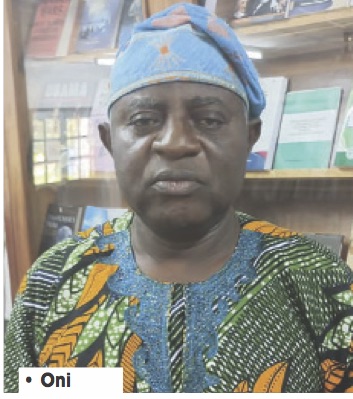
Despite the controversy trailing the just concluded elections in the country, a political scientist, Prof Abiodun Michael Oni, has insisted that Nigeria is making progress as a democratic nation.
Prof Oni, a former Head of Political Science Department, Babcock University, Ogun State, said that one of the positives to be taken from the elections is the realization by the political class that power belongs to the people.
He Also spoke on what Nigeria needs to do in order to have rancour-free elections in future.
Nigeria has experienced 24 years of civil rule during which seven general elections have been witnessed. How would you assess democratic rule in the country so far?
Except for the unnecessary agitations and sentiments being expressed in some quarters, I think we are making progress. Our democracy, going by what we saw during the last election is becoming consolidated. Those in government are getting to know that the people are the owners of Government Houses and not the elected. We are getting to the stage when politicians will be more careful, more cautious and listen more to the people. We will also witness less corruption in the next dispensation because of the hurricane that swept some governors away, including those who were nursing the ambition of retiring and resettling in the National Assembly. With these last elections, I think those in government are now beginning to know that the electorate are the owners of political power. I am optimistic that we will witness better governance in this next dispensation than the previous dispensations when we witnessed arrogance of power; when the political class believed that they would win with or without the people. For instance, Sanwo-Olu almost lost Lagos, APC lost three serving governors; the PDP also lost three serving governors that wanted to go for second term. So, I believe democracy has come to stay in Nigeria.
When we look at the controversy that is trailing the last elections, particularly the presidential election, what would you say accounted for this if our democracy is actually growing as you have said?
There are two processes involved in electoral management: the process and outcome. We cannot isolate one from the other. The process was the most problematic. These include late arrival of election material in some states, but we saw improvement during the governorship and state assembly elections. In spite of naira scarcity, we still saw that political parties still bought votes. Two methods were used: the online/ mobile transfer system and the IOU system. Votes were bought and sold on credit during the last elections. I voted and I witnessed where money was used to sway voters. Parties that did not have money bought votes on credit. All they did once they were satisfied that you had voted for their parties, was to write down your name and when the money was ready they would get across to you. Then intimidation of voters and alleged alterations of figures were also reported. Those are the procedural problems, but I want to tell you that INEC cannot be held responsible totally for all these inadequacies. INEC cannot stop Nigerians from buying and selling votes. We cannot divorce the process from the outcome. Why the outcome of the presidential election is considered controversial was because of the failure to immediately transmit result to the INEC’s IReV. But Section 50, sub-section 52 empowers INEC to determine the mode of transmission. At that time INEC said there were attempts to tamper with its server. But if the results that were collated at polling units are what was transmitted to wards, local governments, states and then to the national, then we need to wait and see what happens at the tribunal. I will not join the people to condemn the outcome of the presidential election or to condemn INEC. INEC has tried its best as far as I am concerned. Obasanjo once said that if angels were brought to conduct elections in Nigeria, it would still not be without controversy. This is because people see politics as a shortcut to making money. Therefore, they can go to any length to upturn the good arrangement that is put on ground. That is my worry about politics in Nigeria.
What is your take on the debate on whether the president-elect fulfilled the requirements to be declared winner?
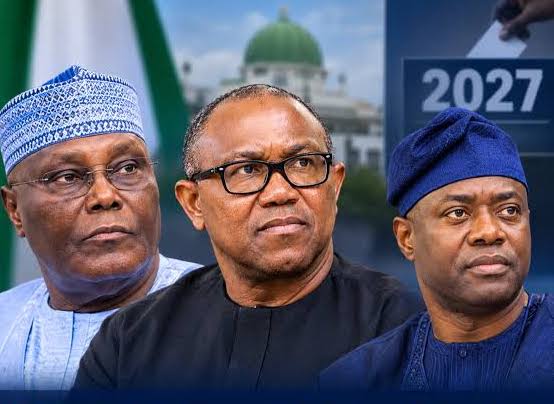
On the hullaballoo over whether the president-elect met the requirements to be declared the winner of the election, perhaps we need to do something very urgently on that. In Ghana, for any candidate to emerge as the president of that country, he must have scored 51 per cent, but here in Nigeria there is no regulated percentage. There is no provision in our constitution and our electoral law that stops INEC from declaring Tinubu as the winner of the election. So, Tinubu has satisfied all the requirements to be declared the winner of the presidential poll. I postulated before the election that the PDP would pave the way for Tinubu’s emergence and that was exactly what happened. Prior to the elections, PDP was shredded into four or five factions and this made it impossible for them to be able to fight a relatively united APC. The intra-party crisis in PDP paved the way for APC to retain power.
Going by the flaws you have been able to identify in the entire process, how is this likely to impact on the psyche of the electorate in future?
It has already started to take its tolls on the electorate. Compared to the presidential election, the Governorship and the State House of Assembly elections recorded abysmally poor turnout of voters particularly in the Southeast. Those people who thought their candidates were rigged out may refrain from voting in future elections. I spoke with some youths this week and I could see that they were disillusioned. They claimed the elders have sidelined them once again, but that is not the truth. I believe if they can keep the tempo, with what we saw at the last election, they will get there. In the last election, the Labour Party supporters built their support around Obi and as soon as he lost the election, they all went back to pit their tents with their former parties apart from Abia State, where we learned that the governor there had overstayed his welcome.
Ethnicity and religion played a major role in the last elections, what signal does this give about the unity of this country?
This election has brought back 24 years. Before the election we were already getting out of religious and ethnic bondage we found ourselves. As a political scientist, I have consistently advocated a two-party system because it will serve as an element of integration and cohesion among the people of Nigeria. Multi-party system will do us more harm than good. Unless something is done urgently in PDP we may slide back to the era when we had PDP as the dominant party before the amalgamation of parties which birthed APC. So ethnicity played a major role and it is very unfortunate. The opposition against Tinubu by Christians in the country was fueled by the daring Muslim-Muslim ticket which the APC flew. It is very unfortunate that we allowed ethnicity and religious factors in the last election. I wish we would be able to stem the tide otherwise we would be going back to the days of Awolowo, Azikwe and Aminu Kano. The outcome of the election has no doubt weakened the bond of unity among the Nigerian people.
What would you say is the way forward in view of the problems you have been able to identify?
The youth must strive to sustain the tempo of what was witnessed at the last elections. The electorate should also know that they wield so much power to determine who occupies the Government Houses. They should desist from selling their votes. Security agencies should beam their lights on corrupt politicians that are only interested in buying votes. During the last elections party agents were everywhere wooing voters to vote for their parties so that their parties could compensate them later. And the way the ballot papers were designed gave out who the people voted for. I want to suggest that INEC does not need to arrange the names of political parties in alphabetic order so that it will not be easy to determine who people voted for. We also need more ICT professionals to manage INEC’s Information and Technology facilities in order to save Nigeria the embarrassment that was noticed at the last election. There is also the need for more enlightenment and the re-orientation of the electorate.