Follow Us on Google

A forum of concerned Nigerians put together by the Toyin Falola Interview Series has come down heavily on the process and fallout of the just concluded 2023 general election held in Nigeria, saying that the integrity of any electoral process remained crucial to the development of that nation.
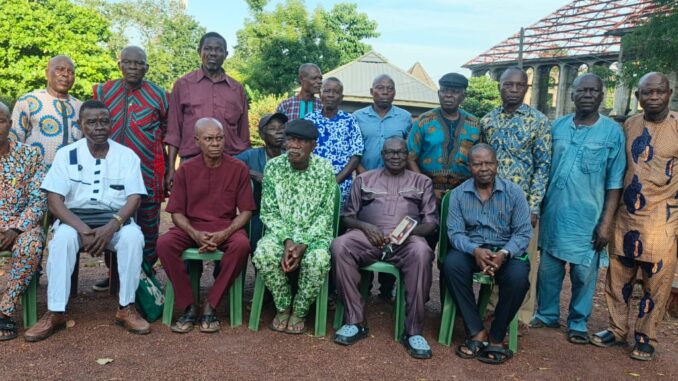
This position, among several others, was made known in response to theme raised by the organizer of the platform, erudite academic, Professor Toyin Falola, in respect of the aftermath of the 2023 general elections in Nigeria. The panelists led by rights activist, author and journalist, Dr. Chido Onumah, included Professor Jibrin Ibrahim, Ayisha Osori, Cynthia Mbamalu, among several members of the audience. The Toyin Falola Interview series, as usual, was beamed and viewed on various social media platforms by over 1.4 million participants.
Disturbed by Nigeria’s embarrassing history of electoral fraud, Professor Ibrahim told the audience that until electoral processes have passable integrity quotient, it would be difficult to make progress. According to him, “A situation in which increasingly electoral outcomes are decided by the judiciary (in which judicial outcomes are determined by corruption), it is definitely not the way to go. The only way to go is to improve continuously the integrity of our electoral process. Improving the integrity of our electoral process is however an extremely difficult thing. Attempts have been made since 2011. There has been considerable progress. However we are not where we want to be. We will continue to face major challenges. Specifically, in the last election, there are colorations of ethnic and religious bigotry due to a number of factors which made the outcomes even more contentious and problematic than is normally the case. The nomination process of the political parties was based on massive use of financial resources.
“The decision of the APC to come out with a Muslim-Muslim ticket goes against the logic of Nigeria’s nomination in the past. These all helped to push such religious and ethnic problems. I think that voters’ suppression which occurred in certain states where certain people from certain ethnicities were physically harassed from coming out to vote is the greatest matter of this election. It is a very terrible situation because you are questioning the citizenship of some Nigerians. If today the divisions are so strong because of that process, then why did the process occur? It occurred because certain people thought they would have easy victories. They discovered that people were fed up with them. This is why the devices of Nigerian politicians in dividing to rule come out as being very dangerous for our democratic future. They know how to mobilize along ethnic and religious lines. When they do that, it works significantly.”
Cynthia, however, argued that the deployment of technology in the electoral process failed to meet the expectations of the voting public. “The new electoral act makes it mandatory that only those who had been accredited by the BVAS would be allowed to vote. The law is so emphatic that where the BVAS is not deployed, elections in that polling unit would be suspended and conducted the following day. Some of the instances where we had inconclusive elections, some polling units did not have the BVAS; so they could not vote. That added to the number of polling units. At the end of voting at every polling unit, the BVAS is used to take a picture of the result form at the polling unit level. The result is then uploaded at the INEC Result Viewing portal (IREV). This is done before proceeding to the next level of collation.
“We know that the result collation is the weakest link in our elections. At the polling unit, you can observe what happens. But after this, you do not know what happens. When the amendment commenced to the electoral process, one major issue that citizens rallied around was the electronic transmission of results. Many people pushed for electoral technology. INEC was given the power to electronically transmit results. It was however clear that the electronic does not substitute the manual; however it complements the manual. A section of the article says that when there is discrepancy between the manual result and the uploaded the result, the uploaded result will take premium consideration. Our data did show that BVAS was deployed in 95 per cent of our sampled polling units across the local government areas.
“In 88 per cent of the polling units, it malfunctioned but fixed. In some places, elections did not hold because the BVAS did not hold. For accreditation, BVAS worked. On the result collation, our data did show that in 88 per cent of our polling units, the BVAS was used to take pictures of the result forms at the polling unit level. In 68 per cent of the polling unit level, the presiding officers attempted to upload the results on the result viewing portal. (This was for the presidential election). As at 10pm on the presidential Election Day there were no results on the viewing portal. We observed that on the same day, the results for the senate and House of Representatives elections were uploaded. These elections held the same day with the presidential. Why did we experience delay in the upload of the presidential election results on the viewing portal? INEC is yet to respond to this,” she said.
Ayisha expressed her distrust for both the process and outcome of the general election, insisting that those who only focus on the outcome must be told that the process was deeply flawed. “There was a lot of hope that with the introduction of technology, we would see something better. To focus on the results alone means that we are saying ‘here is the answer let us work back to it.’ There is something called competitive authoritarianism. You can have competitive elections but they are not becoming more democratic,” she said.