Follow Us on Google

Stanley Uzoaru, Owerri
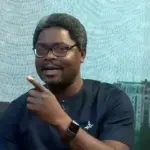
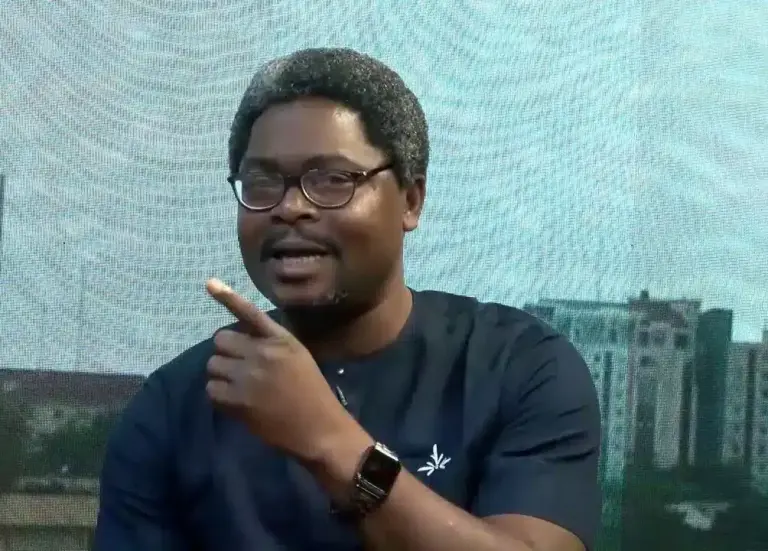
Sam Amadi was a governorship aspirant on the platform of the All Progressive Grand Alliance (APGA) for the last election in Imo State. A former Executive Chairman of the Nigerian Electricity Regulatory Commission (NERC), lawyer, rights activist, and astute administrator in this interview talked about the country’s failing democracy, corruption, restructuring and other issues.
It’s been 20 years of uninterrupted civil rule in Nigeria; looking back, do you think we have fared well?
Obviously, we have not done well. Nigeria has two kinds of problem, we have technical problems in terms of economic development; we are not developing. Look at the indicators, our capital income is not much; poverty has increased to the extent that we are now the world’s headquarters of the poorest, according to the world’s poverty clock. Look at healthcare generally, and if you look at the global development indicators, look at infrastructure services, we are the world’s fourth country with worst electricity, the same with infant mortality. All the key indicators of both human and social wellbeing are bad. Two, in terms of instability and fragility, the red lines are there showing the level of communal crises, volatility, and criminality, lawlessness, compared to the rule of law. We have not improved in any way since 1999 in any sustainable significant sense. The only thing we have achieved is that we have had continuity of formal democracy with no reversal. We can point to the fact that we are able to hand over power from one civilian democratically elected government to another one. That is really some measure of success. Again, I can say that in spite of some acts of harassment by some state actors in the public sector, generally we have not witnessed any form of repression of freedom as we had under the military. If we look at the Freedom House checklist of freedom, we are better than under the military. It is a mixed bag but generally; democracy has failed to generate economic wellbeing.
From the picture you painted where do you think that the challenges are anchored? Is it in the system or in the people practising democracy?
People have always tried to draw a distinction between the system and the practitioners. Like in management strategy; you talk about strategic management and implementation, but great strategists tell us that a good strategy will be easy to be implemented. If a strategy is not properly implemented, it means that the strategy is bad. Good or effective strategy is one that in itself makes it easy to implement. Strategy as a government direction of action, strategy as an analysis of solution and implementation ought to be implementable. Mapping it into politics, if we are not able to succeed in implementing democracy, it is because our model is bad and that is what engenders bad implementers. Take, for instance, our political leaders, often times, we complain about their poor performance because as people say, the worst rule the best. So, what makes it possible for the worst to emerge is the system. The difference between the system and personnel is so intricate that it is difficult to separate. Our democracy is bad because our processes for political selection itself are faulty. It does not encourage the emergence of credible persons. A British political scientist, Paul Colia wrote and he argued clearly that the problem of rigging the election like the one we had now is that it creates a fait accompli. At the end of the day, it engenders a circle in the sense that only criminals will dare to offer themselves for political offices. If the cost of running elections in Nigeria is high, the process is militarized, violence is the currency for politicking, the result is that the bad system incentivises bad people who have the skills to run the system and the outcome is that good people will fizzle out. At the end of the day, you create a fait accompli on the bad people, why, because the system is designed to incentivise bad actions. It means only criminals can win and those criminals are those who have no need for governance. They don’t need governance to win. The Nigeria political paradox is that democracy fails because the design of the system favours lack of accountability, favours incompetence, and those lacking the incentive to govern. By so doing, it destroys governance and then destroys the prospects of people who come into power to govern because government will not return them to power. So, the political economy of power in Nigeria is that you don’t need to govern well to be in power, therefore, when you are in power; you don’t need to govern well. So, it is a vicious circle.
So what do you think should be the way out?
The way out should be to change politics; when I was running for primaries as governor in All Progressive Grand Alliance (APGA), that was my message. The New Imo Movement had three processes and I said that the Imo crisis is a function of bad politics. Bad politics is the politics of impunity, the politics that recycles people who are not qualified. So, what we do is to stop it and get the people back to take over governance, open the political space, electoral reforms so that votes will count and then, let the middle class, professionals and those who are economically stable and not going to politics as a survival strategy populate the political class. The real answer to our political tragedy is to get back professionals into politics. It does two things. One, it creates a pool of people who can actually have the ways of solving problem. It changes the dependency factor in politics because it has to employ impoverished people and the unemployed young people in the rural areas who are the catchment constituency of politicians. They are not going to sell their votes and they are going to make decisions based on who needs the money. When professionals come in, they change the dynamics. They create expectations and that expectation becomes the measuring lines of those who perform or not perform, so that in the next election, there would have been a high bench marked expectations to sort out those who will continue or not. So, overtime, we will have good governance. Take the case of Anambra, for example, because of the conflict between a godfather and godson, getting new setting, Anambra professionals came together and that is how Peter Obi came into focus. Obi has engendered some professional touch from vicious to virtuous which after him someone who may not be exactly like but comparable to him has sustained that. Look at the array of people they parade in their circles. So, Anambra people have shown us that we can change politics through the infusion of professionals and by getting new actors to the game. We are not talking theories here; it happened in Anambra and can happen in Imo or elsewhere.
The former CBN governor, Sanusi once said that over 25% of recurrent expenditure in the budget goes to service the National Assembly alone. What would you suggest as way to trimming down cost of governance or would you recommend another democratic system?
I had a debate on this issue that our democracy is expensive and some ill-thought out proposals of returning to Parliamentary system emerged. It is a form of poor diagnosis; the question is; why is our democracy expensive? It is not because of model or structure of government. Some say we have too many ministries, we don’t have too many ministries, some say that we have too many agencies; no we don’t have too many agencies. We only have very high cost centres. Let me give you an example. When I was Chairman of Nigerian Electricity Regulatory Commission, before I came, commissioners were flying first class, I abolished that. Peter Obi, I heard gave an advice to the current Imo governor, that he should not use chartered flight. Ticket between first class and economy class on major routes are over a million. In an agency where in a week you have over four to five people travel out, you can save over N4-5 million. In some places, look at the amount of police escorts; everybody in Nigeria who is somebody has a police escort which is paid from public purse. They all have other forms of support base privileges and prerogatives. We created a privilege-based public service and that is where the money goes. This means we see those persons in public offices as persons to spoil. We don’t see them as servants who have come to deliver public service. So, we have imposed an aristocratic system upon our democracy such that we are spending a lot on one person. Think about 109 Senators, every quarter they have about N15 million. That amount is supposedly for them to run their offices. Now in running those offices, what stops the civil service in running them that is engaging the Civil Service Commission? Should a Senator be involved in that? They should sign off their working materials like computers, printers, papers etc; and run like a typical bureaucracy and even connect all of them to a first class digital library. The best a senator gets is simply materials, books, reports, journals, and brainpower. They are not manufacturing anything; so why N15m? We chose corruption in the system. Nigeria is such a thoroughly corrupt country by design. We shouldn’t be fighting corruption, we should re-design our country. So, we have already made a choice to waste money. It is not a choice imposed on us by the structure. The base of the structure around government is sub-optimal. The problem is not the structure. If we pay all the senators their normal salaries and all their aides are paid by the Civil Service Commission, so what is the meaning of running their offices? Is it the work of the senator to run his office? It is the work of bureaucracy to provide facilities. We are in a neo-feudal set up that continues to perpetrate that aristocratic system we imposed on ourselves by our desire and design and that is what is costing us much in democracy and not the model of democracy. We will continue to live with the expensive democracy so long we live with the mind-set that public office is all about public reward. If a man spends N1 billion to win election and every month we give about N350 million is that not madness.
What would you describe as the high and low points of President Muhammadu Buhari administration so far?
I think clearly this very government has terribly under performed. They have the potentials, but they have not delivered on their promises to the people. I think they were restricted by a narrow vision. The president perhaps did not have a background of the best set of skills and the people at the policy levels, the quality of public policies are adjudged very poor. Like I have always said that there are four criteria to use in identifying good talents for public office. One is to look out for people with public interest, look for general and specific competences, they have to have the acumen to solve the problems and understand the processes, and that is why in many countries, the political advisers and staffers are people who have a level of competence, a level of coherence, a level of intelligence and acumen to deliver technical support to solve problems, a level of social mobilization and aptitude to reach out to people, to create values, win support base, build coalitions, etc. But it has been a little bit more of hegemony here. Clearly, we have seen that the skill to win elections is not the same skill to govern well. The government this last time under performed so its management needs to broaden its scope to engage a broad base of skills.
Recently former President Olusegun Obasanjo came hard on President Buhari, accusing him of Fulanization of Nigeria and Islamization of Africa drawing from the level of insecurity in the country. Do you agree with him?
I think this is a very tough and high-level political criticism.
What is tough about it?
The accusation of Fulanization and Islamization itself which setting came off a Christian event is arguable anyway. The challenge is not in attacking the president, the challenge is in how the president responds to the matter in terms of how he makes his appointments, the way he handles the Boko Haram issue, the way he handles the Fulani herdsmen will provide the rebuttal in it. People have this general perception that he has not been fair-minded in dealing with these issues. He needs to act more decisively to show firmness, that Nigeria is one united entity, to be ruthless and intolerant of any act of violence from anywhere the same way he went on to proscribe IPOB.
What would you suggest as alternative solution to Nigeria’s problems since the campaign for restructuring has not materialised?
I think restructuring is a victim of Nigeria’s politics of fear. The North unwilling about the restructuring feels that the South will take advantage of it while the South already disadvantaged feels that without restructuring they will lose out. Nigeria’s problem has been that of going beyond ethnic and regional fears of distrust and embracing a moment of truthfulness. The system is not working. It is not delivering. The states are almost bankrupt except just a few of them that can stand on their own. They are suffocated, so, there is every need for restructuring. Conceptually, we take out feudal decadent religious states into a modern accountable democratic society not minding where you come from, even the cast and class system is so dominant in Nigeria. We have to get to a modern functional state that works; state whereby things are done by logic of merit and production. That is the first restructuring by conception. Second, we have to have a state that is organized along local ownership, that is; there must be local control. For example, when the local government allocation is made available, the council officials must decide how to manage their resources and learn and have the incentives of how to solve their problems. We should be able to have leaders who are able to sustain these equitable and efficient institutions and invigorate them to create values and leadership. I think it is foolish to argue that we don’t need restructuring. Nothing is working. We are trapped. For the Southeast, it is going to be a pretty long battle, in the interim they should create different leadership at the local level and begin to do things that they are not doing which are many. The states can take back some of the powers of the Federal Government through judicial pronouncements. Taking the IPOB issue, for example, the Southeast could declare Owerri or any other city Biafra to kind of exorcise that demon and raise discussion over what happened and what didn’t happen. How do we leverage on the technological genius we saw during Biafra. The Southeast can launch into monuments, different creativities, drama, musicals, plays, books, festivals etc. There is no law that says that they can’t do all that. No law says that Okorocha couldn’t have built Biafra memorial. These are the things that they can do to diffuse tensions and take the people away from radical incendiary groups and institutionalize the consciousness. Leadership failure compounds the problem of restructuring. States provide alibi for failure. States pretend as if they are appendages, but they are not creative, not creating their own policies. Look at the issue of state police. If I am a governor, it is not unworkable that I can go to the IG of Police and say I need 2000 more police officers in the state. This is the deal. Here I would give you the money, to recruit the police, train them, manage them, but send them to me after. This is to be able to provide the number considered sufficient to cover the state, so Imo will be properly policed.
Would the law allow such?
Of course, it is the Nigeria Police Force. It is not Imo Police Force. The IG of Police has operational control, so Imo is paying for the police and after that the Commissioner will post them to the appropriate places for manning. For instance, if like 500 policemen are deployed to Ngor Okpala; and you have 11 wards there, it will be like 10 police men policing each ward in the area. That is the local policing that you are talking about, the governor can get each of the police men a bicycle to comb the area with their pistol, their torch, their baton or whatever is necessary. With police presence crime will reduce. We are not sure of restructuring in the next one or two years so local governance will solve some of these issues.