Follow Us on Google
N4.05 trn raised, gross foreign reserves hit $50.4bn
________________________________________________________
From Adanna Nnamani, Abuja
No fewer than 20 banks have fully met the new minimum capital requirements, with 13 banks at advanced stages of their capital-raising processes, while others are finalising strategic plans to comply with the regulatory directives.
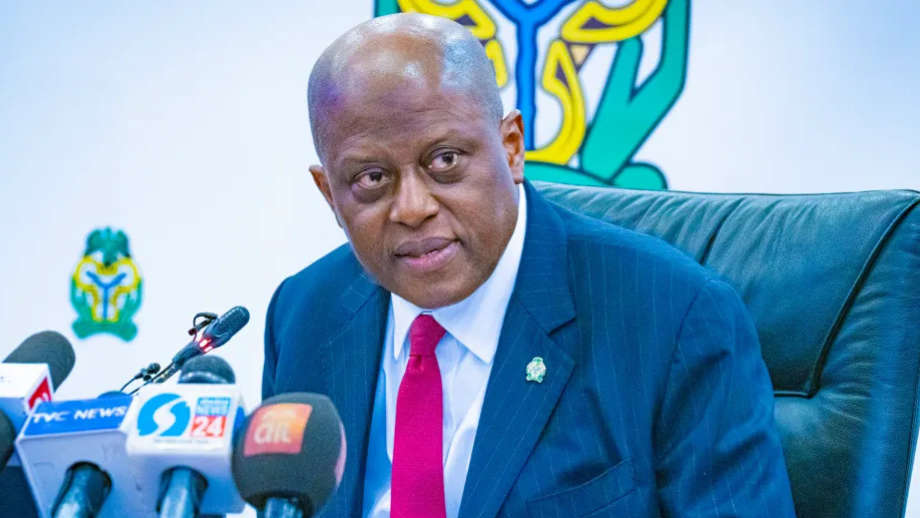
CBN Governor Olayemi Cardoso disclosed these at the Monetary Policy Committee (MPC) briefing in Abuja on Tuesday.
According to Cardoso, the verified total capital raised across these institutions stands at N4.05 trillion, with 71.6 per cent mobilised domestically and 28.33 per cent sourced from foreign investors.
The CBN governor said the development demonstrates investor confidence in the country’s financial system.
Meanwhile, the apex bank also slashed the country’s benchmark interest rate, known as the Monetary Policy Rate (MPR), from 27 per cent to 26.5 per cent.
The slash in the interest rate, which is the second in five months, is expected to ease borrowing costs for businesses and individuals, contributing to improved liquidity in the economy.
Cardoso said the decision reflects the committee’s view that efforts to reduce the high cost of living are beginning to yield results. They added that the impact of earlier strict measures is now evident, and the naira is demonstrating greater stability in the foreign exchange market.
The CBN, however, maintained other protective measures to keep the banking system strong. The Cash Reserve Requirement (CRR) remains at 45 per cent for regular commercial banks and 16 per cent for merchant banks. The committee also revised the Standing Facility Corridor (the range of rates at which banks can borrow from or lend to the central bank), setting it at +50 to -450 basis points around the new 26.5 per cent policy rate.
Cardoso noted that while the rate cut provides relief, maintaining macroeconomic stability remains a top priority, with close monitoring of inflation and fiscal discipline.
He further revealed that Nigeria’s gross foreign reserves reached a record $50.4 billion in mid-February, the highest level in 13 years. The governor said the increase is underpinned by a healthy current account surplus, rising non-oil exports, diaspora remittances, and sustained market confidence.
Other News
On inflation, he noted that although the rate has fallen from 34 per cent to 15.45 per cent, due to tight monetary policy measures, caution remains essential and called for collaboration among all stakeholders to sustain the gains.
Cardoso added that the CBN is advancing a comprehensive framework for digital assets and strengthening oversight of digital payment systems. With over 430 licensed fintech operators, he said the central bank is focused on balancing innovation with financial stability, addressing cyber risks, and ensuring operational standards align with deposit money banks.
Governor Cardoso also highlighted ongoing reforms in the foreign exchange market, including the elimination of multiple exchange rate windows and clearing backlogs in foreign exchange payments. He said these measures, together with bank recapitalisation and interest rate adjustments, are part of a broader strategy to strengthen Nigeria’s financial system and support sustainable economic growth.
He said: “The committee decided as follows: 1. Reduce the monetary policy rate by 50 basis points to 26.5 per cent; 2. Retain the standing facilities corridor around the FDR at plus 50 to minus 450 basis points. 3. Retain the cash reserve requirement, CRR, for deposit money banks at 45 per cent, merchant banks at 16 per cent, and 75 per cent for non-TSA public sector deposits.
“The committee’s decision was premised on a balanced evaluation of risks to the outlook, which suggests that the ongoing disinflation trajectory would continue, largely supported by the large transmission of previous monetary tightening, sustained exchange rate stability, and enhanced food supply.
“Caution is our watchword in the Central Bank. We are, by nature, conservative because we must do everything possible to protect our economy. Where we see fragilities, we must ensure that we are doing the right things to strengthen our base.
“Inflation at that time was 34 per cent. We’ve brought it down to slightly over 15 per cent headline. We are encouraged by that. A lot of the measures we have taken, though difficult, have begun to pay off, and part of that is the monetary tightening.
“We believe that if we sustain stability in the foreign exchange market, which we have seen in the recent past, it is important to maintain that. But it will take discipline from all stakeholders. This is not something the central bank alone can achieve.
“It is important for the system to benefit from innovation. However, we also appreciate that there are risks, especially to financial stability. The way forward is to ensure we balance potential risks with innovation.
“To date, 20 banks have fully met the new minimum capital requirements, and a further 13 are at advanced stages of their capital-raising processes.
“As of February 19, 2026, total verified and approved capital raised stands at N4.05 trillion. Of this, 71.6 per cent has been mobilised domestically, while 28.33 per cent represents foreign participation. This balance signals broad investor engagement and confidence in the sector.
“We remain actively engaged with all relevant stakeholders to ensure an orderly and credible outcome while maintaining financial stability. Depositor funds in these institutions remain secure, and operations continue under close supervisory and regulatory oversight.”